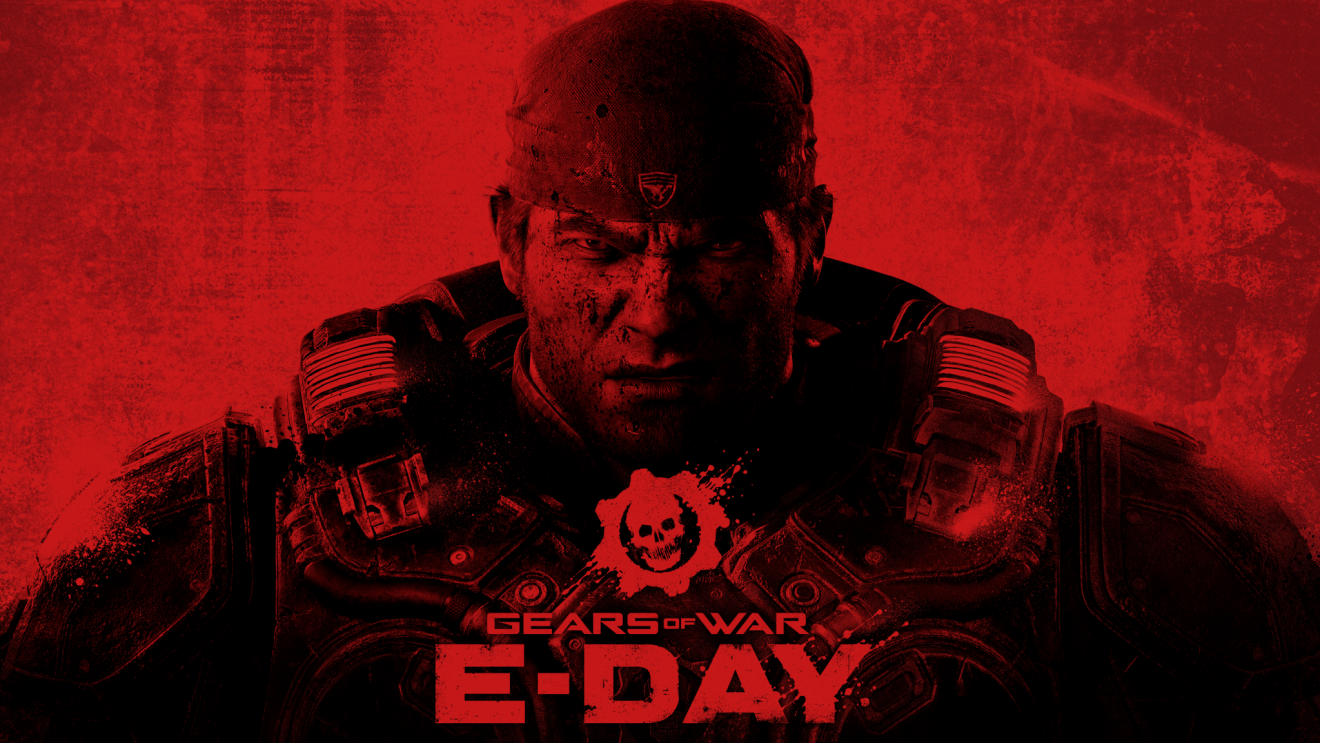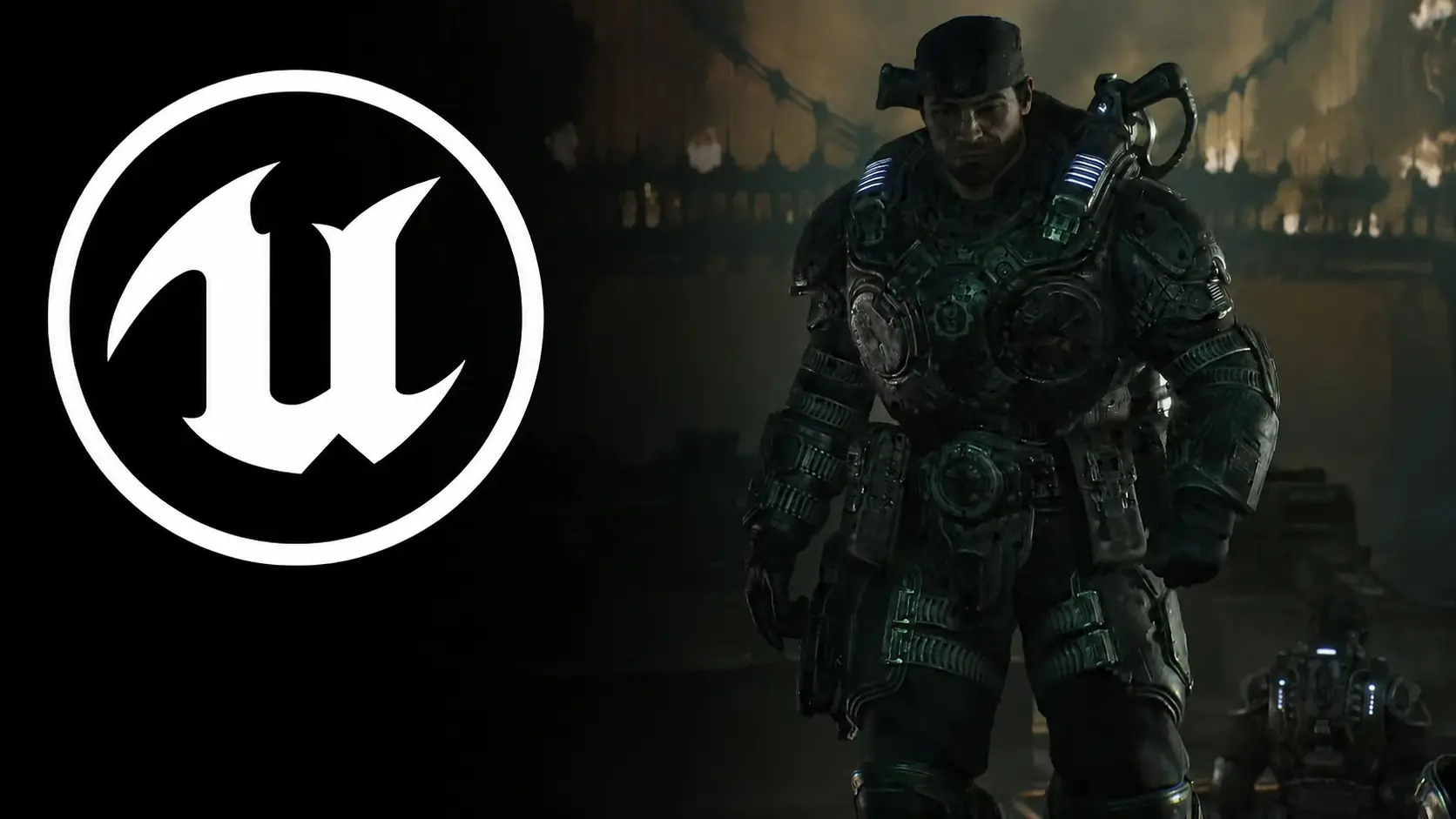
Gears of War: E-Day showed up at Unreal Fest Chicago this week and did something I did not expect from this franchise. It went quiet. The Coalition put Marcus Fenix on a street in Kalona, cut every Locust, every gunfight, every reason to flinch, and just let him walk. Nothing was trying to kill him. Nothing was trying to kill you, the viewer, either, and that emptiness was the entire point of the demo.
The session sat inside the State of Unreal keynote, Epic's yearly rundown of where Unreal Engine is headed, and The Coalition used its time slot on one feature: MegaLights. Here's what they showed and what it actually means.
A Walkthrough Built Around the Absence of Danger
Every prior look at E-Day has leaned hard on threat. The 2024 reveal teaser had Marcus getting thrown around by a Locust drone. The gameplay trailer from the Xbox Games Showcase a few weeks ago showed civilians being torn apart as the ground opened under Kalona. Chaos has carried the marketing since day one. This demo did the opposite.
No Locust anywhere in the footage. No combat encounter, no scripted scare, no chainsaw Lancer payoff. Just Marcus walking down a Kalona street, maybe at a calmer point in the story, maybe just a quiet block in a city about to fall apart. There's a reason for stripping the danger out: combat pulls your eye toward muzzle flashes and cover spots, and once that's gone you actually look at the walls, the windows, the way shadow falls across a sidewalk. You cannot sell a lighting system while someone's getting shot at. Nobody's eyes go to the wall texture during a firefight.
MegaLights, and Why The Coalition Built the Demo Around It
MegaLights is Epic's stochastic direct lighting system, and it does not work like the lighting setups most studios have leaned on for the last decade. A typical big-budget scene tops out somewhere between 50 and 200 shadow-casting lights before the frame budget buckles under the math. MegaLights throws that out. It runs a stochastic sampling pass that evaluates thousands of simultaneous shadow-casting area lights in a single deferred rendering pass, tracing a fixed number of rays per pixel toward active light sources with hardware ray tracing. Instead of calculating every light source the traditional way, the engine samples a handful of rays per pixel and statistically fills in the rest. It looks close enough to fully ray-traced that you would not catch the difference in most shots, at a fraction of the cost.
That's why Kalona's empty street needed hundreds of light sources to make any point at all. A couple of streetlights and a moon overhead would have proven nothing. The Coalition needed a scene dense enough with lamps, broken windows, reflective puddles, and ambient glow that the old method would have choked on it, so the new one had something real to handle.
The Coalition's own framing of the feature is that MegaLights doesn't just allow more lights in a scene, it noticeably improves visual fidelity across systems that depend on lighting to read correctly, environment destruction, volumetrics, and muzzle flashes among them. Destruction debris catches light and casts shadow in ways that used to require careful baking, or just got faked outright. Volumetric fog and smoke pull color and depth from nearby light sources instead of sitting on top of the scene as a flat gray layer. Muzzle flashes, normally one bright overexposed flare, can now actually light up the room around them, the way a real gunshot would in the dark.
None of that reads in a screenshot. You see it when something explodes near a light source, or gunfire briefly lights up a hallway that was pitch black a second ago.
The Hardware Reality Behind the Tech
MegaLights isn't free, and The Coalition has not pretended otherwise. It depends on DirectX Raytracing hardware, so any GPU from before the 2020 DX12 Ultimate certification simply cannot run it. NeoGAF's discussion of the system put it plainly: "It is forced on. Megalights requires hardware ray tracing and can't function without it. The entire game's lighting is driven by megalights." There's no fallback toggle, no option to drop back to the old direct lighting model, short of relighting the whole game by hand, which would erase the reason for using MegaLights at all.
And yet the confirmed PC specs are oddly forgiving for a game built this way. Every GPU on the requirements list supports ray tracing, on purpose, since The Coalition rebuilt E-Day from scratch on Unreal Engine 5 with MegaLights driving real-time ray-traced lighting through the whole campaign. Minimum spec is an RTX 5050 or RX 6600. Recommended sits at an RTX 5060 or RX 6700 XT. DLSS, FSR, XeSS, and frame generation are all described as necessary at the low end to hold a smooth frame rate. A six-year-old GPU class clearing the floor for a feature this new says something about how far Epic stretched the scaling, even though "scalable" still comes with a hard requirement attached.
Faster Iteration, Not Just Better Pixels
The part of the session that probably landed harder with the developers in the room than with the average Gears fan was the workflow angle. MegaLights and the rest of the toolset behind E-Day are not just rendering features. They change how fast the team can actually change a scene.
Under the old pipeline, adjusting how a street looked at night meant baking lightmaps, waiting on the bake, checking the result, then doing it again if something looked off. That loop could eat a whole afternoon for a small tweak. With MegaLights handling lighting dynamically and stochastically in real time, most of that wait disappears. An artist moves a light, changes its color or intensity, and sees the result immediately, no bake sitting between the decision and the screen. The Coalition framed this as a direct gain in iteration speed: more attempts per day, less standing around waiting for the engine to catch up.
That connects to the second claim from the session, that all of this raises per-pixel visual complexity without costing resolution or frame rate. Those two usually fight each other. Push more detail into a scene and either resolution drops to compensate or frame rate does, sometimes both. The pitch here is that the per-pixel complexity budget goes up while output stays locked at native resolution and the frame target the game already promised: 60fps with hardware ray tracing in the campaign, 120fps in multiplayer.
Whether that holds identically once the full campaign ships in October is a different question. Easy to claim on a controlled demo stage, harder to guarantee across every level in a finished game. But the logic underneath it is sound. Cheaper lighting per light source means more performance headroom for everything else fighting over that same frame budget: destruction physics, particle density, how many NPCs can be on screen at once.
This Fits the "Built From Scratch" Story The Coalition Keeps Telling
Nothing about the Unreal Fest demo exists in isolation. The Coalition has been saying the same thing for months: E-Day was rebuilt from an empty hard drive, nothing carried over from Gears 4 or Gears 5. Studio Technical Director Kate Rayner put it bluntly, saying the team "literally rebuilt everything from scratch: characters, enemies, weapons, animation, sound, the world itself." TechSpot's coverage backs that up too, noting E-Day is the first mainline Gears game built without reusing old assets or animations.
A Kalona street with hundreds of working light sources is a pretty direct demonstration of what that buys a studio. No legacy lighting setup to work around. No decade-old level geometry built for a different engine's limits. The team got to design the street, and the lighting inside it, around what MegaLights can actually do, instead of bolting a new system onto an old one and hoping it holds. Art Director Aryan Hanbeck has talked about wanting to push the horror-adjacent side Gears always had further, light and dark, scarier spaces, dynamic shadows, and the tech finally letting the team do that in a way it could not before.
The timing is not nothing, either. Unreal Fest Chicago 2026 is also where Epic rolled out Unreal Engine 5.8, which pushes MegaLights to what's being called production-ready status alongside other updates aimed at games and film production alike. The Coalition putting a MegaLights-heavy walkthrough on this exact stage is a studio using its biggest upcoming release to prove the engine does real work, not just run a tech demo for its own sake.
What This Means Heading Into October
A no-combat walkthrough is a strange thing to get excited about from a series built on cover shooting and gore, and I'll admit it took me a second to see the appeal here. But it's also the most convincing way The Coalition could have made this particular point. Show MegaLights doing its job mid-firefight and the lighting work gets buried under everything else fighting for your attention. Show it on an empty street and you're forced to actually look at what changed.
Gears of War: E-Day still launches October 6, 2026, on Xbox Series X/S and PC, Game Pass day one. The campaign targets 4K with native HDR10, 60fps with hardware ray tracing, 120fps in multiplayer. None of those numbers moved this week. What moved is how much detail we now have on how the studio actually gets there, and a walkthrough with nothing trying to kill you turned out to be the clearest way to show it.