
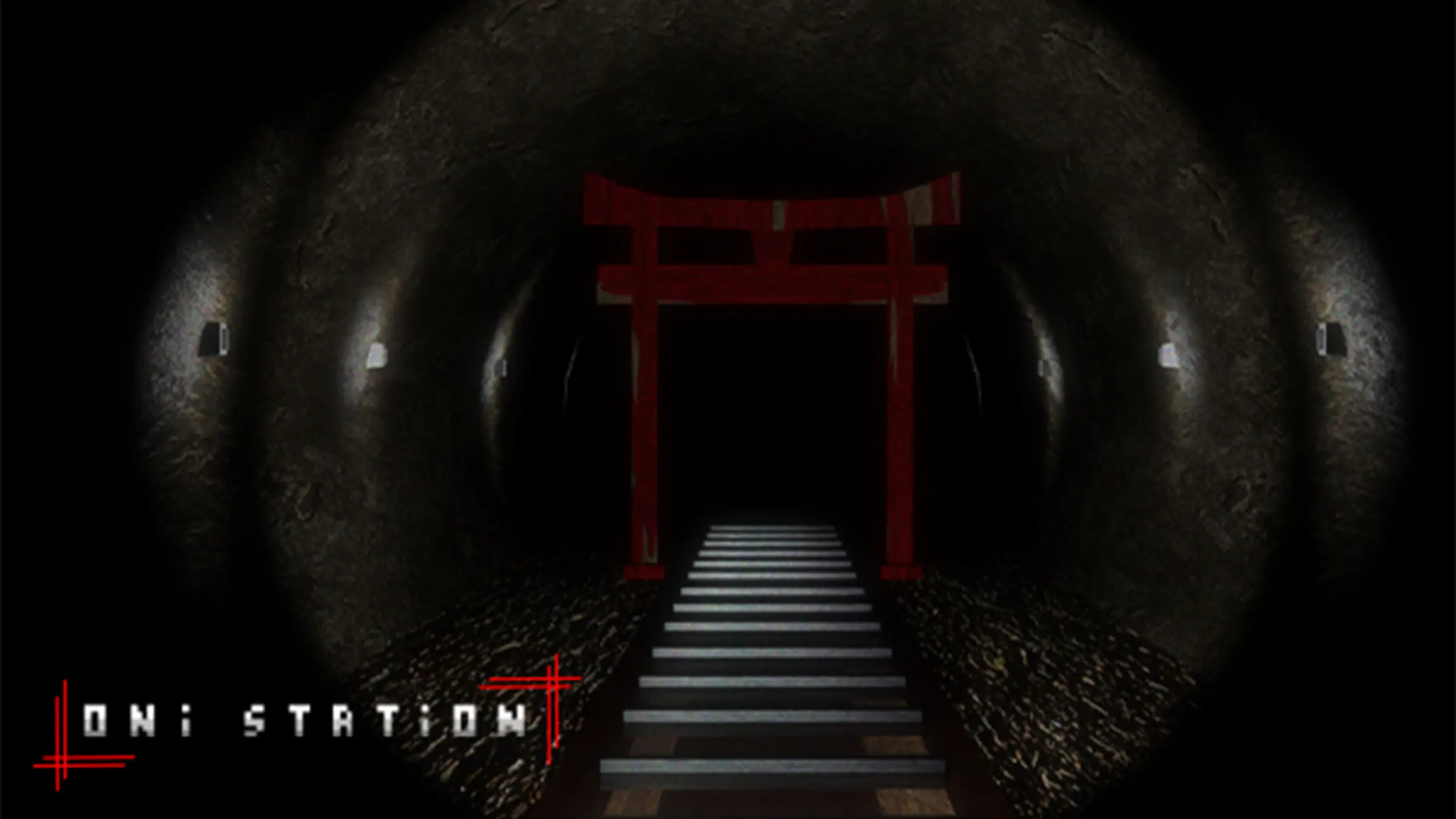
You wake up on a train. You don't know how you got there, you don't know where it's going, and the fuel gauge is already ticking down. That's the entire pitch for Oni Station, and honestly, it's enough. The game launches today on Nintendo Switch from publisher 404 Games, and it's built around one simple, nasty idea: the train has to keep moving, and something is in the dark, waiting for it to stop.
A Train With No Driver and No End of the Line
There's no conductor. There's no map telling you where the tracks lead. Outside the windows is just black, endless and featureless, broken only by the occasional station platform sliding into view. You don't get a say in whether you stop at most of them, but you do get a say in how long you stay, and that decision is where the game lives or dies.
Every station might have fuel, supplies, or some scrap of story you need. Every station might also have nothing, or worse than nothing. The game never tells you which before you step off, so you're always negotiating with your own nerve. Do you search one more room for batteries, or do you get back on the train while you still can?
That tension is really the whole game. There's no combat system to lean on here, no weapon upgrades, no way to fight back against whatever's stalking the cars. Your only tools are your feet, your flashlight, and your judgment, and the game is betting that's scarier than giving you a way to shoot the problem. It mostly works. Without a weapon in your hands, every encounter becomes a question of whether to run, hide, or keep moving and hope the thing loses interest before you do.
Horror That Doesn't Lean on Jump Scares
404 Games describes Oni Station as a tense, atmospheric horror experience, and that framing matters because it tells you what kind of fear this is going for. This isn't a game built around things leaping out of closets. It's closer to a ghost story someone tells you at 1 a.m., the kind that gets under your skin slowly and stays there. Liminal space horror has been having a moment for a few years now, that specific dread of being somewhere that's technically a place but doesn't feel like one, and a moving train with no end destination is about as pure a version of that idea as you can build a whole game around.
One thing worth knowing before you buy: this is a pixel art game, not the moody 3D realism you might be picturing from the screenshots. That's not a knock. Pixel art horror has a long track record of being genuinely unsettling, low-fidelity visuals leave more for your imagination to fill in, and a blurry shape at the end of a dark train car can be scarier than a fully rendered one. Just go in expecting a 2D aesthetic rather than something like a first-person horror walk.
The further into the journey you get, the more the game starts dropping fragments of a story. Who you are, why you're on this train, what's actually following you through the cars. None of it arrives all at once. You piece it together the way you'd piece together a half-remembered dream, which fits the tone the whole game is going for.
A lot of that atmosphere is carried by sound rather than anything you see on screen. 404 Games leans hard on haunting audio design, the kind of environmental noise where you can't always tell if a creak came from the train settling on the tracks or from something a few cars down moving closer. That ambiguity is doing most of the heavy lifting. You spend a good chunk of any session straining to hear what's coming rather than watching for it, which is a much harder kind of dread to shake off once you put the Switch down for the night.
It's worth comparing this to where the genre's been lately. Walking sims and "abandoned place" horror have flooded indie storefronts for years now, and a lot of them coast on vibes alone, a spooky setting with nothing underneath it. Oni Station avoids that trap by giving the atmosphere a mechanical backbone. The dread isn't just decoration, it's tied directly to a resource you're managing in real time. Fuel runs out whether you're scared or not, and that constraint is what keeps the horror from going slack the way it does in games where you can just wander forever with nothing at stake.
No Two Rides Are the Same
Here's the part that gives Oni Station some actual replay value instead of being a one-and-done spook house: every station is procedurally generated. Layouts shift, item placement shifts, what you find and what finds you shifts. Run it twice and you won't get the same train ride.
That also means the game leans into a fail-and-restart loop rather than a single linear campaign you beat once and shelve. Die on the tracks, and you're back at the start for another attempt, hopefully a little wiser about which stations are worth the risk. If you've played a roguelike before, you know this rhythm. Knowledge carries over even when your save doesn't.
404 Games also built in online leaderboards, so once you've survived a run or two, there's a reason to keep going beyond just finishing the story. How far did you make it down the line? How long did you keep the train moving compared to everyone else who tried? It's a small addition, but it's the kind of thing that turns a 45-minute horror game into something people come back to for weeks.
What I appreciate about the leaderboard angle is that it doesn't ask you to be good at a skill-based challenge the way a speedrun leaderboard would. It's measuring patience and risk tolerance instead. The players sitting near the top of the list aren't necessarily the most mechanically skilled, they're the ones who figured out which stations are worth the gamble and which aren't. That's a more interesting thing to compete over than reflexes, and it gives the procedural generation an actual purpose beyond just keeping the visuals fresh between runs.
What's Actually in the Box on Switch
The Switch version is digital-only, and it's light. We're talking about 320MB, the same footprint on both the original Switch and Switch 2 listings, which makes this one of the easier horror games to justify keeping installed permanently instead of shuffling it on and off your SD card.
It's single-player only, no co-op or local multiplayer, and it plays across all three Switch modes: TV, tabletop, and handheld. Save Data Cloud is supported if you've got an active Nintendo Switch Online membership, and the listing supports family group lending, so it's shareable the way most digital Switch titles are these days.
On the ratings side, Oni Station carries an ESRB Teen rating for blood and violence. That's not the gore-soaked end of horror gaming, but it's enough that this isn't one to hand to a younger sibling without checking with a parent first. The store listing also carries the standard photosensitivity warning that shows up on most games built around flickering light and shadow, so if you're prone to seizures, that's worth reading before you dive in. Language support on this release is English only, both American and British, so don't expect localized text if English isn't your first language.
None of this is a budget game pretending to be bigger than it is, either. Oni Station is priced at $2.99 on the Nintendo eShop, and that's currently a sale price running through July 4. A 320MB file size and a tight, focused premise match the price tag. You're not paying for a fifteen-hour campaign you'll never finish. You're paying three dollars for a tight, replayable loop that's built to be picked up in short bursts, which is exactly the kind of game that earns its keep on a system people carry around in a bag.
Why a Small Horror Game Like This Works on Switch
I'll be honest, I wasn't expecting much going in. Indie horror on Switch is a crowded lane, and a lot of it leans on a single gimmick that runs out of steam after twenty minutes. What pulled me in about Oni Station is how well the format fits the platform. A 320MB game that's built for short, tense sessions is basically made for handheld play. You're not committing to a three-hour campaign on the couch. You're committing to one more station, one more risk, played in bed with the lights off, which is honestly the correct way to experience something like this.
The procedural stations mean it doesn't get stale the way a lot of cheap horror titles do once you've memorized where the scares are. The leaderboards give it a reason to stay on your home screen instead of getting buried after a single playthrough. And the whole premise, a train that can't stop, fuel that won't last, a presence that's always somewhere just out of frame, is the kind of simple idea that horror games sometimes forget works best when you don't overcomplicate it.
Oni Station is live now on the Nintendo eShop for $2.99 through July 4, after which the sale price ends. If you've got a Switch and a free evening you don't mind losing some sleep over, this is about as low-cost as horror games get, and it's a fair bet for finding out if you can keep the train moving longer than the last person on the leaderboard.