Most game announcements from the Summer Game Fest cycle get watched once, skimmed in a Reddit thread, and quietly forgotten. Signet City is not doing that. It came out of the PC Gaming Show on June 7 and people are still talking about it a week later, which for a no-release-date narrative RPG from a solo developer is genuinely unusual. The conversations are not all positive. But they are happening, and the ones that are positive are really positive.
Gareth Damian Martin, who makes games under the studio name Jump Over the Age, has built a reputation over the last several years for writing some of the best prose in independent games. In Other Waters, Citizen Sleeper, Citizen Sleeper 2: Starward Vector. Each one landed with critics and found a specific kind of player who reads every line of dialogue rather than skipping it. Signet City is the first new universe Martin has announced since Citizen Sleeper, and the premise is strange enough that it deserves a proper look.
The Setup: You Are Not the Hero. You Are the Parasite.
Signet City is set in a declining coastal city where biological computing has replaced the silicon chip. That premise alone takes a second to sit with. In this world, organic technology grew past its digital counterpart, and the city has been shaped by that fact in ways the game has not fully explained yet. What it has confirmed is the city's state: it is in its final season. Things are ending.
You are a parasite. Born in the brackish waters of the city's bay, you have the ability to inhabit human minds. You do not play a traditional protagonist with a backstory and a mission. You move through the city's population, entering hosts, living behind their eyes, and guiding them through decisions that matter to them and, eventually, to the city itself.
The city is called Signet City. The mushrooms are everywhere. The people are struggling. And you are the strange, barely-understood thing threading through all of it.
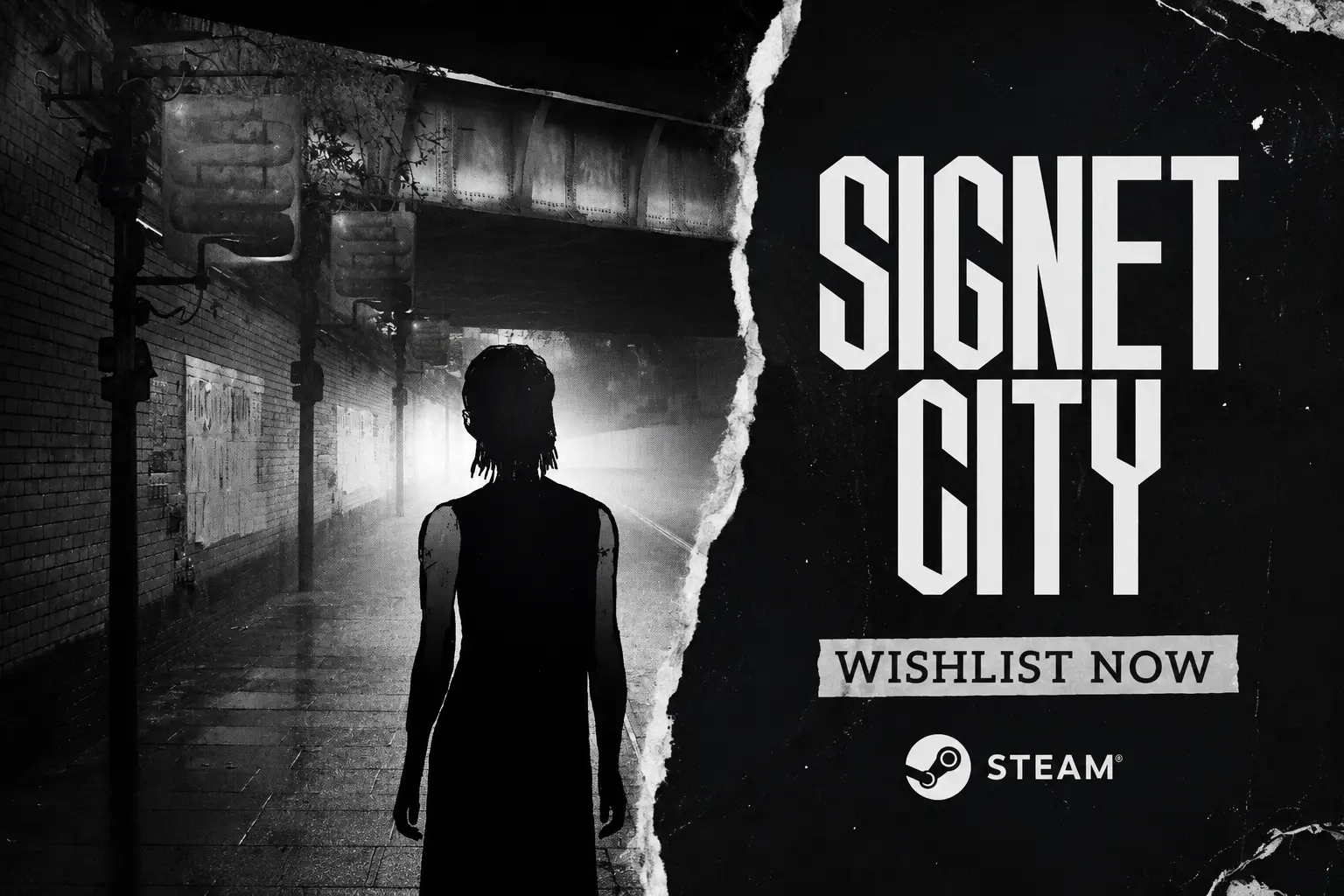
Martin has described the genre as "fungalpunk," which is a word that did not exist before this announcement and now feels inevitable. The reference points are post-punk Britain, weird fiction, and the kind of brutalist architecture that makes a city feel like it has weight. The trailer is all stark monochrome visuals and a track by Irish garage punk band SPRINTS. If you have ever listened to Joy Division and wished someone would make a video game that felt like that, this game seems to know you specifically.
What the Gameplay Actually Looks Like
The announced mechanics pull in a few different directions and work together in a way that is easier to understand once you know the Citizen Sleeper context.
Signet City is a first-person RPG. That is the biggest structural change from Martin's previous work, which used a more detached, illustrated view of its environments. Here, you are behind the eyes of your hosts. Every location in the city, from the stained wallpaper of the squats to the public monuments dotting the skyline, is experienced from that intimate viewpoint. The press materials describe it as creating "a very different kind of intimacy and tension," which is an accurate way to put it. You are not watching someone navigate a dying city. You are inside their head while they do it.
The system underneath is tabletop-inspired, which is also familiar if you have played Citizen Sleeper. There are dice-based checks, but the angle here is different: your host's emotional state influences the odds. A host who is frightened or despairing rolls differently than one who is resolute. That connection between inner state and mechanical outcome is the kind of design decision that sounds clever on paper and tends to feel genuinely meaningful when it works. Martin's track record suggests it will work.
You manage resources, upgrade skills and abilities, and choose paths through the city one day at a time. The hosts change. The parasite persists. What you carry forward from each host, and what you leave behind, is presumably where the game's emotional weight accumulates.
The art direction is its own thing entirely. Martin is drawing all of it personally, which tracks with how Jump Over the Age has always operated. The visual influences are screentoned manga, pen and ink drawing, and black and white photography. The result, from the trailer, looks like nothing else on a release calendar. Engadget described the setting as "mushroom-infested City 17-esque," which is not wrong and also barely covers it.
Who Made This and Why That History Matters
Jump Over the Age is a one-person studio. Gareth Damian Martin writes, designs, and draws. For Signet City, the team expands slightly: Eli Rainsberry handles sound design and composition, and Tom Kitchen joins as environment artist. That is still a very small group making something with obvious ambition.
Martin's credentials are worth knowing because they explain why the reaction to Signet City's announcement landed as hard as it did. In Other Waters won the Jury Prix at IndieCade Europe. Citizen Sleeper was nominated for six BAFTAs. Citizen Sleeper 2: Starward Vector was called "the perfect sequel" by PCGamesN when it released in 2025. The prose across all three games has been singled out by critics as exceptional, which is rare praise for any game and almost unheard of for an independent studio run by one person.
Before game development, Martin wrote criticism for outlets including Eurogamer, Edge, and Rock Paper Shotgun. That background shows in the games. They read like they were made by someone who has spent years thinking seriously about what games can do with text, and then spent a few more years figuring out how to actually do it.
Signet City is Martin's first universe outside of Citizen Sleeper. The previous games were all set in a distant future across space. This one is set in a version of Britain's industrial north in the 1980s, or something very close to it. That shift from science fiction to something grittier and more grounded, mixed with the biological horror of the fungal technology, puts Signet City in a genuinely unusual genre position.
Why the "Fungalpunk" Label Is Actually Doing Work
Genre labels for indie games usually feel like marketing. Fungalpunk is doing something different here.
The 1980s UK setting the game draws from was a decade of genuine upheaval for British cities, particularly in the industrial north. Factory closures, Thatcherite economic policy, communities falling apart around absent industry. The post-punk music that came out of that context, Joy Division, The Fall, The Smiths, was a direct artistic response to exactly that kind of decline. It was music made by people watching their cities slow down and not knowing what came next.
Dropping a fungal parasite and biological computing into that setting is strange, but the strangeness has a logic. The fungus is the weird fiction element that makes the political content stranger and more surreal than a straight historical game would allow. You are not just walking through a declining city as a human observer. You are something that lives inside the city's decline, that feeds off it and is shaped by it. That is a specific perspective on collapse that does not show up in games very often.
The post-punk soundtrack choice for the trailer reinforces this. SPRINTS are not a band name most people know, which is part of the point. The game is not reaching for something familiar. It is reaching for something that fits.
What We Still Do Not Know
The honest answer is: a lot.
There is no release date. Fellow Traveller is listing it as "coming soon" on PC via Steam, GOG, and the Humble Store. No console versions have been announced. The announcement was a cinematic trailer, a fact sheet, and a Steam page. There has been no gameplay footage shown publicly yet. The host-switching mechanic, the scope of the city, the length of the experience, how the dice system actually plays turn by turn: none of that has been demonstrated.
Martin has said there is "plenty more growing beneath the surface," which is either a fungus metaphor or a genuine promise of more announcements coming before release. Probably both.
What we have is a strong premise, a distinctive visual identity, a developer who has earned significant trust from the people who play this kind of game, and a setting that has no real parallel on the current release calendar. That is not nothing. For a narrative RPG announced without a release date, it is actually quite a lot to go on.
Why It Is Worth Watching
The honest reason Signet City is worth tracking is that the developer has not made a bad game yet. Three games across several years, each one praised for exactly the qualities that are hardest to fake: prose, emotional coherence, and worlds that feel like they have internal logic rather than being assembled for visual effect.
The shift to first-person is the biggest unknown. Martin has not worked in this perspective before, and first-person narrative games have a specific set of challenges around pacing and player agency that are different from what Citizen Sleeper required. Whether the intimacy that perspective creates enhances the parasite mechanic or makes it feel disconnected is something no one can know from a trailer.
But the version of this game that works is one of the more interesting ideas in RPG design right now. You are not saving the city. You are not even quite in it, not as a person. You are something stranger, moving through it, learning it from the inside, watching it end. There are not many games that try to make you feel like that, and even fewer that have the writing to back it up.
Signet City has no release date. Wishlist it on Steam and wait. If Martin's previous record means anything, the wait will be worth it.