
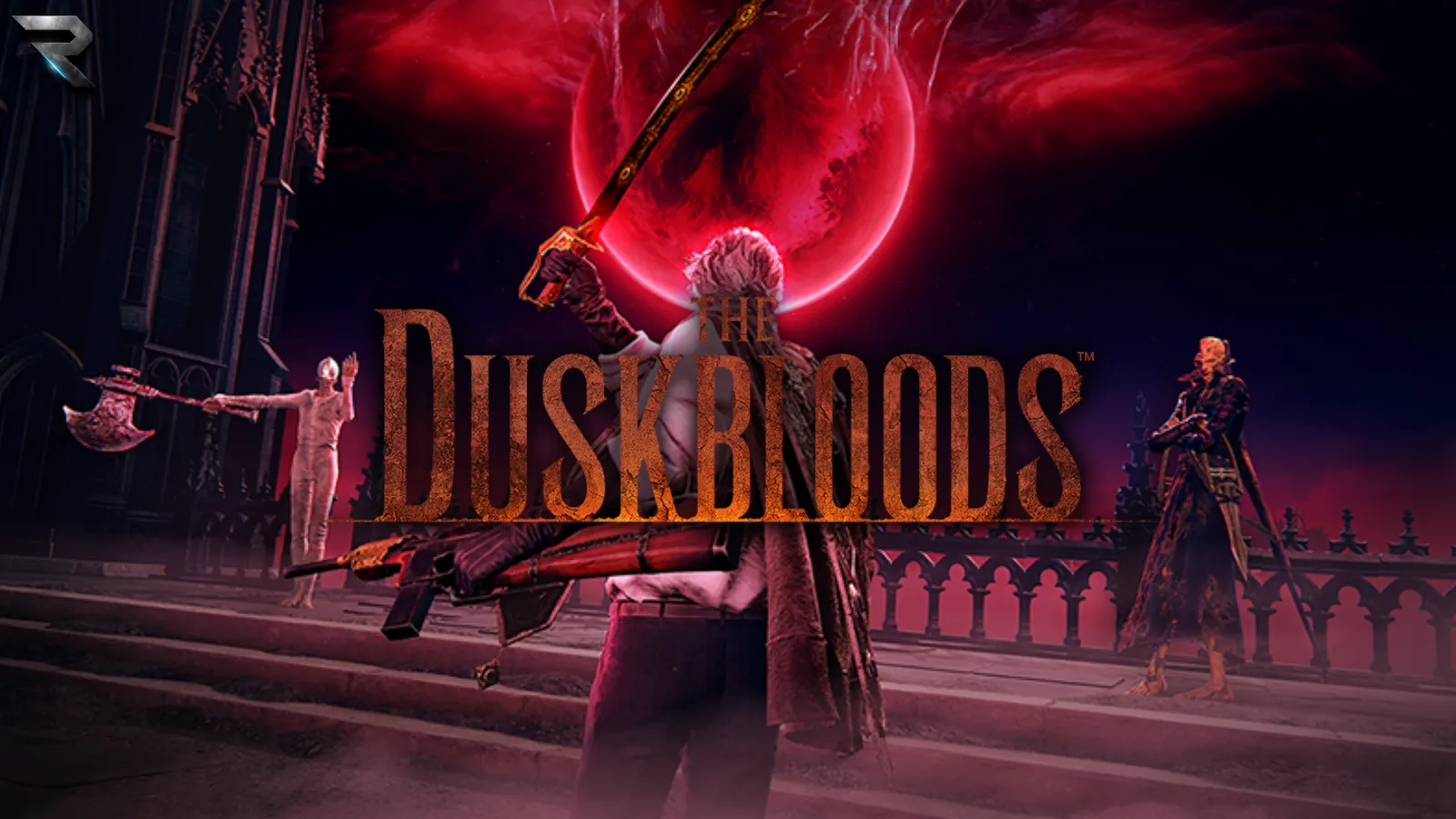
When FromSoftware first showed off its Switch 2 exclusive, the easiest way to describe The Duskbloods was "Souls-style multiplayer, with PvP and PvE." IGN's recent hands-on time with the game, paired with a new interview with FromSoftware president Hidetaka Miyazaki, makes that summary feel thin.
The Duskbloods isn't From's usual combat wearing a multiplayer coat. It's built on a different set of rules entirely, pulling from board games, tabletop RPGs, competitive multiplayer design and, oddly enough, a few ideas that feel more at home in a Nintendo party game.
What's more telling is why it exists at all. Miyazaki's explanation isn't about chasing a trend. The studio had accumulated ideas over time that never quite fit its single-player games, and The Duskbloods turned into the place those ideas could finally go.
It's Not Really About Killing Other Players
IGN's hands-on write-up lays out how a match actually plays. Eight players compete across several phases, but the goal isn't to hunt everyone else down. Points, called Virtue, come from completing objectives, fighting enemies and interacting with the map itself. PvP matters more as the match goes on, especially near Ritual areas, where taking down another player pays off in extra points.
The leaderboard determines who advances, eventually narrowing the field down to the players who reach the final phase.
That structure changes what PvP means in practice. Attacking every player you see isn't automatically the right call. Sometimes cooperating, ignoring someone entirely or sticking to PvE objectives is the smarter play, which makes the whole thing feel less like a deathmatch and more like a game where everyone is constantly weighing how much they want to get involved with each other.
Board Games Shaped the Rules More Than You'd Expect
Miyazaki told IGN that board games directly influenced some of the game's core systems. Virtue is the clearest example, working a lot like victory points in a board game, where combat is one route to success rather than the only one.
Then there's the Sigil system, which Miyazaki compared to mechanics found in tabletop RPGs. Instead of a straightforward loadout of weapons and abilities, Sigils give players another layer to shape how their character interacts with the game's rules.
That's part of why The Duskbloods resists a clean label. It has Souls-style combat, PvE, PvP, elimination mechanics, temporary alliances, character-specific strategy, and random events scattered across a large map, and no single one of those descriptions covers what it's actually trying to be. IGN's own podcast discussion reached for comparisons like Mario Party and Kirby Air Ride's City Trial while trying to pin down the feeling of playing it for the first time, which says a lot on its own.
Nintendo's Fingerprints Go Beyond the Switch 2 Exclusivity
The obvious headline is that this is a Switch 2 exclusive. The more interesting detail from Miyazaki's interview is what Nintendo actually contributed to development.
FromSoftware's games have a reputation for dropping players into complicated worlds and letting them figure it out. The Duskbloods, with systems this layered, apparently needed a different approach, and Nintendo's feedback reportedly helped shape how those mechanics get introduced and explained.
That could end up being one of the bigger differences between this game and the rest of the studio's catalogue. A multiplayer match falls apart if one player understands Virtue points, another has no idea what the objectives are, and a third doesn't know when PvP starts mattering, especially with seven other people learning at the same time. IGN's hands-on coverage specifically called out the extensive tutorial and how new mechanics keep surfacing even after the basics click.
Nintendo, in other words, may not just be lending the hardware. It sounds like the partnership is helping FromSoftware adapt its usual opacity to a game where actually understanding the rules matters a lot more.
Also Read: Gamescom 2026: Dates, Opening Night Live and Where to Watch
Keeping a Playerbase Alive Might Be the Real Test
None of this experimentation solves the problem that comes after launch: an online-only multiplayer game lives or dies by its community, in a way FromSoftware's single-player games never had to worry about.
A player who loses to an AI boss can eventually learn its patterns and come back stronger. A player who steps away from a competitive online game for a few months often returns to find everyone else has gotten better without them, and that gap came up repeatedly in IGN's discussion of the game.
Miyazaki addressed it directly, saying ranked matchmaking is planned to keep highly skilled players together while giving newcomers room to learn against people closer to their own level. FromSoftware is also considering ways to create a more positive relationship between veteran and new players, including potential Alliance systems that could connect newcomers with experienced players.
That's a notable shift for a studio whose games have leaned hard into throwing players into the deep end. The Duskbloods needs its community to stick around long enough for the complexity to become the appeal rather than the reason people bounce off it.
You Don't Have to Be Good at PvP to Enjoy This
One of the more surprising parts of Miyazaki's comments is that he isn't building this exclusively for hardcore PvP players. He's said plainly that he isn't especially good at high-intensity action games or PvP, and that perspective actually informs how he approaches the game's design. Miyazaki said he starts by asking what systems he would enjoy as someone who isn't particularly interested in intense PvP.
The full release is expected to include character customization, story content, and systems that let players lean into PvE or cooperative play instead of chasing kills. Even making it to the later stages of a match without winning is supposed to carry some value, with progression and story elements giving players a reason to keep going.
The result is a competitive game that doesn't want competition to be the whole point. You can fight, cooperate, chase Virtue points, experiment with your character build, or just explore the map, and if the systems hold up, you can still uncover more of the world even after someone else wins the match. That's a very different pitch than simply telling players to get better at PvP.
FromSoftware Isn't Walking Away From Single-Player Games
For anyone worried that The Duskbloods signals a permanent shift in direction, Miyazaki pushed back on that idea directly in the IGN interview. Elden Ring Nightreign and The Duskbloods aren't part of some grand plan to abandon single-player development, he said. The two projects simply came together around the same time, with The Duskbloods growing out of ideas that happened to suit multiplayer.
Miyazaki even suggested that spending so much time on a multiplayer project has made him want to get back to single-player work. Framed that way, The Duskbloods isn't FromSoftware becoming something new. It's the studio taking its existing design philosophy and seeing what happens when those ideas get a multiplayer sandbox to play in.
The Bottom Line
The Duskbloods doesn't look like FromSoftware studying the multiplayer market and building the safest version of what's already popular. It looks like the studio gathering a pile of ideas that didn't fit anywhere else and building an entire game around them, Souls DNA without being another Souls game, PvP without being a straightforward competitive fighter, PvE without being a standard co-op experience.
That combination could make the game a tough sell to anyone who wants something instantly familiar. It might also be exactly why it works. FromSoftware has a track record of taking established ideas and making something distinct out of them, and with The Duskbloods, the rules themselves have become part of the experiment. After hearing more about how those rules fit together, this stopped looking like "FromSoftware's multiplayer Souls game" and started looking like something a lot stranger, which might turn out to be its biggest strength.