
PlayStation's most recent State of Play gave Phantom Blade Zero a slot it hasn't really had before: no cinematic trailer, no music-video pacing, just a straight look at how the game plays. S-Game walked through combat, the Wulin world, the weapon system, difficulty options and the design thinking behind its Kungfupunk aesthetic, and the result is a much clearer picture of what this game is actually trying to be.
There's a lot to get through. Soul has more than 30 primary weapons, 25 secondary Phantom Edges, three difficulty modes with wildly different rules, and a story hook that S-Game has turned into an actual gameplay system. Here's what the deep dive covered, according to the PlayStation Blog and the presentation itself.
Soul Only Has 66 Days Left
Soul used to be one of the most feared blades in his order. Then he was framed for killing his own leader, cut off from the people he once fought beside, and forced into a final duel with Zuoshang, his childhood blood brother. The fight ends with a blade through Soul's heart.
He doesn't stay dead. A healer called the Flesh Sculptor brings him back, but the revival comes at a cost: Soul has exactly 66 days left to live. Everything that follows, tracking down a cure, untangling the betrayal, uncovering a threat big enough to touch the whole Wulin, has to happen inside that window. S-Game didn't leave that premise as flavor text either. It built an entire mode around the countdown, which we'll get to further down.
Inside the Wulin
The Wulin is the martial underworld Soul has to navigate, and S-Game describes it as a dark Wuxia setting shaped by old grudges, shifting alliances and factions that have stopped trusting each other. Some of the people Soul meets are still holding onto their codes. Others gave those codes up a long time ago.
Pangzhen, one of the key locations shown, is where a lot of that tension plays out. Martial artists from across the Wulin have gathered there, and the town is full of rival factions and hidden motives. Side quests matter here too. The PlayStation Blog notes that talking to citizens and finishing certain optional content can open new story paths and fill in more of the Wulin's background, which suggests the side content isn't just filler dropped around the map.
Not Open World, Not Fully Linear Either
S-Game was specific about what Phantom Blade Zero isn't. It's not an open-world game, and it's not a straightforward linear one either. Instead, the world is built out of handcrafted areas meant for exploration, and the deep dive showed a good spread of them: villages, valleys, a bandit-controlled stretch of land, an abandoned warehouse full of hanging puppets, and a steam-powered iron tower built for some kind of experiment. At one point Soul crosses a large lake on an unusual high-speed vessel.
Instead of a standard map marker system, the game uses eight hand-painted, Chinese ink-wash maps that give a rough sense of direction without spelling everything out. Once an area is discovered, players can use bales to fast travel between connected locations, picking up hidden enemies, treasures and story clues along the way.
What Kungfupunk Actually Means
If there's one word S-Game keeps coming back to for this game, it's Kungfupunk, its own term for blending traditional Chinese martial arts and folk culture with steampunk machinery and body modification. It's why Phantom Blade Zero doesn't look like a typical Wuxia game. Alongside the martial arts choreography, the deep dive showed steam-powered machinery, an enormous iron tower and other industrial builds that clash with the game's more traditional influences on purpose.
Also Read: Phantom Blade Zero's 11-Minute Gameplay Trailer Details Combat and Story
According to S-Game, the goal is to pull from authentic Chinese folk arts and martial arts culture without presenting them the way a historical drama would. Instead, those traditions get pushed into something darker and more mechanically extreme, and that friction between old and industrial is a big part of what makes the game's world stand out.
30-Plus Weapons Built for Different Fights
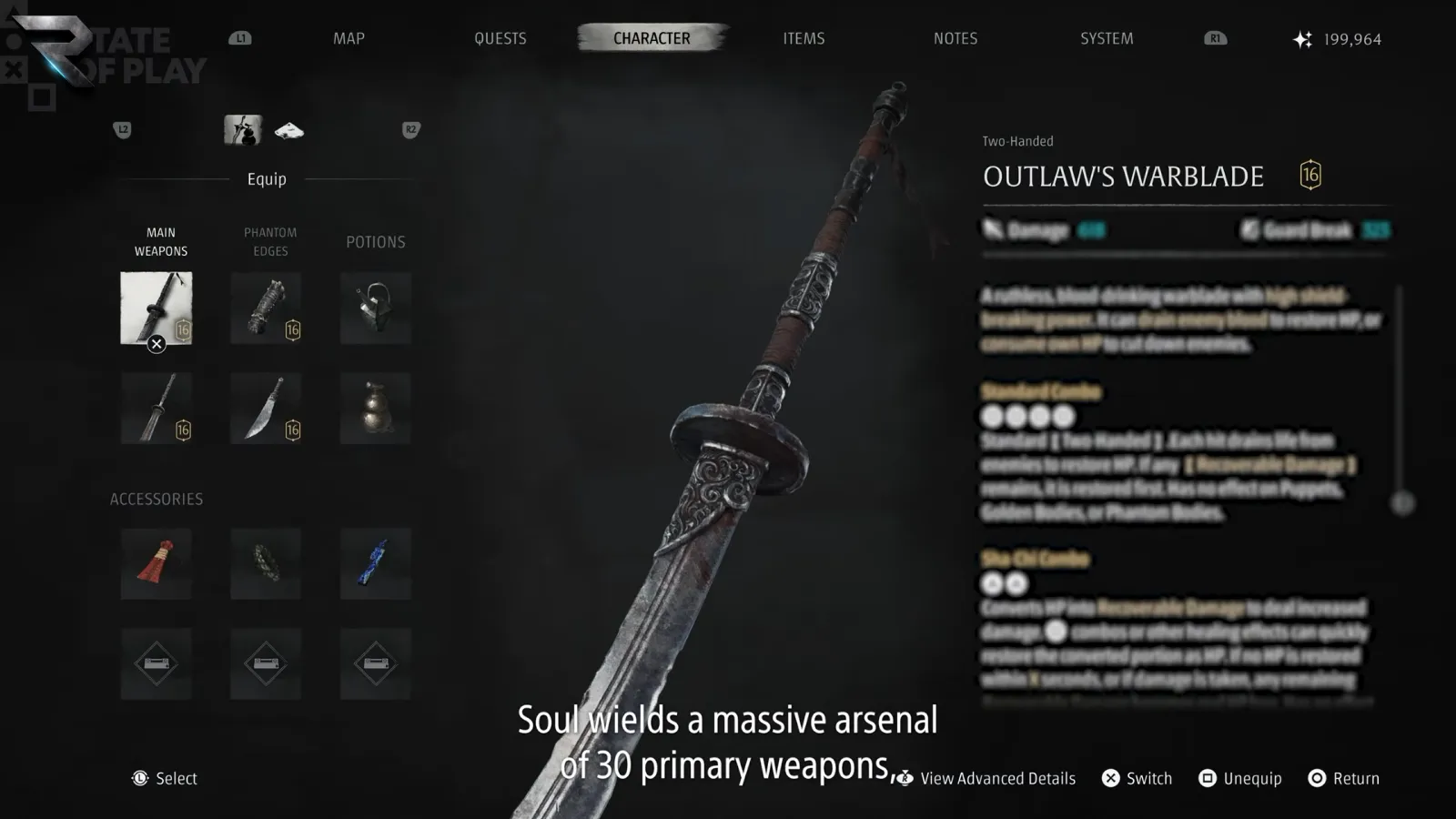
Combat is where most of the deep dive's time went, and the arsenal is the centerpiece. Soul has access to more than 30 primary weapons and 25 secondary Phantom Edges, and none of it is just palette-swapped versions of the same moveset. Each weapon comes with its own forms and techniques.
A few examples stood out. The Drunken Sword style builds up drunken energy that boosts Soul's evasiveness while giving his movement a staggering, off-balance look. The White Serpent and Crimson Viper work as a pair, with the White Serpent's length letting Soul fling the Crimson Viper out for ranged hits. The Soft Snake's flexible blade can coil around an opponent's guard and even cut through attacks coming in mid-air.
Not everything calls for speed. Heavier enemies with strong defenses push players toward iron fists and hammers instead, and some weapons are built for specific situations entirely. The Tiger Cannon can wipe out distant enemy formations in one shot and set rushing enemies on fire, while the flame-based Flaming Mane is aimed at groups of enemies like packs of dogs. The message from S-Game is pretty clear: this isn't a game built around picking one sword and sticking with it.
Reforging Talisman Removes the Risk of Experimenting
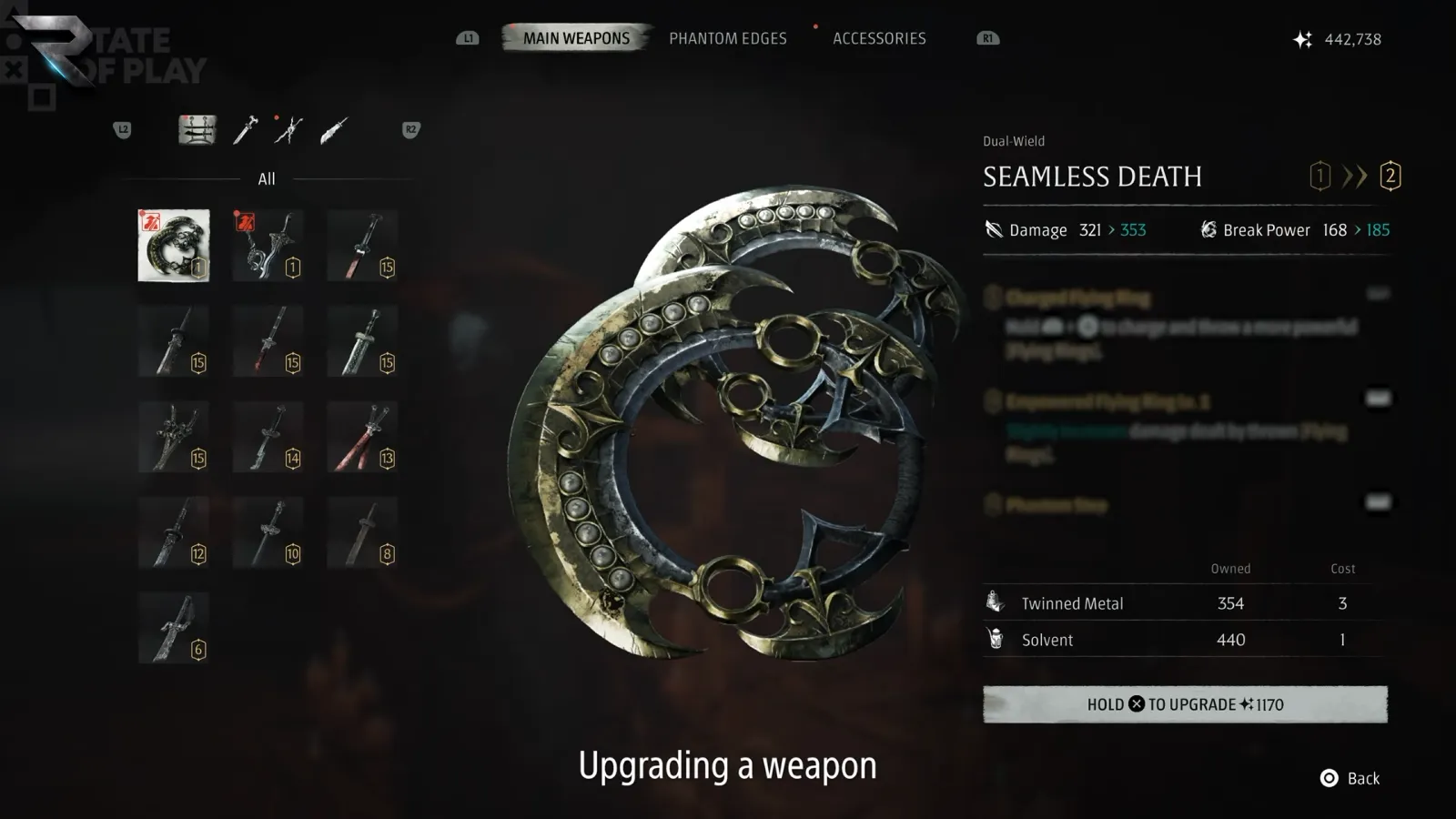
Weapon progression goes past raw damage numbers too. Upgrading a weapon unlocks new forms and techniques specific to it, which gives each one its own identity as you level it up. The bigger deal is what happens if you upgrade the wrong one.
The Reforging Talisman lets Soul reset a weapon's level, get back everything invested into it, and move those materials straight into a different weapon. Both S-Game and the PlayStation Blog describe it the same way, as a system built to let players reforge and reinvest without losing progress. With an arsenal this large, that safety net matters. It means trying something new doesn't carry the fear of falling behind if it turns out not to be your favorite.
Three Difficulty Modes, Three Different Games
Phantom Blade Zero splits its difficulty into three modes that change more than just enemy damage. Wayfarer is the accessible, cinematic option, built for players who want to feel like a kung fu master without needing to master every mechanic first.
Hellwalker is the opposite end. S-Game leaned on more traditional fighting-game mechanics here, and bosses stop following fixed patterns. According to the presentation, they react to Soul's spacing, punish missed attacks and adapt to how the player fights over time, which makes Hellwalker sound less like a harder version of the same fights and more like bosses actually learning from you mid-battle.
66 Days Mode Turns the Story Into a Threat
Then there's 66 Days mode, which takes Soul's countdown from the story and makes it a real gameplay clock. It runs on top of Hellwalker's difficulty, so every fight is already hard, and every defeat eats into the time Soul has left. If the countdown hits zero, Soul dies permanently.
It's the most punishing option S-Game showed off, and it turns the game's central premise into something players actually have to manage rather than just read about in cutscenes. For anyone who likes challenge runs or high-stakes permadeath, this is probably the mode worth watching.
Donnie Yen's Role Goes Beyond a Cameo
Donnie Yen's involvement in Phantom Blade Zero is bigger than a name on the box. He's the game's Creative Consultant, and he also plays Mó Yuan, a formidable martial arts master, using his own facial capture and motion capture for the performance.
The PlayStation Blog notes that Yen has also given creative input aimed at capturing the feel of kung fu cinema throughout the game, and during the presentation he described Phantom Blade Zero as a Wuxia world built on old grudges, shifting alliances and confrontations that shape its legends. Players will run into Mó Yuan at some point during the story, though S-Game kept the details of that meeting under wraps for now.
Phantom Blade Zero Release Date
Phantom Blade Zero is scheduled to launch on October 29, 2026, for PlayStation 5.
What this State of Play made clear is how deliberately all of Phantom Blade Zero's pieces connect. The story gives Soul a reason to keep moving, the handcrafted Wulin gives him somewhere worth exploring, the weapon arsenal gives players room to experiment without punishment, and the three difficulty modes decide how far anyone wants to push that combat. All of it sits inside a Kungfupunk world where traditional martial arts collide with steampunk machinery, and a 66-day clock that never really stops ticking.
The Bottom Line
PlayStation's latest State of Play gave Phantom Blade Zero its most detailed gameplay breakdown yet, covering more than 30 primary weapons, 25 Phantom Edges, the Reforging Talisman progression system, three difficulty modes and the punishing 66 Days permadeath mode built around Soul's countdown. Donnie Yen's role as Creative Consultant and as Mó Yuan was also detailed further, alongside a closer look at the game's handcrafted Wulin world and its Kungfupunk aesthetic.
Phantom Blade Zero launches October 29, 2026, on PlayStation 5.