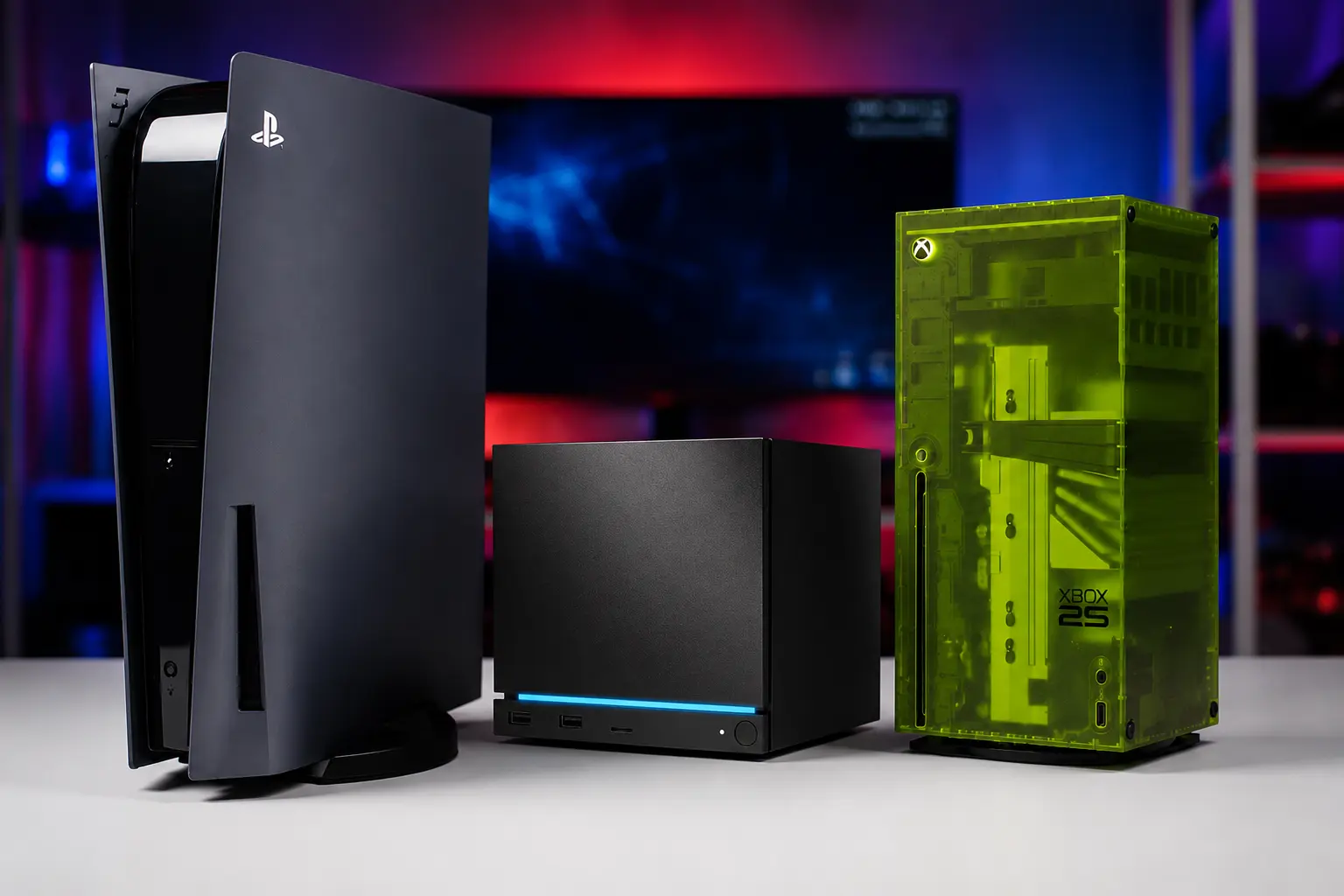

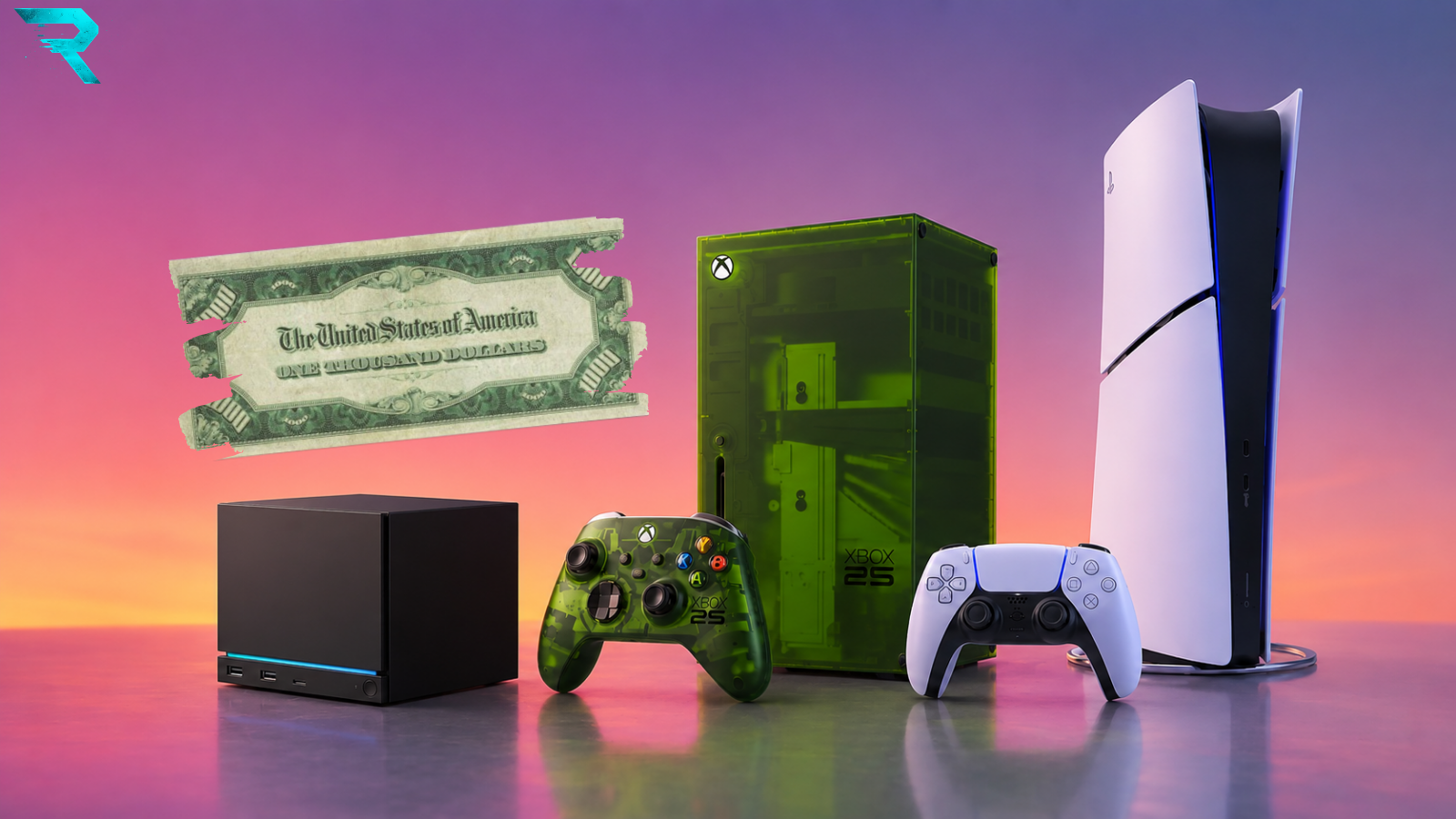
It started with Microsoft. On June 25, Xbox announced that the Series X is jumping from $649.99 to $799.99 and the Series S from $399.99 to $499.99, effective August 1. It's the third Xbox price increase since last year, and Microsoft's reasoning was blunt: storage and memory components have already gotten 2.5 times more expensive, and the company expects that to roughly double again by fall 2027.
Then came Valve. The Steam Machine, the living-room PC that's been rumored for years, finally got real pricing on June 22: $1,049 for the base 512GB model, $1,349 for 2TB, and more if you want a controller bundled in. Valve didn't sugarcoat it either, telling buyers directly that the original target price for the machine "is no longer viable" given what's happened to component costs over the past year.
And now PS6 analysts are openly using the word "inevitable." Speaking to GamesIndustry.biz this week, Aldora CEO Joost van Dreunen said flatly that $1,000 is "the floor" for whatever Sony releases next, whenever that ends up being. Newzoo's Emmanuel Rosier pointed out that the PS5 Pro is already sitting at $899.99 after two price hikes in a year, so the gap to four figures isn't exactly a leap anymore.
Three different companies, three different platforms, one number showing up again and again: $1,000.
Why This Is Happening Now, Not Five Years From Now
None of this is really about any single console maker making a bad call. It's a supply chain problem that happens to be landing on gaming hardware especially hard.
The short version: AI companies need enormous amounts of memory and storage to build out data centers, and they're willing to pay far more for it than console makers ever have. Samsung, SK Hynix, and Micron, the three companies that make most of the world's RAM and NAND flash, have shifted production toward that more profitable buyer. The memory makers have effectively stopped designing for everyday gamers and started designing for hyperscalers instead.
Micron has reportedly locked in historically high memory prices for the next five years. That's not a temporary spike that fixes itself by next Black Friday. It's a new baseline.
Consoles get hit harder than most other electronics because of how the business model works. Phones and laptops are sold for a profit. Consoles, traditionally, are sold at a loss or close to it, with the platform holder making its money back on game sales and subscriptions over years. Xbox said as much directly in its own price hike announcement: consoles are "typically not sold at a profit, but instead for less than they cost to make." When the parts get more expensive and you're already selling under cost, you either raise the price, eat a bigger loss, or shrink the spec sheet. Right now, every major hardware maker is choosing some combination of the first option and pushing the next generation further out.
What Each Company Is Actually Up Against
Xbox's situation is the clearest because Microsoft has already acted. This is the third Xbox Series price increase since 2025, not the first, and the company is also discontinuing the 2TB Series X model entirely rather than try to price it sensibly. To soften the blow, Microsoft is rolling out buy now, pay later financing through its own stores, 0% APR options through Amazon for up to 12 months, and an expanded refurbished and trade-in program. Those are real programs, not just a press release trying to look generous, but they're also a tell. You don't build out financing infrastructure for a console unless you're worried people can't afford the sticker price anymore.
The Steam Machine is the most interesting case because Valve doesn't subsidize hardware the way Sony and Microsoft do. It's not trying to recoup the cost through a years-long ecosystem of game sales the way a traditional console maker is, since most Steam Machine buyers already own a Steam library. That means the retail price is closer to the actual cost of the parts, with less room for Valve to absorb the hit quietly. When a company with that pricing model lands at $1,049, it's a fairly honest signal of where component costs actually sit right now, stripped of the usual subsidy games.
PS6 is the one nobody has official numbers for yet, which is exactly why the speculation has gotten so loud. Sony has already raised current-gen prices once this year, pushing the PS5 Pro to $899.99, and Sony's own executives have been cagey on earnings calls about when the PS6 is even coming, let alone what it'll cost. Analyst estimates range from a relatively optimistic $749 (mostly from leaker Moore's Law Is Dead, who thinks the $1,000-plus predictions are overblown) to van Dreunen's case for four figures as the starting point. The disagreement itself tells you something: when serious analysts can't agree on whether the next PlayStation lands at $750 or north of $1,000, the underlying cost structure is genuinely unstable, not just being talked up for clicks.
Xbox's still-unannounced Project Helix sits somewhere in this mess too, expected to be a higher-end, more PC-like machine that multiple analysts think will land above $1,000 by default, given that it's being built around the same component pool as everything else.
Why This Actually Matters for Players
Strip away the brand names and the pattern is the same everywhere: a console generation that used to start around $400 to $500 is now starting conversations at $1,000, and it's happening because of a market that has nothing to do with gaming. The people buying up RAM and storage right now aren't gamers. They're hyperscalers building data centers for AI workloads, and they can pay prices that make console margins look like rounding errors by comparison.
That changes what "affordable gaming" even means going forward. For two decades, the console pitch was straightforward: spend a few hundred dollars once, then buy games. That math is what made consoles the accessible option compared to PC gaming, which has always required a bigger upfront investment for serious hardware. If a console now costs what a decent gaming PC used to cost, the entire reason consoles existed as the budget-friendly choice starts to wobble.
It also means the people most likely to get squeezed out aren't hardcore players who'll find the money regardless. It's casual buyers, families buying a console for the household, and anyone on a tight budget who used to be able to get into the hobby for $400. Microsoft's financing pushes and trade-in programs exist because that group is the one getting hit hardest, and it's also the group console makers have always relied on to keep the audience bigger than just the enthusiasts.
Where This Goes From Here
Some of the analysts quoted this week think the worst case won't actually happen. Mat Piscatella at Circana says $1,000 consoles aren't a sure thing, just "possibly, even likely." Moore's Law Is Dead is still betting on something closer to $749 for the PS6 if Sony manages its component sourcing well. Micron's five-year price lock-in could turn out to be a ceiling that eventually comes down as new fabs come online, assuming AI demand for memory eventually cools off or production catches up.
But nobody serious is predicting a return to $400 consoles anytime soon. The realistic range under discussion has shifted from whether prices go up to how far past $1,000 they end up landing. That's the real story here, more than any single price tag. The Xbox hike, the Steam Machine reveal, and the PS6 chatter aren't three unrelated headlines. They're the same supply chain problem showing up at three different companies within the same two weeks, and it's probably not finished. Expect this conversation to flare up hard again the moment Sony or Microsoft puts an actual number next to PS6 or Project Helix, because right now everyone is still just guessing at how bad it'll be.