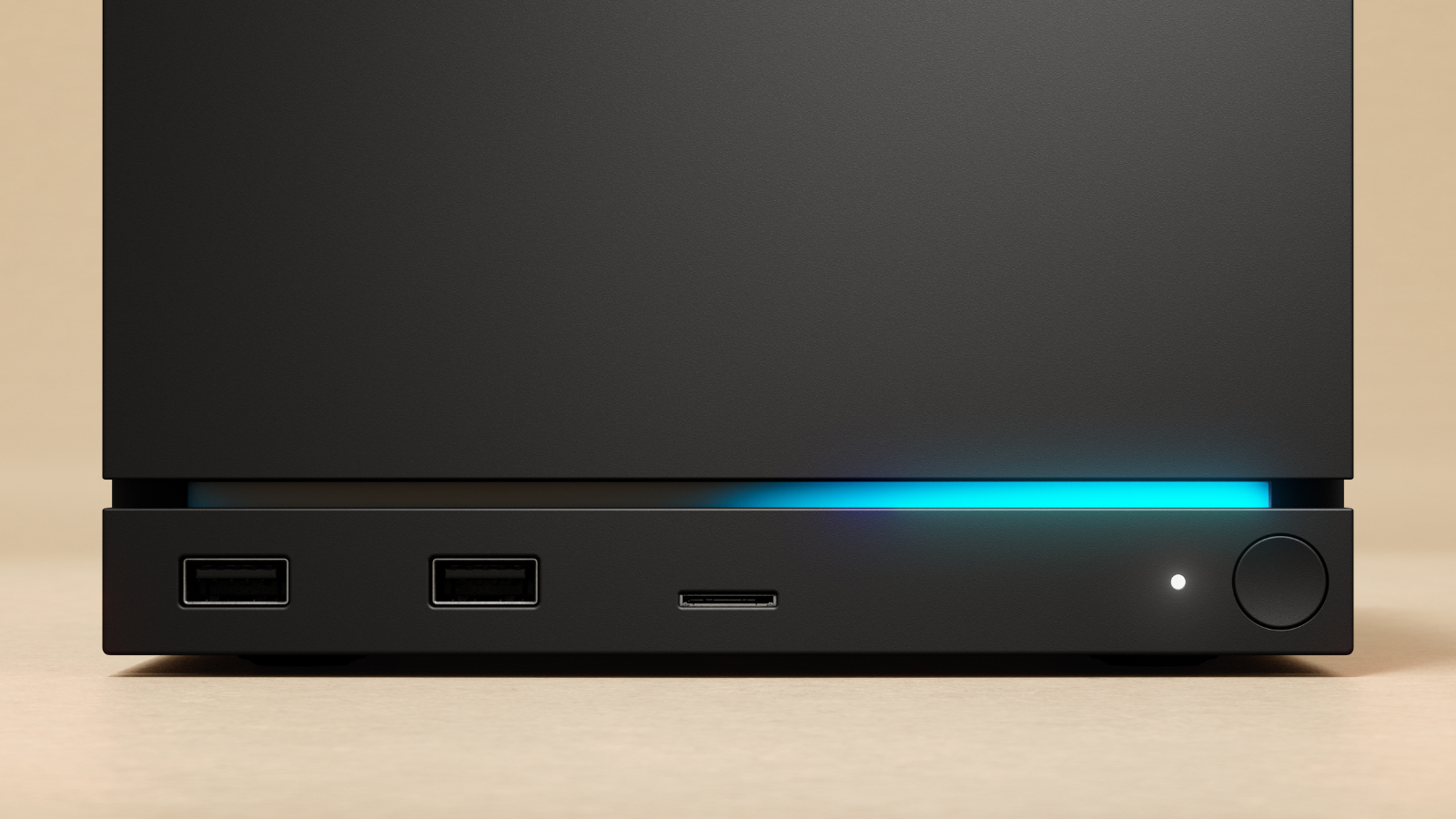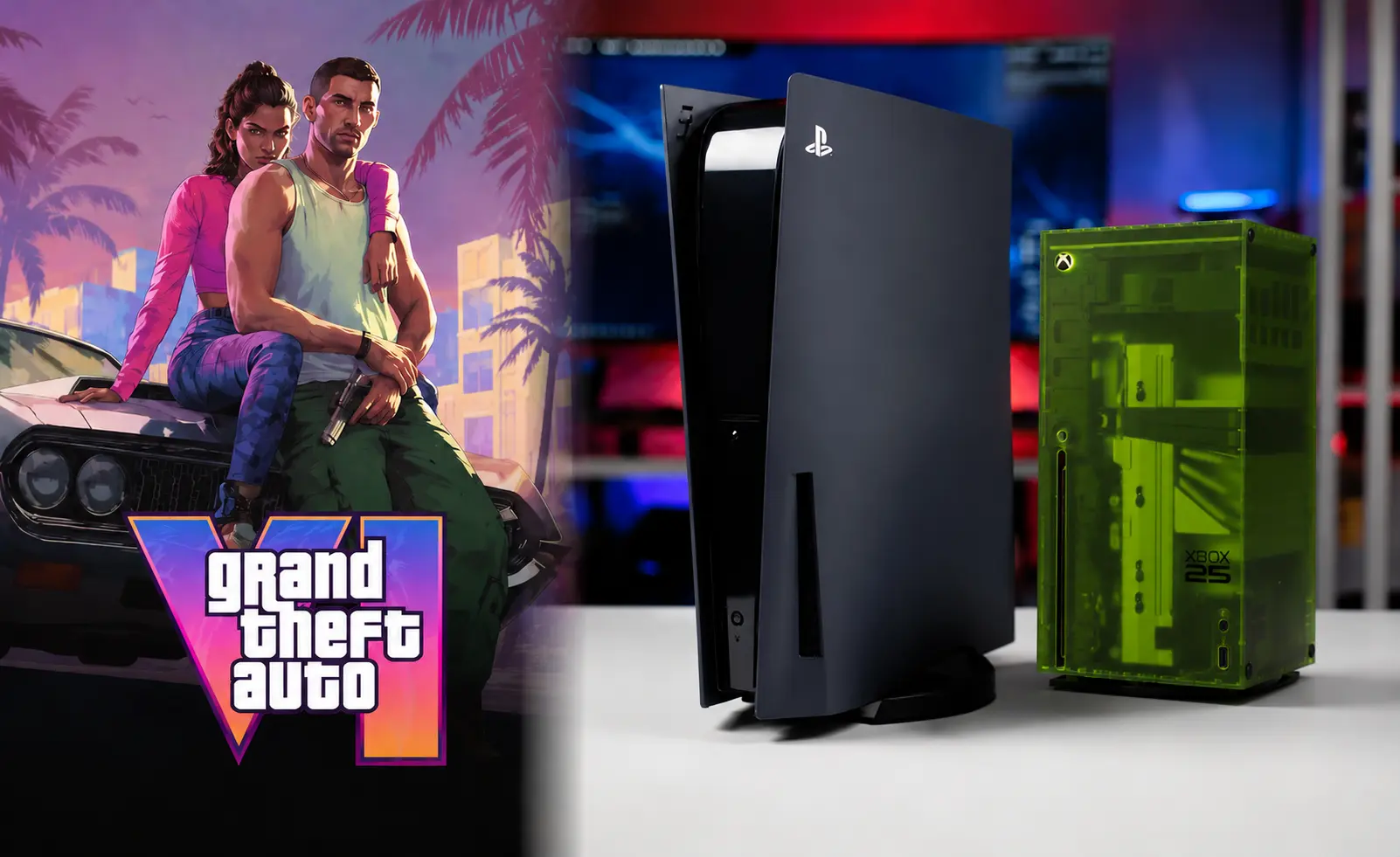

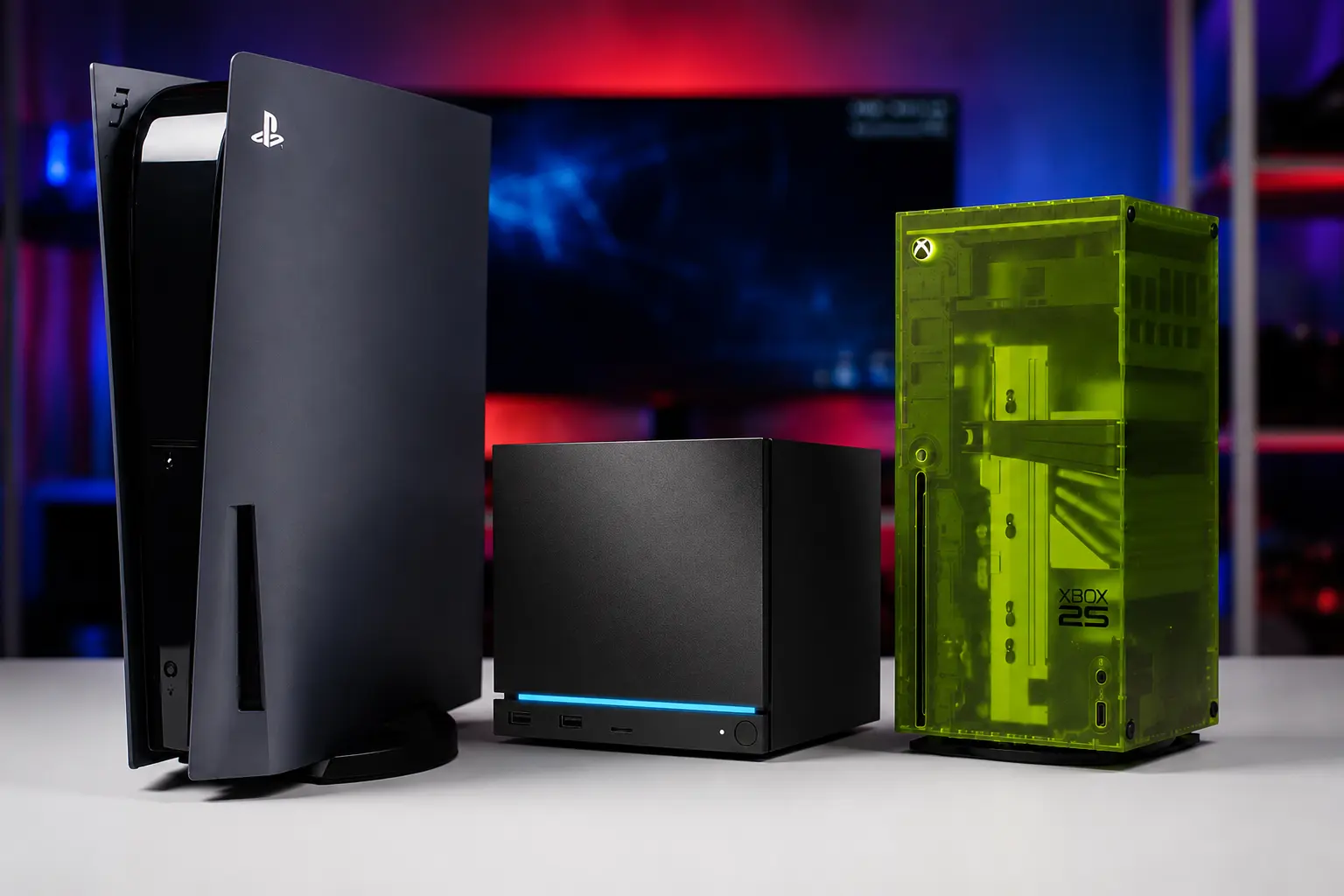
Valve published a pricing explanation alongside the Steam Machine launch announcement that is worth reading in full, because it does not read like standard PR. The company said it began sourcing components in 2023 with a solid understanding of how hardware costs tend to move, built on years of data showing PC component prices generally fall over time as new technology arrives. Then it said, plainly, that the past year changed that understanding "quickly and significantly," and that "our original goal for the price of Steam Machine is no longer viable."
That is a company telling you, in its own words, that the plan broke. Not because of poor planning, not because of margin decisions, but because the external environment moved faster and further than anyone building consumer hardware anticipated. The Steam Machine lands at $1,049 because of what happened to RAM and storage between 2023 and today.
PS6 and next-gen Xbox are approximately two years out. They are being designed and their component supply chains are being negotiated right now, in this same environment. The Steam Machine is not a perfect preview of what those consoles will cost. But it is the clearest real-world data point anyone has about what happens when you try to bring high-end gaming hardware to market while the memory crisis is running.
What Valve Actually Said About Pricing
The official Steam Machine launch FAQ is unusually direct about the mechanics of the pricing problem. Valve started sourcing components in 2023, when the expectation was reasonable: PC hardware prices tend to fall as generations turn over. That model held for decades and informed how the company thought about where the Steam Machine could realistically land on store shelves.
What Valve did not anticipate, and what nobody in consumer electronics fully anticipated, was the scale and speed of the AI infrastructure buildout soaking up manufacturing capacity that used to supply gaming hardware. RAM and storage are the most visible casualties. The prices Valve is charging today "reflect the price of the components as we've secured them over the past 6 months," which is a significant tell. Six months of component purchasing at crisis prices is what produced a $1,049 base configuration.
Valve also noted that price was not the only casualty. Availability took a hit too. There were periods during production where some components were "altogether unavailable to purchase at any price." That is why the launch is running on a randomized reservation system that closes June 25, with the first purchase emails going out June 29 and the expectation that units will continue shipping throughout the rest of the year. Most people who sign up now will be on a waitlist, not in the purchase queue. The production run is limited by what Valve could actually secure.
How the Reservation System Works
The reservation approach is worth explaining, because it also reflects the broader supply picture. When the Steam Controller launched earlier this year, Valve underestimated demand and the purchase window turned into a bot-and-reseller mess. The company did not want to repeat that with hardware costing over a thousand dollars.
Instead of a first-come-first-served launch, Valve is accepting signups through June 25 and then running a one-time randomization to determine queue order. There is no advantage to signing up early. A Steam account in good standing, a purchase on Steam made before April 27, 2026, and one signup per household are the only requirements. Regional lists are separated across North America, UK/EU, and Australia.
If you land in the reservation queue, a Steam Machine is held for you and Valve will email you when it is ready to purchase. You then have 72 hours to complete the transaction before your spot moves to the next person. If you land on the waitlist, you stay there for future production runs, in the order you were placed.
The fact that Valve built this much infrastructure around managing limited supply is its own signal. This is not a device where Valve is confident about meeting demand. It is a device where they are trying to distribute constrained supply as fairly as possible while the component market remains unpredictable.
Why Valve Explicitly Rejected the Console Model
One section of the Steam FAQ is particularly useful for thinking about what this means for Sony and Microsoft. Valve was asked directly whether the Steam Machine is a console. The answer was no, and the reasoning matters.
Valve's position is that the traditional console model, selling hardware at a loss and recovering revenue through subscriptions and locked-in software sales, can make sense for a single company in the short term but is worse for customers over the long run. They explicitly said they do not want to sell at a loss. The Steam Machine is priced at or near component cost because Valve believes PC gaming's open ecosystem is the right model, and that model requires hardware to pay for itself without software subsidies.
That philosophy produced a $1,049 box. Sony and Microsoft use the opposite philosophy, and that is what has historically produced $499 console launches. The question the current component crisis raises is how long the subsidy model can hold when the parts needed to build next-generation hardware are this expensive.
Phil Spencer confirmed publicly in 2022 that Microsoft subsidizes each Xbox by $100 to $200 at launch, betting that component costs will fall over the console lifecycle and allow recovery through Game Pass and game sales. That model requires costs to come down. An internal Xbox memo confirmed in June 2026 warned that storage costs have quadrupled since fall 2025 and could reach five times pre-shortage levels by the 2027 holiday season. That is the window when next-gen consoles are expected to launch. The subsidy model is being stress-tested by a shortage that shows no sign of easing on schedule.
The Memory Crisis Is Not a Temporary Blip
The component situation behind the Steam Machine's price is worth understanding at a structural level, because the gaming coverage of it tends to flatten what is actually a complicated supply story.
Samsung, SK Hynix, and Micron have shifted production capacity toward high-bandwidth memory, the premium chips required by AI data centers, and away from the commodity DDR5 and LPDDR5X that goes into consumer electronics. AI infrastructure is on track to consume roughly a fifth of global DRAM output this year, according to TrendForce. NAND prices, which govern storage costs, have more than doubled, and the CEO of Phison, one of the major NAND controller manufacturers, has said all 2026 production is already sold out with no meaningful relief expected through 2027.
This is not a disruption in the sense of a factory fire or a shipping bottleneck. It is a structural reallocation of manufacturing capacity toward a more profitable customer base. The companies building AI infrastructure are buying memory in volumes and at margins that consumer electronics cannot compete with. IDC has characterized the shift as potentially permanent rather than cyclical, meaning the assumption that costs will naturally fall back to pre-shortage levels may not hold.
Valve sourced its components with the historical pattern of falling PC hardware prices in mind. That pattern no longer describes the world the Steam Machine launched into. It may not describe the world PS6 and next-gen Xbox launch into either.
What This Means for PS6 and Next-Gen Xbox Specifically
Sony and Microsoft operate under different economics than Valve, and those differences matter. Both companies buy components at volumes Valve cannot match, and they negotiate long-term supply agreements that provide some buffer against spot market pricing. But those agreements were structured before the AI memory crisis reshaped the landscape, and the Xbox internal memo suggests the buffer is not sufficient to keep next-gen cost projections stable.
Analysts at Ampere Analysis had already flagged DRAM costs as the single largest variable in next-gen console pricing models before the Steam Machine launched. A realistic PS6 bill of materials in a stable component environment was already approaching $550, which is uncomfortably close to the $599 ceiling that historically causes serious consumer resistance for PlayStation hardware. Add the current pricing environment, with contract prices up roughly 90 percent in Q1 2026 alone and forecast to climb further, and that math gets difficult quickly.
The PS5 Digital Edition currently costs $600, up from $399 at launch in 2020. That increase happened without any hardware revision. Sony stopped absorbing the difference as component costs rose over the PS5 generation. PS6 will be built on newer silicon requiring faster, more expensive memory than PS5, entering the market in conditions that are measurably worse than anything the PS5 generation encountered.
Microsoft has more flexibility. Game Pass provides revenue that Sony's subscription business does not yet match at scale, and tiered hardware lineups have given Xbox the ability to hit lower price points by reducing specs rather than absorbing larger losses. A budget next-gen SKU in the Xbox Series S tradition might land in manageable territory. The premium device targeting the same audience as PS6 faces the same component reality as everything else in this market.
The $499 Assumption Is the Wrong Starting Point
Most discourse around next-gen console pricing still gravitates toward $499 as the expected launch price, with anything higher treated as a strategic failure. That expectation is based on every prior console generation and does not account for a component market that has structurally shifted in the period since PS5 launched.
Valve's FAQ makes the clearest possible statement about where prices come from: they are a direct result of component costs. When Valve tried to hit a lower target and could not, it was because the components cost more than the target allowed. Sony can choose to eat a larger per-unit loss than Valve is willing to take, but that is a business decision with a limit, not an engineering solution to expensive parts.
The PS3 launched at $599 in 2006, and Sony lost the first two years of that generation to Microsoft largely because of the price gap. That history is why Sony is cautious about exceeding $599 at launch, and why $599 has effectively become a ceiling in PlayStation pricing conversations. The problem is that $599 may represent Sony absorbing a significant loss per unit just to stay under that number, in a market where the per-unit losses are larger than they have ever been at a console launch.
Some analysts are more direct about this. Piers Harding-Rolls at Ampere has noted that $599 is not a ceiling on what next-gen hardware costs to build. It is a consumer psychology threshold that Sony will try to stay under regardless of what the bill of materials says. The gap between those two numbers is what Sony will have to absorb, and the current component environment is making that gap wider, not narrower.
SteamOS as a Pressure Relief Valve
There is one piece of the Steam FAQ worth flagging that does not directly affect console pricing but does affect the competitive picture. Valve noted that buyers who do not get a Steam Machine through the reservation system have options, including building their own SteamOS machine. With SteamOS 3.8, Valve said buyers can run the same operating system on their own living room PC using whatever parts they want, with AMD GPU support currently available and expanded hardware support in development.
Valve is explicitly pointing people toward DIY alternatives if the reservation queue does not work out. That is a company comfortable with its platform being bigger than its hardware. Sony and Microsoft cannot say the same thing. PlayStation and Xbox games are locked to their hardware ecosystems, which means Sony and Microsoft have to sell the box. Valve does not. The Steam library runs on whatever runs SteamOS.
That asymmetry matters for the pricing conversation. Valve can be relaxed about hardware availability because the platform survives without it. Sony and Microsoft cannot afford for PS6 and next-gen Xbox to be scarce or unaffordable, because their entire software and subscription businesses depend on people owning the hardware. That pressure to make the hardware accessible is real, and it collides directly with a component market that is making accessible pricing harder to deliver.
What the Steam Machine Tells Us, and What It Does Not
The Steam Machine is a preview, not a guarantee. Valve built a product with a $600-$700 target, watched the component market move against it, and launched at $1,049 because that is what the parts cost. The lesson is not that PS6 will cost $1,049. It is that the gap between a planned price and the actual launch price can be substantial when you are building hardware in this environment, and that the gap does not close just because the manufacturer is Sony or Microsoft rather than Valve.
The Xbox internal memo makes this concrete. Microsoft's own teams are looking at storage costs potentially reaching five times pre-shortage levels in the 2027 holiday window. That is not an analyst projection. That is Microsoft's internal assessment of what their own cost environment looks like for the next generation launch. The details of how Microsoft will respond, whether through larger subsidies, tiered hardware, subscription bundling, or some combination, are not public. But the cost pressure they are responding to is documented.
Nobody outside of Sony and Microsoft's internal planning teams knows what PS6 and next-gen Xbox will cost. What the last six months of gaming hardware news makes clear, and what the Steam Machine's launch has now put in writing from Valve itself, is that the component environment shaping those prices is the most difficult since the PS3 era. The Steam Machine is the first major gaming hardware product to launch fully into that environment and tell us exactly what happened to its pricing. It will not be the last.