

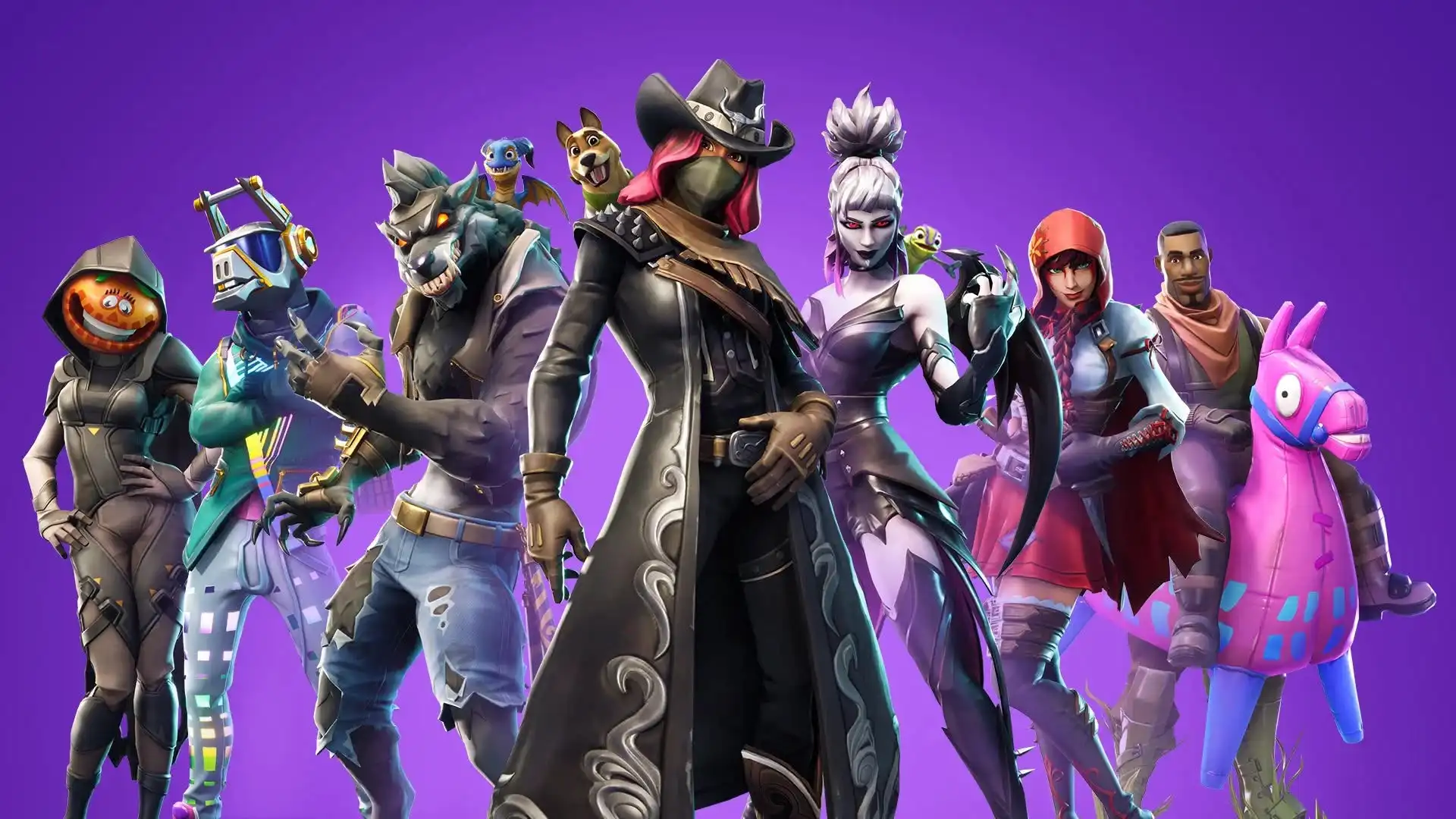
Epic just told us what Fortnite actually is. Not a battle royale with a few side modes bolted on. A platform. And the company wants your Fortnite skins to eventually work in other games entirely.
At State of Unreal 2026, Epic skipped the usual season-reveal theatrics and laid out its roadmap for Unreal Engine 6 instead. Buried in that roadmap was a line that's been bouncing around gaming forums all week. Fortnite cosmetics could one day function across multiple Unreal Engine 6 titles. Epic also confirmed it's merging the regular Unreal Engine pipeline with the creator tools currently locked inside Unreal Editor for Fortnite, so professional studios and Fortnite island builders end up working from the same foundation.
My first reaction was skepticism. Game engines promise "ecosystems" all the time and most of it amounts to a slide with a nice gradient background. The more I sat with this one, the more it looks like Epic means it.
Right now, the rule everyone's accepted without really thinking about it is that purchases stay where you bought them. A Call of Duty operator means nothing in Apex Legends. A Valorant skin can't touch Counter-Strike. Even inside Epic's own house, Fortnite cosmetics that some players have spent thousands of dollars on over the years are stuck in one app. Epic's pitch is that this doesn't have to be permanent.
This Is The Bigger Story Hiding Behind The Engine Talk
Strip away the Unreal Engine 6 branding for a second and look at what Epic's actually been building toward.
Fortnite stopped being just a shooter years ago. LEGO Fortnite, Rocket Racing, Fortnite Festival, the entire UEFN creator scene with thousands of player-made islands, none of that reads like "battle royale support content." It reads like Epic slowly turning one app into a place where a dozen different kinds of games happen to live.
Unreal Engine 6 is Epic saying the quiet part out loud. The plan, as far as they've described it, involves shared identity systems, shared assets, and a creator economy that isn't boxed into a single title. Epic wants developers and players moving through one connected ecosystem instead of a pile of separate, walled-off games.
So forget the engine branding. Epic isn't trying to make a better game engine here. It's building something closer to a platform that other games happen to run on top of.
The Skin Thing, And Why It's A Bigger Deal Than It Sounds
Here's the part everyone's actually talking about. Under the new roadmap, developers will eventually be able to build games that recognize and support Fortnite cosmetics. Some of that could run in the other direction too, with outside studios creating their own cosmetics that work back inside Fortnite.
You log into some new survival game or social hangout built in Unreal Engine 6, and you're wearing the same skin you've been customizing in Fortnite for three years. That's the pitch, anyway. Whether it ships looking anything like that is a different question, but it's the dream Epic's selling right now.
I keep going back and forth on how I feel about this. Part of me thinks it's genuinely clever. Part of me pictures a grizzled tactical shooter getting invaded by a banana costume and immediately wants to file a complaint.
Why This Actually Matters If You've Put Money Into Fortnite
For people with real money sunk into their Fortnite account, this isn't some abstract engine update. It's about whether that spending was ever going to be worth anything outside the one app it happened in.
A skin you bought two years ago is basically dead weight the moment you stop playing. That's just how it's worked for as long as live-service games have existed, and most players have made peace with it because there was never an alternative. Epic's proposal flips that. Instead of buying a costume for one game, you'd be buying something closer to an identity that follows you wherever Unreal Engine 6 titles let it in.
That changes how people think about spending in the first place. If a skin might show up in three or four different games down the line instead of disappearing the second you uninstall Fortnite, the calculation around dropping twenty dollars on a cosmetic starts to look different. More appealing for players, sure, but also obviously good for Epic's bottom line if it actually plays out that way.
Even If You've Never Opened Fortnite, This Should Still Get Your Attention
This is the part I find most interesting, honestly. If Epic pulls this off even partially, it puts a question in players' heads that publishers really don't want them asking.
Why can a Fortnite skin theoretically travel between games while a Call of Duty operator can't leave Call of Duty? Why does the money you spend in one game evaporate the moment you move to another? These aren't new complaints, people have grumbled about this for years, but right now there's never been a real alternative sitting in front of them to compare it against.
Gaming has flipped expectations like this before. Cross-platform play used to be a pipe dream that publishers swore was technically impossible. Cross-progression was rare enough that games advertised it as a headline feature. Now both are just expected, almost boring. Asset portability could follow that same arc if Epic actually gets traction, and once players start expecting it, it's hard for the rest of the industry to keep saying no.
What This Means For The People Actually Building Things
UEFN already turned thousands of independent creators into people who get paid to build inside Fortnite. That part of the story tends to get buried under all the skin talk, but it might end up mattering more long-term.
With Unreal Engine 6 folding traditional engine development and UEFN into one pipeline, Epic's effectively widening the lane for who gets to build inside this ecosystem. A solo creator and a AAA studio working from the same foundation isn't nothing. If cosmetics, characters, and entire experiences can eventually move across multiple games instead of staying locked to one, you're looking at a much bigger marketplace than "make an island, hope people visit it."
That's the kind of thing that pulls in artists and small studios who'd never have bothered building exclusively for Fortnite before. More hands building things usually means a more interesting catalog of stuff to actually use.
This Is A Business Move First, Vision Statement Second
It's easy to talk about this purely in terms of cool features and player freedom, but there's a much more boring reason Epic is doing this.
The gaming market right now is brutal for attention. Players are spread across a hundred live-service games, social apps, and creator platforms, all fighting for the same few hours a day someone has free. Fortnite is still enormous, but "enormous" doesn't mean immune to engagement dipping, and reports over the past year have pointed to exactly that kind of pressure inside Epic alongside company restructuring.
A connected ecosystem is a pretty elegant fix for that problem. If your identity, your cosmetics, your whole digital presence stays tied to Epic across several different games instead of just one, Epic stops needing any single title to carry the entire business. The whole network keeps you, even if one specific game falls out of favor. That's probably the real reason most industry people are reading Unreal Engine 6 as a platform play rather than just an engine refresh.
None Of This Comes Easily
I want to be clear that "Epic announced it" and "Epic delivers it" are very different things, and there's a long list of reasons this could quietly die on the roadmap.
The biggest one is convincing other studios to actually buy in. Epic can build all the infrastructure it wants, but it needs outside developers choosing to support cross-game cosmetics, and plenty of them have good reasons not to. A horror studio chasing dread and tension is not going to want someone showing up dressed as a cartoon banana. A grounded military shooter probably doesn't want a player running around in a superhero cape breaking the entire mood the team spent years building.
Then there's the technical side, which is genuinely messy. Different games run different animation rigs, different body proportions, different physics, different art styles entirely. Making one skin look and move correctly across five wildly different games is a much harder engineering problem than "just let the file load somewhere else." Epic's going to need real cooperation across a lot of studios that have zero obligation to give it to them.
The Disney Project Looms Over All Of This
One reason Epic might actually believe in its own pitch is the partnership it's been quietly building with Disney on some kind of large-scale persistent universe. Details are still thin on what that actually looks like day to day, but most people watching this space read it as part of the same broader push, interconnected digital experiences instead of isolated apps.
If you let yourself imagine it, licensed characters, player identities, and purchased cosmetics all moving across different branded experiences inside one bigger ecosystem starts to look a lot closer to Epic's actual end goal than "make Fortnite season 47 slightly better."
What Unreal Engine 6 Means If You're The One Building Games
State of Unreal wasn't only a pitch to players, and it would be a mistake to read it that way.
Epic also laid out plans to fold standard Unreal Engine development and UEFN into one shared pipeline under Unreal Engine 6. The stated goal is cutting down on fragmentation so creators and full studios aren't working in two completely separate worlds anymore. For developers, that could mean faster iteration, shared tooling between teams that never used to talk to each other, and a much bigger built-in audience the moment something ships.
Whether that pans out into indie developers and major studios genuinely working side by side, instead of just sharing a logo on a slide, is the actual test here.
Don't Expect This Anytime Soon
If you're hoping to log into a new game next week wearing your favorite Fortnite skin, that's not happening. Epic has been upfront that Unreal Engine 6 is years out from any kind of full rollout, with an early-access version reportedly targeted for late 2027 and wider adoption sometime after that.
This is a direction, not a feature drop. Epic's basically telling the industry where it intends to be standing several years from now, not handing players something to try this weekend.
Where This Actually Leaves Us
State of Unreal 2026 might end up being the moment people point back to when they explain how Epic stopped thinking of itself as a game company.
On the surface, this was an engine announcement. Underneath it, Epic laid out a future where your digital identity, your cosmetics, and your purchases aren't trapped behind one app's login screen anymore.
I don't know if it actually happens the way Epic's describing it. The technical hurdles are real, plenty of studios have zero incentive to play along, and "years away" has a way of quietly turning into "indefinitely delayed" in this industry. Still, the direction matters more than the timeline does right now.
If Epic gets even part of this working, the skin you bought last week might end up meaning something far beyond the one game you bought it for.