

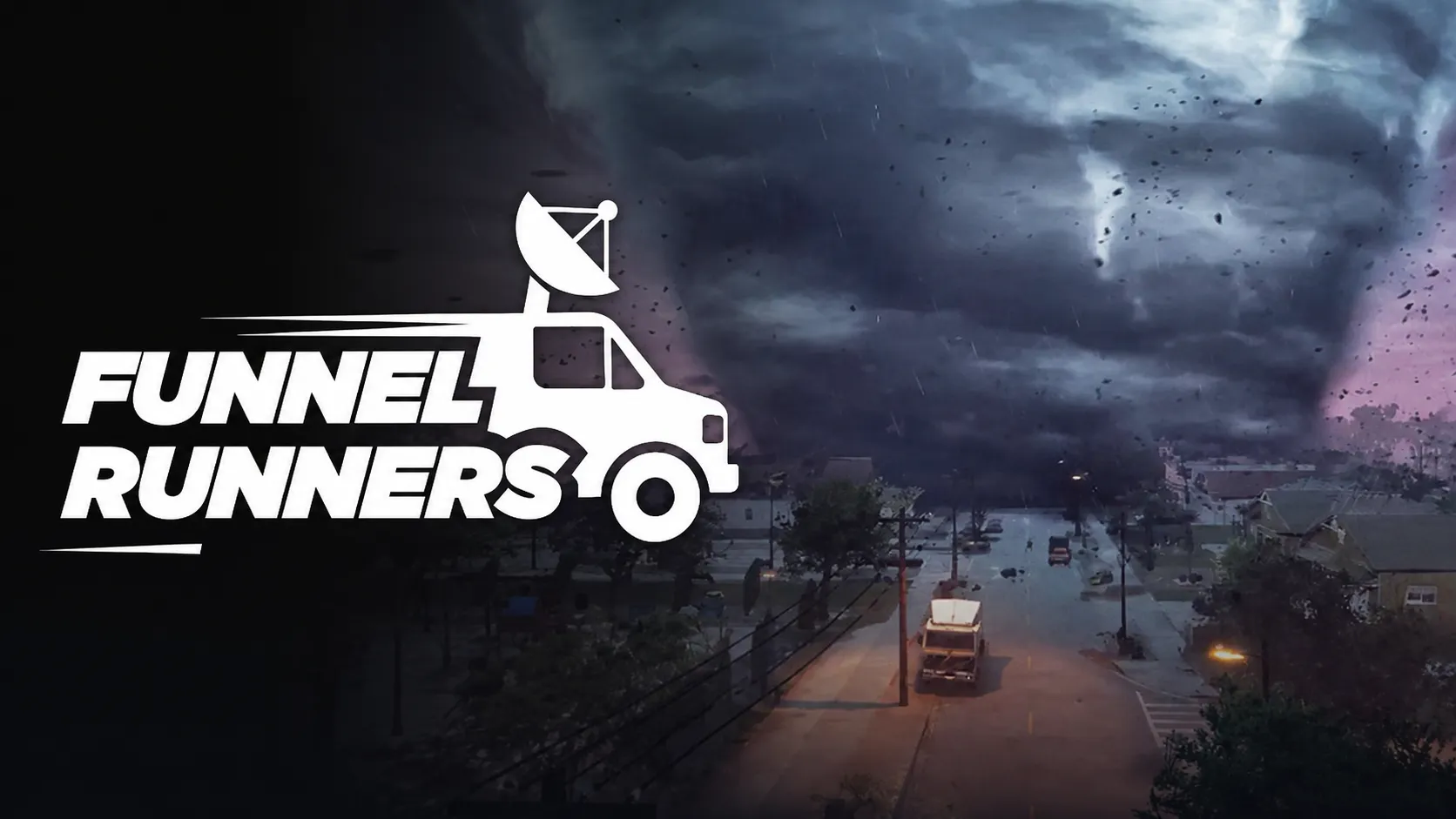
Funnel Runners drops you and your team into a wrecked town with one job: find enough parts to fix a broken escape van before the weather kills you first. That's the whole pitch, and it sounds simple enough on paper. In practice, every run turns into a scramble the moment the sky starts changing color.
The danger ramps up the longer you stay out. Buildings that felt safe ten minutes ago start falling apart, the parts you need are scattered somewhere different every single match, and grabbing every shiny item you see is a good way to end up stuck when the tornado finally shows up. Knowing what to prioritize matters a lot more than knowing where anything is, since nothing stays in the same place twice.
Here are 15 tips that should help you escape more often, whether this is your first run or your tenth failed one.
1. Know Your Objective Before You Start Looting
The van is the goal. Not the loot. That sounds obvious written down, but it's the single most common reason new teams don't make it out.
Because the repair parts spawn in random spots each match, there's no route you can memorize your way through. You're always adapting, which means burning ten minutes clearing one building for a handful of extra supplies can leave you badly behind once the weather turns.
Treat every building as a quick stop, not a destination. Grab what's useful, but if you find something that goes toward the van repair, get it there before you keep exploring for anything else. The good news is this gets easier to judge with time. You'll start recognizing which buildings are worth the detour and which ones aren't.
2. Find the Van Early
Locating the van the moment you spawn in, even before you have a single part, saves you from a much worse problem later: not knowing where you're supposed to be going once the storm is already bearing down.
New players tend to skip this step entirely. They spend the first few minutes looting, and by the time they've actually got repair parts in hand, they realize they have no idea where the van even is. That's a bad position to discover you're in with a tornado closing.
If you're running with friends, the van becomes a natural rally point. Split up to search different buildings, then loop back whenever someone finds a part. Playing solo, it just means your routes stay tighter instead of you wandering the map without a plan.
3. Repair Parts Beat Everything Else in Your Inventory
Not everything you pick up deserves a slot. Gear and consumables help, sure, but repair parts are the only thing that actually gets you out of the match, and your bag can only hold so much.
A useful gut check whenever you find something valuable: does this help us escape, or does it just make surviving slightly easier? If it's not going toward the van, it's optional. Grab the essentials first, and if there's still time and space once the van is fixed, go back for the rest.
4. Watch the Weather, Not Just the Ground
The storm in Funnel Runners isn't background noise. It's the actual threat, and it only gets worse the longer a run drags on.
It's easy to get tunnel vision searching a building or hauling a part back to the van, but the sky doesn't wait for you to finish. Wind picks up, movement gets harder, and a tornado can turn a clear path into a death trap in seconds. Get in the habit of checking your surroundings on a loop rather than waiting until the storm is already on top of you. If it's worsening fast, that's your cue to decide whether the search is worth continuing or if it's time to head back.
5. Don't Linger Inside Unsafe Buildings
Buildings hold your loot and your shelter, but they're not permanent. As conditions get worse, structures start to weaken, and a building that seemed fine when you walked in can come down on top of you if you stay too long.
Keep an exit in mind whenever you're inside somewhere. If the building starts groaning, the wind outside picks up, or the place just feels unstable, leave, even mid-search. Missing a few items in a room is a far smaller loss than getting buried when the ceiling gives out.
6. Manage Your Stamina Like a Resource, Not an Afterthought
Sprinting everywhere feels efficient, but it leaves you with nothing in the tank exactly when you need it most.
There will be a moment in every run where you need a full sprint, whether that's outrunning a tornado, reaching cover, or making a final dash with a part in hand. If you've already burned your stamina wandering between buildings out of habit, that option isn't there anymore. Walk when things are calm, and save the burst of speed for when it actually matters. It's a small habit, but it adds up over a full run.
7. Explore Efficiently Instead of Clearing Every Building
Trying to fully search every structure on the map sounds thorough, but it usually just eats time you don't have.
Since parts spawn somewhere new each run, there's no guarantee a five-minute sweep of one building gets you anything. If a quick look doesn't turn up something useful, move on. The goal was never to loot the whole map, just to gather enough to fix the van and get out before the storm forces the issue.
8. Communicate and Split Responsibilities in Co-op
A team that runs off in four different directions without a plan usually wastes more time than it saves, and someone almost always ends up caught alone when the weather turns.
Divide the work early. One player searches nearby, another ferries parts back to the van, others keep pushing outward. Callouts matter just as much as the searching itself. Let people know when you've found a part, spotted something useful, or seen the weather shifting. Even with random teammates, sticking together or pinging locations goes a long way.
9. Every Run Is Different, So Stay Flexible
Since parts and supplies reset randomly each match, whatever route worked last time isn't guaranteed to work again. Trying to memorize a fixed path is a losing bet.
Learn the maps instead of the routes. Over time you'll get a feel for which buildings tend to be worth checking and when it's time to cut your losses and move. Some runs you'll find everything you need in the first few minutes. Others take much longer. Staying calm and adjusting on the fly matters more than sticking to a plan that stopped making sense two buildings ago.
10. Use Your Equipment at the Right Moment
Gear is most useful when it's saved for the situation that actually needs it, not burned the second you pick it up.
A well-timed item can get you through a dangerous stretch or buy the extra seconds a repair needs to finish. It also helps to leave a bit of inventory space open. Filling every slot with low-priority junk means you might not have room for a repair part when you actually find one.
11. Stay Calm During the Final Escape
The last few minutes of a run are usually the most dangerous, and that's exactly when panic causes the most damage. This is where a lot of otherwise good runs fall apart.
Resist the urge to sprint blindly through the storm. Take stock of what's around you, avoid risks you don't need to take, and don't split from your team unless you have to. If you're the one carrying the last part or making the final trip, surviving the trip matters more than shaving off a few seconds.
Common Beginner Mistakes to Avoid
Even experienced players slip into a few of these habits when the storm starts closing in. Avoiding them will do more for your escape rate than almost anything else on this list.
Ignoring the Van Until the End
Spending most of the match looting before thinking about repairs leaves you racing the weather during the final stretch. Install parts as soon as it's practical instead of letting them sit in someone's bag.
Spending Too Long in One Area
If a building's been searched and nothing useful turned up, move on. Staying put rarely pays off and just gives the storm more time to get worse.
Burning All Your Stamina Too Early
Sprinting between every building might save a few seconds early, but it can leave you stranded without energy when you actually need to run. Walk when you can and save the sprint for emergencies.
Carrying Too Many Low-Priority Items
A packed inventory isn't a good thing if it means you can't pick up a repair part the moment you find one. Leave some room, especially while your team is still short on parts.
Panicking in the Final Minutes
Rushed decisions in the last stretch of a run cause more deaths than the storm itself. Stay calm, keep talking to your team, and stick to the plan instead of forcing a risky shortcut.
Since Funnel Runners is currently in Early Access, new maps, gadgets, weather events, and gameplay improvements are expected to arrive over time. While the core objective of repairing the van and escaping remains the same, future updates may introduce additional mechanics that change how each run plays out.
Frequently Asked Questions
What is the main objective in Funnel Runners?
Search the map for the parts needed to repair the escape van while surviving worsening weather. Once the van is fixed, your team can leave and complete the run.
Can you play Funnel Runners solo?
Yes. Solo play is fully supported, though it's tougher since you're handling the searching, the inventory management, and the weather all on your own.
Are repair part locations always the same?
No. Parts are randomly placed at the start of every run, so you'll need to explore and adjust your approach each time you play.
Does the weather get worse over time?
Yes. Conditions grow more dangerous the longer a run goes, which is the game's way of pushing you toward repairing the van instead of looting indefinitely.
Is Funnel Runners better with friends?
It's fully playable solo, but co-op generally makes searching, hauling parts, and reacting to changing weather a lot more manageable. Good communication makes a real difference in your odds of escaping.
Final Thoughts
Funnel Runners mixes exploration, teamwork, and survival into runs where nearly every decision has weight. The first few attempts will probably feel chaotic, but the routes, the inventory habits, and the read on when to bail all start clicking faster than you'd expect.
Escaping is always the priority. Find the van early, gather parts efficiently, and treat every run as its own puzzle rather than a repeat of the last one. The confidence comes with reps, whether you're running solo or coordinating with a full squad.
Editor's note: We'll keep expanding our Funnel Runners coverage with guides on advanced strategies, weather mechanics, and gadgets as the game continues to grow through Early Access.