
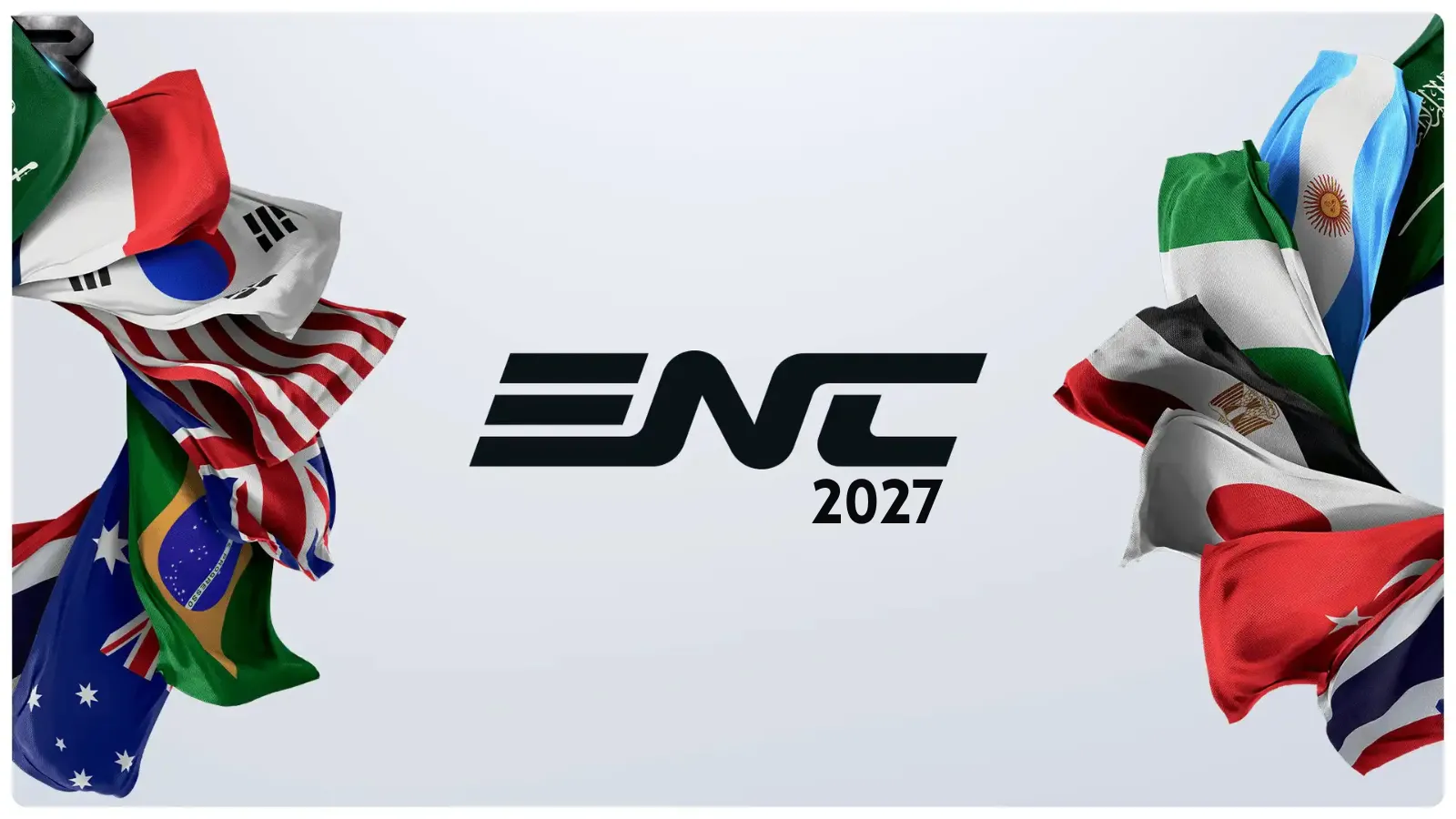
The Esports Foundation confirmed on August 18 that the first-ever Esports Nations Cup will not take place this year after all. The tournament, originally set for November 2026 in Riyadh, Saudi Arabia, has been moved to November 2027, a delay of exactly one year from its planned debut.
The organization pointed to the wider regional situation as the reason for the change, saying it needs to give national teams, publishers, partners and fans more certainty before the competition goes ahead. Riyadh remains the host city, and the Foundation says its commitment to the competition remains unchanged, even as the timeline shifts.
Why the ENC Got Pushed Back
According to the Esports Foundation, the decision came after an ongoing assessment of the regional situation combined with conversations with the people already tied to the event. The organization framed it as the responsible decision given how large the tournament has grown, with the unprecedented international scale of the competition cited as the reason for choosing certainty over rushing ahead.
The announcement doesn't go into detail about what exactly is happening in the region that prompted the delay. What it does say is that Saudi Arabia remains fully capable of hosting major sporting and entertainment events, pointing to other large-scale events continuing there as planned. That framing matters, since it separates this decision from any question about the country's ability to run the tournament and ties it instead to broader circumstances outside the Foundation's control.
Ralf Reichert, CEO of the Esports Foundation, said the decision to postpone wasn't taken lightly. He added that the reaction from national team partners, publishers, players and esports communities had already shown what the competition could become, and that the Foundation would rather deliver the first ENC under the right conditions than rush it out under uncertain ones.
How Far Along the ENC Already Was
This isn't a case of an event getting delayed before much work had gone into it. By the time the postponement was announced, the ENC had already built national team partnerships across more than 100 countries and territories, with qualification processes and competitive plans in place for several of its games.
PUBG: Battlegrounds is a good example of how far things had progressed. The Foundation had already confirmed 24 national teams for that title, built out of a mix of direct invitations, online qualifiers and wildcard spots, with the tournament originally scheduled for November 11 through 15, 2026. Other games in the lineup had gone through similar qualification work, and the Foundation's press room had already put out official rosters, invites and results for several titles before the postponement was announced.
That's part of what makes this delay a bigger deal than a simple date change. A meaningful amount of competitive groundwork now has to be revisited, since rosters, rankings and player form can look very different a year from now than they did when qualification first ran.
What Actually Changes, and What Doesn't
Riyadh is still the host city. The Foundation was specific about that, and it also stated directly that Saudi Arabia remains capable of hosting major sporting and entertainment events. So this isn't a relocation story. It's a delay, and the organizers are framing the extra year as a way to build more certainty around the event rather than a step back from it.
What isn't staying the same is the calendar. The ENC was designed as a biennial competition, and pushing the first edition to 2027 resets the clock for everything that follows it. The Foundation says it will work directly with its partners on what the revised timeline means, including the competition calendar and qualification pathways going forward.
National team development work isn't stopping in the meantime. The Foundation confirmed that existing ENC Development Fund commitments to National Team Partners will stay in place, and that the fund along with other ecosystem programs will keep running. In practice, that means the National Team Partners and other stakeholders who were already building toward the ENC are expected to keep developing their programs while the tournament itself waits for its new date.
The Open Question Around Existing Qualifications
The biggest thing left unanswered is what happens to teams and players who had already qualified. The Foundation says it will share more clarity in the coming weeks on the revised calendar and qualification pathways, but for now it hasn't confirmed how existing 2026 qualification results will carry over, if they carry over at all.
That distinction actually matters quite a bit. Esports rosters shift constantly, and a player or team that earned a national team spot in 2026 isn't guaranteed to be in the same form, or even on the same roster, a year later. Rankings for games like EA Sports FC, Counter-Strike 2 and PUBG: Battlegrounds move fast enough that a full year is a long time to stay static. How the Foundation handles this will likely be the detail that national teams and players are watching most closely once more information comes out.
What the ENC Was Trying to Be
Part of what made the ENC stand out in the first place was its format. Rather than the usual club-versus-club structure that defines most major esports tournaments, players would represent their countries and territories directly, closer to how international sport traditionally works. That put it in a different lane from something like the Esports World Cup, where competitors play under professional organizations rather than national banners.
The tournament's 16-game lineup was built to reflect that ambition, spanning shooters, sports titles, fighting games, MOBAs, racing, mobile esports and even chess.
The confirmed games are:
- Apex Legends
- EA Sports FC
- Mobile Legends
- Rocket League
- Chess
- Fatal Fury
- PUBG: Battlegrounds
- Street Fighter
- Counter-Strike 2
- Honor of Kings
- PUBG Mobile
- Trackmania
- Dota 2
- League of Legends
- Rainbow Six Siege
- Valorant
That's a genuinely broad footprint across PC, console and mobile, and it's a big part of why more than 100 countries and territories had already signed on as official partners before the delay was announced.
The Foundation describes the ENC as a biennial global competition meant to open new pathways for players, build up national esports scenes, and give fans a way to connect with competitive gaming through national pride rather than club loyalty. That vision hasn't changed. It's just going to take another year to see it play out.
The Bottom Line
The inaugural Esports Nations Cup has been postponed from November 2026 to November 2027, with the Esports Foundation citing the wider regional situation. Riyadh remains the host city, national team development funding stays in place, and existing qualification results are not confirmed to carry over as-is. The Foundation says more details on the revised calendar and qualification pathways are coming in the weeks ahead.
For a tournament that had already locked in partnerships across more than 100 countries and territories, the extra year is a significant reset, even if the underlying plan for the competition hasn't changed.