
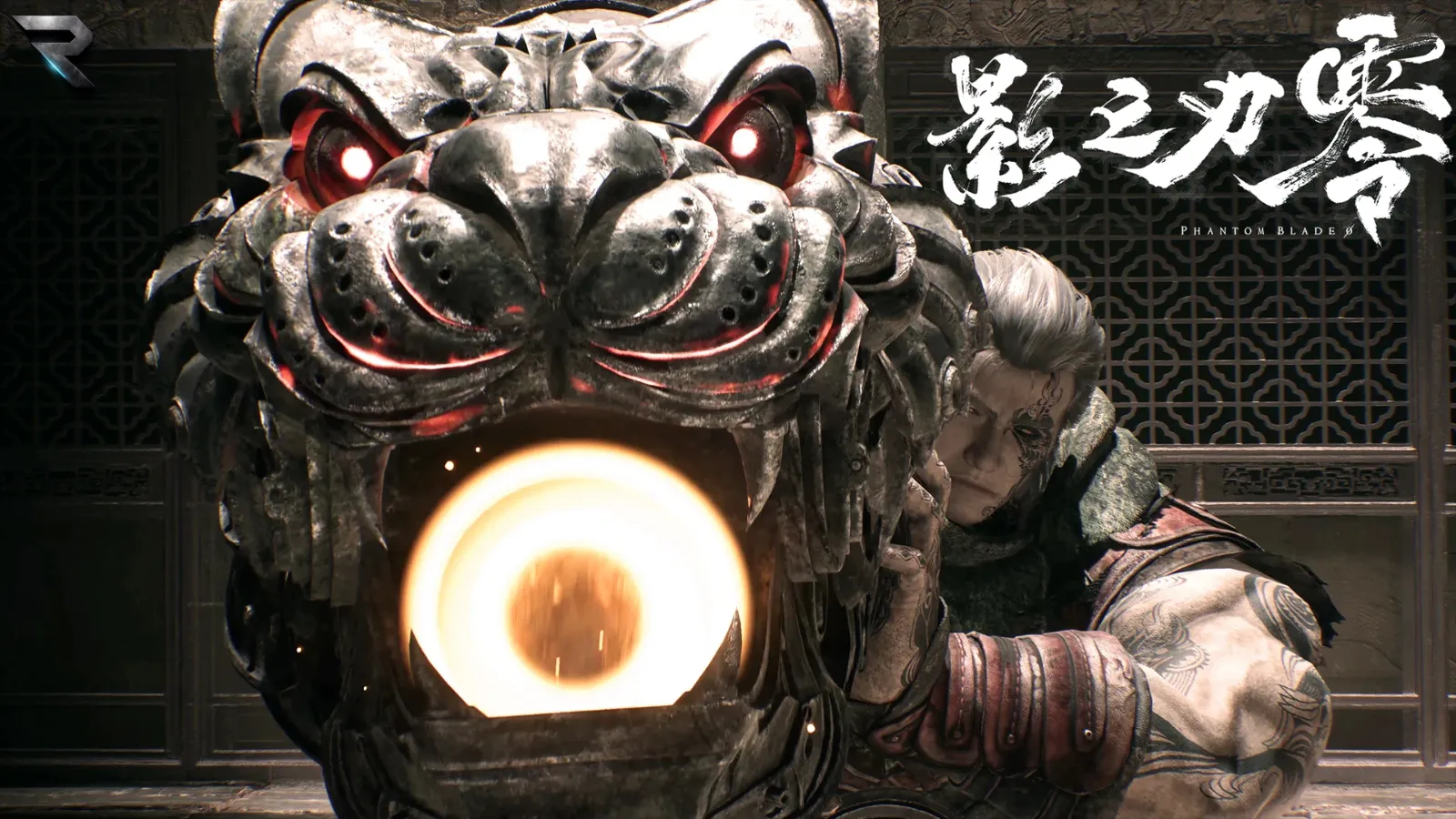
S-GAME dropped an extended, eleven-minute gameplay trailer for Phantom Blade Zero this week, and it is easily the most complete look at the Wuxia action RPG since its earliest reveals. The video moves through combat, world-building, and character introductions at a pace that matches the game's own philosophy of speed as the ultimate technique. Between the trailer, a fresh Steam listing, and a letter from the game's creative director, players now have a far clearer picture of what S-GAME is building, along with a new release date to plan around.
A World Where the Mandate Has Failed
The opening stretch of the trailer, roughly from the five-minute mark, sets up the world of Woolin as a place where institutions have collapsed under their own weight. The dialogue makes clear that the mandate, the ruling order meant to protect ordinary people, has abandoned peddlers, laborers, and children alike. Rain never lets up across these scenes, and the combat that follows carries a similarly soaked, grim texture. It is not subtle, but it does not need to be. The trailer is telling players early that Soul, the protagonist, is one of the few characters left who still cares whether the common people survive.
That premise lines up with what S-GAME has published on the game's Steam page. Soul has been framed for the death of his master, left with a ruined heart, and given only sixty-six days to live while being hunted by his former comrades. That ticking clock reframes everything shown in the trailer. Every fight, every conversation, every clue about the larger conspiracy carries the weight of a character racing against his own mortality. It is a tighter, more personal setup than the usual open-ended RPG premise, and it explains why the tone throughout leans so heavily into urgency and loss.
Combat Built Around Speed, Not Patience
The middle section of the trailer, running from roughly the one-minute mark to just past four minutes, is where Phantom Blade Zero makes its clearest pitch to action fans. The combat is fast, not in the sense of quick animations layered over a slow core, but fast as a design philosophy. Soul chains light and heavy strikes into named Phantom Edge abilities, weaves through enemy attacks with a maneuver the community has already nicknamed Ghostep, and reads incoming damage through a color-coded parry system that rewards split-second timing over cautious blocking.
This is a deliberate departure from the genre most people assume the game belongs to. S-GAME's own team has said repeatedly that Phantom Blade Zero is neither a soulslike nor a conventional hack-and-slash title, even though some surface elements, particularly the atmosphere and level design, invite that comparison. In practice, combat encounters lean closer to Ninja Gaiden's relentless aggression than to the stamina-conscious, defensive rhythm most players associate with Dark Souls or Sekiro. Enemies rarely come one at a time either. Multiple encounters in the trailer show Soul managing several attackers simultaneously, reinforcing crowd control as a core combat pillar rather than an occasional set piece.
The Steam listing backs this up with real numbers too. Players will have access to more than thirty weapons and over twenty unique Phantom Edges to mix and match according to playstyle, with the option to obtain a defeated enemy's signature technique to grow the arsenal further. That is a substantial toolkit for an action RPG, and it suggests S-GAME wants combat variety to stay fresh across a campaign that has previously been described as running thirty to forty hours, before factoring in end-game content like boss rushes.
New Faces, Old Betrayals
Roughly six to eight minutes into the trailer, the video shifts from pure combat demonstration into narrative territory, introducing two new characters: Quickhand Jang, described as a traveler who collects rare relics, and Forge, an artisan working under a figure named Lady Anis. Their dialogue carries a bitterness that suggests they were once true believers in the mandate, only to realize their loyalty was spent on something hollow. That disillusionment threads directly back into the game's larger themes.
The conversation escalates from there. References to a great secret and a power beyond reason hint at forces controlling events from behind the scenes, with characters described as being manipulated like puppets. It is intentionally vague at this stage, which is standard for a marketing trailer trying to tease a mystery without spoiling it, but it does suggest the story has ambitions beyond a straightforward revenge plot. The Steam page reinforces this with its own framing, describing a world of shifting realities, echoes of memory, augmentation, and beings of higher power, where every rumor is a thread leading toward a larger truth waiting to unravel.
A Philosophical Turn Before the Credits
The final act of the trailer, from around the nine-and-a-half-minute mark onward, slows the pace deliberately. Instead of another combat showcase, it leans into Soul's internal conflict. Dialogue challenges him to drop the blade and let true steel speak, framing the climax less as a straightforward boss fight and more as a test of what kind of fighter, and what kind of person, Soul is willing to become. It is a familiar Wuxia storytelling beat, the idea that true mastery requires letting go of ego or weapon, but it lands well enough here that it does not feel tacked on. The trailer closes on an intentionally open note, setting up a future confrontation without showing its outcome.
Kungfupunk, Explained, and Donnie Yen's Role
S-GAME has coined the term Kungfupunk to describe the game's overall aesthetic, and the Steam page spells out what that means in practice. The world blends traditional martial arts with machinery, mixing ancient codes with iron and smoke into what the studio calls a new style forged from combining these mediums. Visually, that translates into rain-soaked streets, mechanical contraptions sitting alongside traditional weaponry, and a color palette that favors muted grays and blues broken up by flashes of blade-light during combat.
The choreography backing all of this draws directly from Hong Kong's Golden Age of martial arts cinema. The game was built in Unreal Engine 5 using motion capture, with every strike and stance rooted in techniques captured with the precision of film and then reborn through modern game design. That pedigree gets a significant boost from the trailer's closing reveal: Donnie Yen appears both as Mo Yuan, Soul's father, and as a creative consultant overseeing the game's overall martial arts direction. Given Yen's decades of work in Hong Kong action cinema, his involvement is not just a marketing hook. It is a direct link between the combat system players saw in the trailer and the choreography traditions the studio has said it wants to honor.
Standard and Deluxe Editions, Broken Down
Alongside the trailer, S-GAME also updated the Steam page with edition details as pre-orders are now LIVE on Steam as well. The Standard Edition includes the full game plus two pre-order bonuses, an early-unlock accessory called Treasure Basin and an early-unlock outfit called Legacy. Both of those pre-order items can also be earned through normal in-game progression, so players skipping pre-orders are not locked out of them permanently.
The Deluxe Edition carries everything in the Standard Edition and adds two exclusive outfits, Wulin Legend and Blood-Steel Form, along with a digital artbook and a digital soundtrack. Unlike the Standard Edition's pre-order items, S-GAME has also indicated that the Deluxe-exclusive outfits can be unlocked through play.
PC System Requirements, Including Ray and Path Tracing Tiers
S-GAME also published a full spread of PC requirements, covering everything from a baseline 1080p experience up to full path tracing at 4K. The minimum tier asks for an Intel Core i7-8700K or Ryzen 5 3600, paired with a GTX 1660 6GB or RX 5500 XT 8GB, aiming for 1080p at 30 FPS with upscaling enabled. The recommended tier steps up to a Core i5-10600K or Ryzen 5 5600X with an RTX 3060 Ti or RX 6700 XT, targeting 1440p at 60 FPS, also with upscaling on.
-
Minimum Specification
- OS: Windows 10/11 64 bit
- Processor: Intel Core i7-8700K / Ryzen 5 3600
- GPU: NVIDIA GeForce GTX 1660 6GB / AMD Radeon RX 5500 XT 8GB
- DirectX: 12
- Memory: 16 GB
- Storage: SSD is Required
- Resolution: 1080p / 30 FPS (with upscaling enabled)
-
Recommended Specification
- OS: Windows 10/11 64 bit
- Processor: Intel Core i5-10600K / AMD Ryzen 5 5600X
- GPU: NVIDIA GeForce RTX 3060 Ti 8GB / AMD Radeon RX 6700 XT 12GB
- DirectX: 12
- Memory: 16 GB
- Storage: SSD is Required
- Resolution: 1440p / 60 FPS (with upscaling enabled)
-
Ray Tracing Recommended Specification
- GPU: NVIDIA GeForce RTX 5060 8GB
- Resolution: 1080p / 60 FPS (with upscaling enabled)
-
Path Tracing Recommended Specification
- GPU: NVIDIA GeForce RTX 5080 16GB
- Resolution: 2160p / 60 FPS (with upscaling enabled)
An SSD is required across every tier, and DirectX 12 is the baseline API. The gap between the recommended and path tracing tiers is enormous, an RTX 5080 is a genuinely high-end card, which suggests S-GAME wants the game to scale cleanly from mid-range machines up to showcase-level hardware rather than treating ray tracing as an afterthought bolted on late.
Why the Release Date Moved to October 29
Not everything in this update is a straightforward win. Phantom Blade Zero's creative director, credited as Soulframe and identified as S-GAME's CEO, published a letter confirming the game has been pushed from its previously announced September 9, 2026 date to October 29, 2026, a fifty-day delay.
The letter frames the delay as a decision made late in development, after the team found what it describes as one final opportunity to push the game further. According to the director, character models and environments across the game have been reworked and pushed closer to the studio's current technical ceiling, with extra effort put into preserving that visual quality even for players not using ray tracing. The letter is candid about the tradeoff: a 50-day delay cannot solve everything
, but the team felt the specific improvements on the table were worth holding the line for rather than shipping now and patching later.
S-GAME also used the letter to lay out what comes next. A new trailer built from entirely new in-game footage will land alongside pre-orders, followed by a dedicated State of Play broadcast, focused on world, combat, exploration, and character progression systems, with the studio promising most of that footage will be new as well. The State of Play broadcast is now scheduled for August 17 at 7:00pm Pacific Time.
The Bottom Line
Phantom Blade Zero's eleven-minute gameplay trailer is the clearest look yet at Soul's sixty-six day countdown, the Kungfupunk world of Woolin, and a combat system built around speed rather than patience, backed by Donnie Yen's involvement as both a character and a martial arts consultant. Alongside the trailer, S-GAME confirmed Standard and Deluxe edition contents, published full PC requirements spanning 1080p minimum to 4K path tracing, and delayed the game fifty days to October 29, 2026, to finish a round of visual upgrades the creative director felt was worth the wait.
Development on the game has been confirmed complete aside from this final polish pass. Pre-orders are now LIVE for the game.
Note: This article will be kept updated as S-GAME shares more details during the State of Play broadcast.