
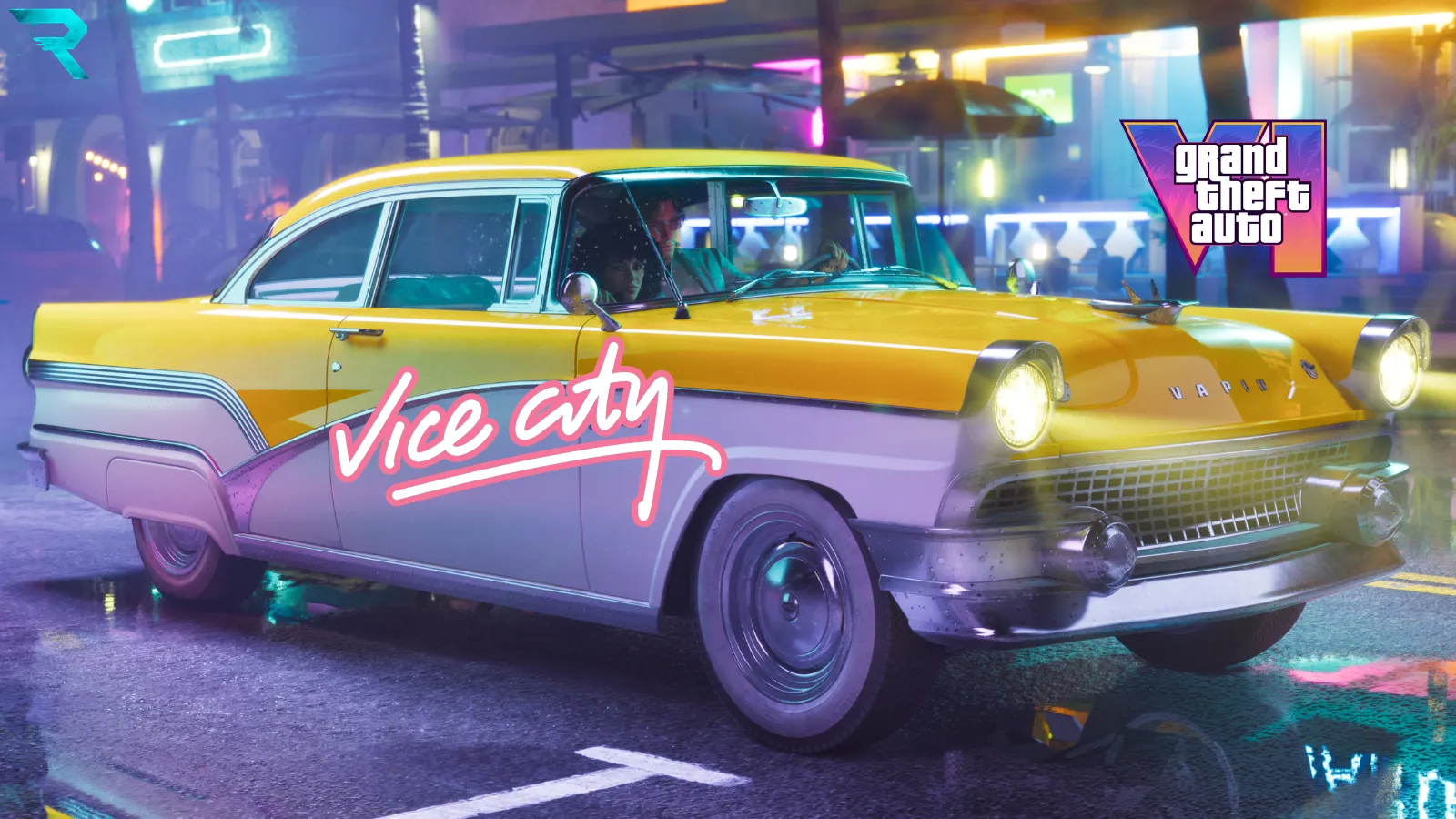
For more than a decade, Grand Theft Auto VI has lived somewhere between anticipation and myth. Every trailer broke records. Every rumor took over the gaming conversation for weeks. Every stray detail, no matter how small, became something people argued about online. Few games in this industry's history have carried this much weight before release.
Now that GTA 6 finally has a release date and pre-orders are live, the conversation is shifting. Players aren't asking when they get to play anymore. They're asking something that says a lot more about where gaming is right now.
Will I actually own the game I'm paying for?
Will there even be a real physical copy to put on a shelf?
And in an era where publishers are increasingly investing in generative AI, why does GTA 6 feel like it's moving in the opposite direction entirely?
Whether Rockstar leaned on human craftsmanship out of principle or simply never made AI central to how it builds games, GTA 6 has turned into a symbol of something a lot of players feel is disappearing: patience. Years of iteration. The willingness to keep working on something instead of shipping it the moment it's good enough.
That same game has also put a spotlight on two anxieties that have been building across gaming for a while. Players are excited about what might be one of the most ambitious AAA releases ever made, and at the same time, they're nervous about whether they'll actually own it years down the line, or whether they'll ever get to put a complete copy next to the rest of the series on a shelf.
Those two worries look unrelated on the surface. One is about artificial intelligence. The other is about digital ownership. But they come from the same place.
What do players actually value in games right now, and is the industry still building around that?
GTA 6 probably won't answer that on its own. But it's turned into a useful way to ask the question.
Why GTA 6 Feels Different
Every generation has a small handful of games that stop being just releases and become milestones instead, the kind that define an era and shape conversations for years. GTA 6 is already one of those, and nobody has even set foot in Leonida yet.
Some of that comes down to Rockstar's reputation. The studio has spent decades building worlds packed with the kind of detail most players won't notice until they're hundreds of hours in: pedestrian routines, environmental storytelling, dynamic encounters that only trigger if you happen to be in the right place at the right time. Rockstar's games reward curiosity instead of rushing you from objective to objective, and that's earned the studio a level of trust few others have.
That approach feels rarer than it used to.
Development budgets have exploded into the hundreds of millions, with teams scattered across studios on different continents. As costs keep climbing, publishers are under more pressure than ever to ship faster, spend less, and keep shareholders happy with predictable returns.
So it's not surprising that AI has become one of the industry's biggest talking points. Studios are already experimenting with it for coding, animation, QA, localization, and asset creation. Used well, these tools free up developer time for the parts of a game players actually notice.
Still, plenty of players stay wary. It's not that AI existing is the problem. It's the fear that it quietly becomes a replacement for creative decisions instead of a tool that supports them. Nobody wants procedurally generated stories standing in for actual writing, or AI art replacing the artists whose fingerprints give a game its identity.
This is where GTA 6 sits in an interesting spot.
Rockstar has never marketed this as an "AI-free" game, and the studio hasn't claimed AI played zero role in development. That distinction matters. But the public image around GTA 6 was never built on cutting-edge automation or promises of AI-generated worlds. It's built on something much simpler: the sense that Rockstar took the time to make the game the way it wanted to make it.
That perception carries weight, because players have spent years watching dev cycles shrink, live-service roadmaps swell, and unfinished games ship anyway. Against that backdrop, a game that reportedly took well over a decade feels almost defiant.
People aren't excited about GTA 6 just because it's big. They're excited about what it represents: a studio willing to pour extraordinary time, talent, and money into one vision instead of chasing an annual release window.
Whether that perception survives contact with the actual game is a separate question. But the excitement around GTA 6 says something important on its own. For all the industry's talk about faster pipelines and automation, players still care enormously about craft.
If nothing else, GTA 6 has reminded the industry that technology keeps moving, but what players expect from a truly great game hasn't shifted nearly as much.
Ownership Is Changing, and Gamers Are Starting to Notice
Alongside all the excitement around GTA 6, another conversation has been quietly building. It goes well past Rockstar's next release and touches nearly every major AAA game today.
Do players actually own the games they buy anymore?
For decades, buying a physical game meant exactly that. You walked into a store, grabbed a box, put the disc or cartridge in, and it was yours. Years later you could reinstall it, hand it to a friend, put it on a shelf, or dig it back out whenever nostalgia hit. A collection wasn't just plastic cases stacked up. It was a timeline of a person's gaming life.
That certainty doesn't feel guaranteed anymore.
Digital storefronts changed how games get distributed: instant downloads, automatic patches, cloud saves, a whole library without leaving the couch. For a lot of players, especially the ones who already prefer buying digitally, those upsides outweigh the downsides easily.
But convenience brought new questions with it.
What happens if a game gets delisted years after launch? What if a licensing deal expires? What if the servers needed for authentication go dark decades from now? Even if none of that seems likely for something the size of GTA 6, it's happened often enough across the industry that players have started thinking twice about what they're actually buying.
Physical editions don't offer the same reassurance they used to, either.
More and more, collectors are finding out that a disc is only part of the deal. Massive day-one patches, mandatory downloads, online activation, incomplete builds on the disc itself: all of that has become normal in modern AAA releases. The box looks the same. What's inside it doesn't mean what it used to.
That's become a real sore spot for collectors waiting on GTA 6. After more than ten years of anticipation, a lot of players want more than access to the game. They want something physical they can put next to the rest of the series. It's not just nostalgia. It's about holding onto a moment that feels significant in gaming history.
The irony isn't subtle.
At the same time players are celebrating one of the most ambitious games ever made, they're wondering whether anyone will experience it the same way twenty years from now. Will someone stumble across GTA 6 at a second-hand store two decades from now and just pop the disc in, or will access depend entirely on servers and storefronts that might not still exist?
None of this is unique to Rockstar. These worries have been building across the industry for years. GTA 6 has just pulled them into sharper focus because of how much the game matters culturally.
When a release gets this big, players start thinking past launch day. They think about legacy, about preservation, about whether the games defining this era will still be playable decades from now, the same way classics from past generations still are.
For an industry built on unforgettable experiences, keeping those experiences around might end up mattering just as much as making them in the first place.
AI Isn't the Villain. Misusing It Is
Artificial intelligence has become one of the most divisive topics in gaming almost overnight. Bring it up in any conversation and the reactions come fast. Some see it as the next big leap for development. Others see it as a shortcut that threatens the creativity that makes games worth remembering.
The truth sits somewhere messier than either side wants to admit.
AI is already part of game development in ways most players will never notice. It helps programmers cut down on boilerplate code, helps QA teams catch bugs faster, speeds up localization, and handles some of the repetitive production work that used to eat up development time.
Those are practical uses. They're meant to help developers work faster, not replace the people doing the work.
The problem starts when efficiency becomes the whole point.
If publishers start treating AI as a way to cut artists, writers, designers, composers, or voice actors out of the process, the conversation changes completely. No game has ever been remembered for being made as cheaply as possible. Games get remembered because of the imagination and the countless small creative decisions made by the people who built them.
Players can usually tell the difference.
A quest doesn't stick with you because of how many lines of dialogue it has. It sticks because of what it makes you feel. A character isn't beloved because they got generated fast. They're beloved because someone spent years shaping their personality and their place in the story.
Technology has always reshaped how games get made. Motion capture changed animation. Photogrammetry changed how environments look. Modern engines sped up entire production pipelines. Barely anyone would argue those tools made games less creative. If anything, they gave developers better ways to build what they were already imagining.
AI deserves to be judged the same way.
If it clears out repetitive work so artists have more time to create, that's a win. If it lets small studios pull off things that used to require AAA budgets, that's genuinely exciting. If it improves accessibility, testing, or localization, players everywhere benefit.
But if it starts replacing artistic vision instead of supporting it, the industry risks losing something no algorithm can replace.
Bringing the Conversation Back to GTA 6
Whether Rockstar used AI internally for smaller production tasks isn't really the point. What players are reacting to is the game they believe they're about to get: years of iteration, handcrafted environments, characters that feel considered rather than assembled, an experience shaped by intent instead of efficiency targets.
That perception matters because of what it says about what players actually reward.
Nobody waits years for a game because it promises the most advanced automation available. They wait because they believe they're about to play something that couldn't have been made any other way.
Maybe that's the real lesson here. Game development doesn't have to be a choice between human creativity and AI. The studios that figure out how to combine both, without letting one crowd out the other, are probably the ones that come out ahead.
Technology should make good creators better at their jobs, not replace them. If the industry keeps that in mind, AI has a real shot at becoming one of its best tools instead of its biggest source of arguments.
The Industry's Real Problem Isn't Creativity
If GTA 6 has become the center of so many different conversations, it's because it represents something that feels rare in modern AAA development right now: confidence. The confidence to spend more than a decade on one game. To delay it when the game needs it. To pour extraordinary resources into a single vision instead of rushing it out the door.
Not every studio can afford that kind of confidence.
The economics of AAA development have shifted hard over the last ten years. Budgets have ballooned, expectations keep climbing, and publishers are under constant pressure to deliver predictable returns. In that environment, taking a real creative risk starts to look like a luxury few can justify.
It's usually safer to make another sequel, another remake, another live-service game than to bet on something genuinely new.
That's why it's hard to argue gaming actually has a creativity problem.
Developers keep putting out imaginative worlds, strong stories, and inventive mechanics every year. Indie studios prove originality is alive and well on a regular basis, and the big studios are still full of artists, writers, programmers, and musicians who are more than capable of building something unforgettable.
The creativity never went anywhere.
The problem is building an environment where that creativity actually gets room to breathe.
When schedules tighten, deadlines stop moving, and financial targets start outweighing long-term vision, even the best teams get forced into compromises. Features get cut. Ideas get scaled back. Predictability wins out over innovation because predictability is easier to defend to a room full of executives.
This is where GTA 6 stands apart.
For years, people questioned whether spending this long on a single game made any financial sense. But the reaction to its trailers, its release date, and its pre-orders suggests players aren't actually asking for games to come out faster. They want games worth the wait.
That's an important distinction.
Players rarely get excited about a game because it hit shelves ahead of schedule. They get excited about games that feel complete, that feel considered, that leave something behind after the credits roll. If GTA 6 delivers on that, it might reinforce something the industry tends to forget: quality creates excitement no marketing budget can manufacture.
None of this means every game needs a ten-year development cycle or a nine-figure budget, and it doesn't mean every publisher should try to copy Rockstar's approach. Most studios don't have the resources or the flexibility to do that even if they wanted to.
What it does suggest is that the industry's real problem was never a shortage of creative talent.
It's finding the time, the trust, and the nerve to let that talent actually do its job.
Maybe that's why GTA 6 resonates this much before anyone has even played it. It's a reminder of something that feels almost radical in today's gaming landscape: sometimes the real risk isn't spending too long making a great game. It's never giving a great idea the time it needs to become one.
Respawnerz Verdict
GTA 6 hasn't shipped yet, and it will ultimately be judged on the same thing every game is judged on: whether it's fun to play. But it's already done something worth noting regardless of how the actual game turns out. It's pulled two of gaming's biggest ongoing arguments, AI in development and what "owning" a game even means anymore, into a single, unavoidable spotlight.
The AI conversation isn't really about whether Rockstar used the tech somewhere in its pipeline. It's about what players are rewarding: patience, craft, and a sense that a game was shaped by intent rather than by a spreadsheet. The ownership conversation isn't really about GTA 6 either. It's about an entire industry drifting toward delistable, server-dependent, patch-dependent releases, and a growing number of players who want at least one thing on their shelf that doesn't depend on a company's servers staying online.
Whether GTA 6 becomes the game people hoped for is still an open question. But it's already made one thing clear: craft, patience, and genuine ownership still matter to the people buying these games. If publishers are paying attention, GTA 6 may become more than a commercial success. It may become the benchmark for what players expect from the next generation of AAA games.