
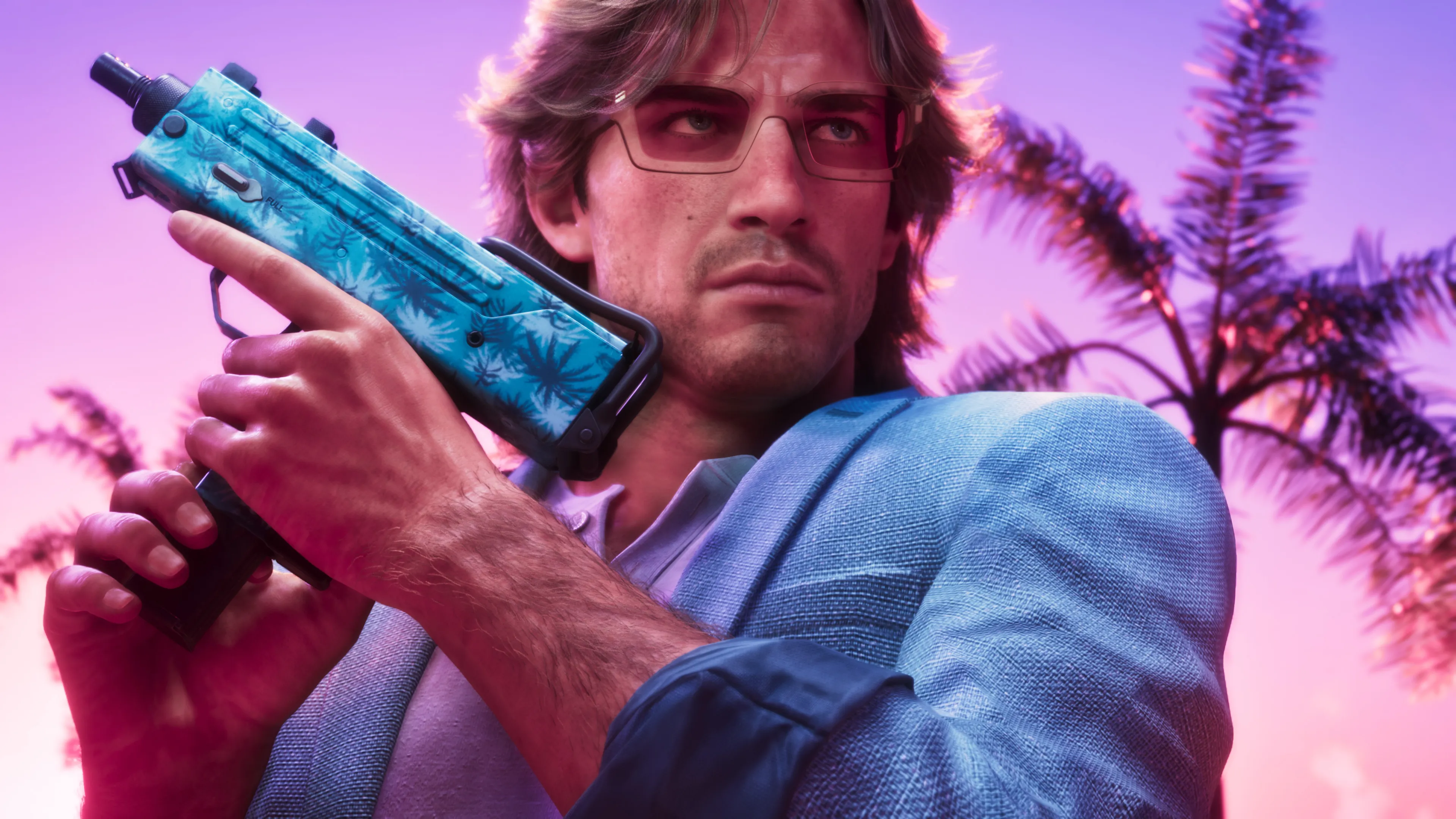
Grand Theft Auto VI has dominated headlines for months. Between record-breaking trailers, pre-order debates, edition pricing, and endless speculation over every screenshot, Rockstar's next open-world release has become the most anticipated game of a generation.
Most of that conversation has centered on whether the game is worth its asking price. But there's a bigger challenge waiting for Rockstar, and it has nothing to do with the number on the box.
Not competition.
Not hardware.
Not even sales.
The biggest challenge facing GTA 6 is living up to more than thirteen years of expectations.
Few games have carried this level of anticipation. Grand Theft Auto V became one of the best-selling games in history, while Red Dead Redemption 2 reinforced Rockstar's reputation for creating detailed open worlds. By the time GTA 6 finally arrives, players won't simply be looking for another great Rockstar game. They'll be expecting the studio to redefine the genre once again.
The biggest challenge facing GTA 6 isn't convincing people to buy it. It's convincing them it was worth waiting more than a decade for.
13 Years of Expectations Is Almost Impossible to Meet
When GTA V launched in 2013, social media looked completely different. Streaming was still finding its feet. TikTok didn't exist. Gaming leaks weren't a daily occurrence, they were an event.
Today, every trailer gets slowed down and picked apart frame by frame. Every screenshot gets dissected in threads that run for pages. Every rumor spreads across the internet within minutes of showing up.
For years, fans have imagined what GTA 6 should be, and those expectations have grown with every delay, every leak, and every official reveal. The longer players wait, the more impossible those expectations become.
There's also another factor that makes GTA 6 unique. Rockstar has spent more than a decade refining its craft while the gaming industry itself has changed dramatically. Open-world games have become bigger, more detailed, and more ambitious, raising players' expectations of what a blockbuster should deliver. As each new generation of hardware arrived, so too did new assumptions about realism, interactivity, and immersion. By the time GTA 6 launches, it won't just be measured against Rockstar's previous work, it'll be judged against years of technological progress and a market that expects every major release to push boundaries.
Expectations Are Being Set by More Than Rockstar
Rockstar hasn't been the only one building this pressure. Its own community has done plenty of that work for them.
Every trailer the studio has released has been paused, zoomed in on, and analyzed for details nobody has confirmed. A blurry reflection in a car window becomes a thread about dynamic weather systems. A background NPC walking into a store becomes proof of fully simulated daily routines across the map.
Over time, these theories stopped reading like speculation and started reading like a checklist. Destructible environments. Interiors players can enter at will. An economy that reacts to what the player does instead of resetting on a timer. Police AI that adapts rather than following a script. None of this has been confirmed by Rockstar, and most of it may never show up in the form fans have imagined.
That's the trap. When a community spends a decade building its own version of a game across forum posts, YouTube essays, and wishlists, the actual release ends up competing against something Rockstar never actually promised to build. The longer the speculation continues, the harder it becomes for any finished product, however good, to match the version players have collectively imagined in their heads.
Every Detail Will Be Judged
Unlike most major releases, GTA 6 won't simply be reviewed on whether it's a good game.
Players will compare everything against the version they've pictured for more than a decade. Graphics. NPC behavior. Police AI. Driving physics. Mission variety. Online features. Day-one performance. Every small detail will get scrutinized by millions of players within hours of release.
That level of scrutiny extends far beyond professional reviews. Livestreams, YouTube analysis videos, Reddit discussions, and social media clips will collectively shape public opinion within days of launch. A single unexpected gameplay interaction could go viral for the right reasons, while a bug or missing feature could spread just as quickly, regardless of how representative it is of the overall experience.
That's the reality of launching a game in 2026. Millions of players won't just experience GTA 6, they'll document it, analyze it, compare it, and debate it in real time. Every discovery, every criticism, and every moment of praise will become part of the conversation almost instantly.
Even a minor shortcoming could dominate social media for days, regardless of how well the game succeeds everywhere else.
GTA 6 Isn't Just Competing With Other Games
This is where GTA 6's situation looks different from almost any other launch this generation.
Most big releases are judged against their direct competitors. A new Call of Duty gets compared to last year's Call of Duty and whatever Battlefield is doing that cycle. A new Assassin's Creed gets measured against the last one and against other open-world games on the market at the time.
GTA 6 isn't really competing with any of that.
It's competing with GTA V, a game so commercially dominant it kept selling for over a decade after release. It's competing with Red Dead Redemption 2, widely considered one of the best open-world games ever made and the project that raised the bar for what a Rockstar release should feel like. And it's competing with something that doesn't exist anywhere except in the minds of the people waiting for it: thirteen years of imagination, nostalgia, and accumulated hype.
Rockstar isn't just trying to beat another studio's blockbuster. It's trying to surpass one of the best-selling games ever made while also living up to a version of GTA 6 that has only ever existed in players' heads, shaped by leaks, fan art, and a decade of "what if" conversations. That's an unusual position for any studio to be in, and it means the usual scorecard of review averages and launch sales doesn't tell the whole story of what success looks like here.
The Industry Has Seen What Happens When Hype Becomes Too Big
Gaming has already seen how overwhelming expectations can affect a major launch.
Cyberpunk 2077 is the example everyone reaches for, and for good reason. It arrived after years of anticipation, but technical issues across multiple platforms quickly overshadowed the game's genuine strengths. The launch became an industry-wide reminder that excitement alone can't carry a release if the experience underneath it doesn't hold up.
None of this means GTA 6 is heading toward the same outcome. There's little evidence pointing that way, and Rockstar's track record on polish has looked very different from CD Projekt Red's back in 2020. But Cyberpunk's launch demonstrated something the entire industry learned the hard way: the bigger the anticipation, the smaller the margin for error. Rockstar also has a history of delaying major releases when more development time is needed, suggesting the studio is willing to prioritize readiness over rushing to market.
Launch Day Is Only Half the Story
For all the excitement surrounding GTA 6's release, launch day may not ultimately define the game's success. The days that follow could prove far more important.
The first week will almost certainly bring record-breaking player counts, review scores, livestreams, and social media reactions. But by the second week, the conversation tends to shift from excitement to scrutiny.
Players will have spent dozens of hours exploring Leonida. They'll start uncovering hidden details, testing gameplay systems, pushing mechanics to their limits, and forming opinions that go far beyond first impressions. It's also during this window that Rockstar's post-launch support comes into focus, whether that's addressing unexpected bugs, balancing gameplay, or simply communicating with the community. How the studio responds in those early days could shape the public narrative just as much as the launch itself.
For many players, the conversation won't stop with the single-player campaign either. Attention will inevitably begin shifting toward the future of GTA Online, with fans eager to see how Rockstar plans to evolve its multiplayer experience alongside Leonida. While details remain limited, the long-term success of GTA 6 is likely to be shaped by both its story and the years of online content that follow.
A record-breaking launch would be a remarkable achievement, but it won't be what defines GTA 6's legacy. That verdict starts taking shape once the excitement settles and millions of players begin asking a much simpler question: was it worth the wait?
The First Impression Won't Be the Final Verdict
Review scores set the initial tone, but they rarely stay the last word for long. Within days of launch, players start posting hidden mechanics nobody caught during embargo. Content creators, speedrunners, modders (when supported platforms allow), and the wider community will quickly begin uncovering mechanics, hidden details, and unexpected interactions that even reviewers may have missed.
This is also the window where Rockstar's communication matters more than people give it credit for. Quietly fixing bugs is one thing. Explaining decisions, acknowledging what players are frustrated by, and shipping quality-of-life updates at a reasonable pace is another, and it's the kind of thing that shapes public opinion just as much as the initial review cycle does.
Red Dead Redemption 2 is the clearest recent example of how much a game's reputation can shift after launch. It received strong reviews out of the gate, but appreciation for its slower pacing, its side content, and the sheer density of its world kept growing for months, well past the point where most games have already faded from the conversation. GTA 6 doesn't need a flawless first week to succeed. It needs the kind of second, third, and fourth month that Red Dead Redemption 2 had, where the more time people spend with it, the better it looks.
Rockstar Has Earned Players' Trust
If any studio has the experience to handle that pressure, it's Rockstar Games.
Over the past two decades, Rockstar has consistently delivered some of the industry's most influential open-world experiences. From Grand Theft Auto IV introducing a more grounded take on Liberty City, to Grand Theft Auto V becoming one of the best-selling games of all time, the studio has repeatedly demonstrated its ability to raise the bar with each major release. Red Dead Redemption 2 only strengthened that reputation, earning widespread praise for its storytelling, world design, and remarkable attention to detail.
One of Rockstar's greatest strengths has never been simply building large worlds. It's creating worlds that continue to surprise players long after the credits roll. Years after release, fans are still discovering hidden interactions, environmental details, and small touches that reflect the studio's meticulous approach to game development.
Rockstar has also shown a willingness to delay projects rather than rush them out the door, suggesting the developer understands exactly what's at stake. In an industry where release dates often take priority, delaying a highly anticipated title is rarely an easy decision, but it can make the difference between meeting expectations and falling short of them.
None of this guarantees that GTA 6 will be perfect. However, Rockstar's track record gives players reason to believe the studio understands the weight of those expectations and the importance of delivering an experience worthy of the wait.
Success May Look Different This Time
Selling millions of copies isn't the question. Breaking records isn't the question. GTA 6 will almost certainly achieve both.
The real test begins once millions of players actually step into Leonida. Will the gameplay justify more than a decade of anticipation? Will the world feel alive enough to surprise players who already believe they've seen everything? Will the game create memories that last another decade?
Those are the questions Rockstar will ultimately be judged on.
A Bigger Kind of Pressure
GTA 6 has reached a point few games ever do. It isn't simply expected to be great, it's expected to redefine what players believe an open-world game can be.
That's an extraordinary position for Rockstar to be in. It reflects years of trust, a string of genuinely great releases, and a community that has been willing to wait more than a decade for a sequel a lot of people quietly assumed would never actually arrive.
Whether GTA 6 becomes another landmark in gaming history won't be decided by pre-order numbers or opening weekend sales. Those records are likely to fall regardless of how the game plays. The real measure of success will come weeks, months, and even years later, when players look back and ask whether the wait was worth it.
If the answer is yes, Rockstar won't just have released another hit. It will have pulled off something the industry rarely manages: meeting expectations that a lot of people believed were impossible to satisfy.
Ultimately, GTA 6's legacy won't be defined by how many people buy it on day one. It'll be defined by how many players, months or even years later, still believe it was worth waiting more than a decade for.
Editor's Note: This article is an editorial and reflects the author's analysis based on publicly available information about GTA 6's development and marketing. It should not be read as confirmation of unannounced features or as a prediction of the game's final quality.