
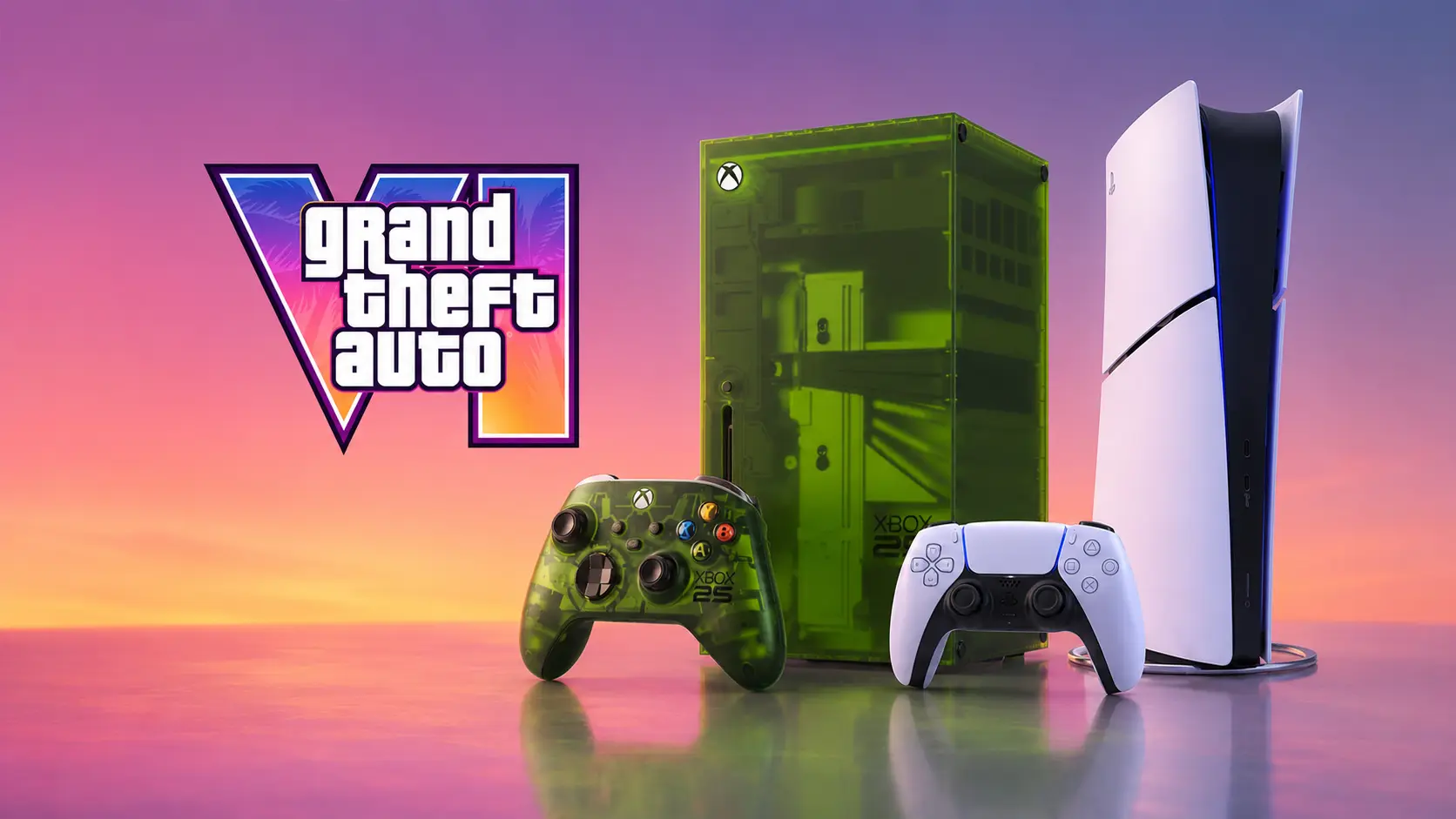
When GTA VI pre-orders went live today, June 25, the listing confirmed something Rockstar had buried in the press release without much fanfare: the physical edition of GTA VI does not include a disc. Walk into any GameStop or retailer on November 12 and pay $79.99 for the Standard Edition, and what you get is a box with a download code inside. No disc. No physical media. A slip of paper that does the same thing a digital purchase does, wrapped in cardboard.
Predictably, the reaction has been rough. A Change.org petition asking Rockstar to reverse the decision appeared within hours of the announcement. The GTA subreddits are full of people who feel they are paying for a box. Some longtime fans have said they will skip the launch entirely and wait for a disc edition.
But here is the thing: this decision was not made carelessly, and it almost certainly was not made because Rockstar wanted to cut disc pressing costs. The real reason is sitting in the recent history of what happened when Rockstar lost control of GTA VI information. And once you see it through that lens, the disc-free physical edition makes a lot more sense, even if it is still genuinely frustrating for the people it affects.
What Actually Ships in the Box
To be clear on the mechanics first. The physical version of GTA VI goes on sale at retail from November 12, one full week before the game's launch on November 19. Rockstar confirmed it is shipping early specifically so that buyers can redeem the code and begin pre-loading. The digital version pre-load date is also November 12, so everyone, physical or digital buyers, lands on the same timeline. The game unlocks for everyone on November 19.
There is no early access. There is no advantage to having the physical box over a digital pre-order beyond the object itself. Once you redeem that code, the game ties to your PlayStation or Xbox account, exactly like a digital purchase. You cannot lend it, resell it, or install it offline from the box. The distinction between physical and digital for GTA VI is, in practice, entirely cosmetic.
The Leak Problem Is Not Abstract for Rockstar
In September 2022, a hacker operating under the name "teapotuberhacker" posted more than 90 files to GTAForums. The files contained early development footage of GTA VI, characters, locations, vehicles, gameplay systems still in rough form. The footage spread across the internet in hours. It was called one of the biggest leaks in video game history, and not in a flattering way. Rockstar confirmed the breach was real. Take-Two estimated the incident cost roughly $5 million in direct recovery costs, not counting the broader damage to a years-long marketing strategy built entirely on secrecy.
The hacker, an 18-year-old member of the Lapsus$ group, had accessed Rockstar's internal Slack channels. He was later arrested and sentenced to an indefinite hospital order in the UK in 2023. In December of that same year, GTA VI's first official trailer leaked online less than 16 hours before its scheduled release, posted in lower quality with "BUY $BTC" stamped across the footage. Rockstar got the proper trailer out, but the moment was still undercut.
Then in April 2026, just months before launch, another breach. Hackers claiming to have accessed Rockstar's Snowflake cloud storage system issued a public ultimatum with a deadline of April 14. Rockstar confirmed a "limited amount of non-material company information" had been accessed through a third-party compromise. A second data breach on the same game, months before it ships.
These are not background details. They are the context in which the disc-free physical edition has to be understood. Rockstar has been burned repeatedly, and the physical retail supply chain is exactly the kind of vulnerability that burns studios. Discs get shipped to retailers early. Retail employees find them, copy them, sell them. Dataminers crack the install files before the game is out and flood the internet with story spoilers. For most games, that is an unfortunate but manageable risk. For GTA VI, after what Rockstar has been through, it is a risk they have clearly decided they are not willing to take.
A Code Cannot Be Ripped Early
This is the core logic of the decision. A download code sitting inside a retail box does nothing until Rockstar flips the server-side switch that activates it. No one can rip a code. No one can datamine a code. No one can install the game from a code before the release date, because the code is not the game. It is a permission slip that only Rockstar can honour.
A disc is different. A disc is the actual data. Once a disc exists in the physical world, it is outside Rockstar's control. One copy in the hands of someone with the right tools is enough. GTA V shipped on multiple discs in 2013 and Rockstar dealt with early copies surfacing in the days before launch. Red Dead Redemption 2 had the same issue in 2018, with footage and screenshots from early retail copies appearing online before the official release date. Rockstar has lived this problem enough times to know exactly how it plays out.
The code-in-a-box approach cuts that off entirely. There is nothing in that retail box worth stealing before November 19. No one is cracking a slip of paper.
What You Actually Lose
This is where the frustration is legitimate, and it is worth being direct about it rather than handwaving it away.
Physical ownership used to mean something specific. You owned a disc. You could install the game without internet access. You could lend it to a friend or a sibling. You could sell it second-hand when you were done with it. You could put it on a shelf and keep it indefinitely, long after the publisher stopped caring about that particular title. The disc edition of GTA V still works today on PS3 and Xbox 360, 13 years after launch, with no need for a server handshake or an account.
A code in a box gives you none of that. The game is tied to your account. If you lose access to the account, you lose access to the game. If the PlayStation Store or Microsoft Store ever goes dark for that title, the code becomes worthless and the disc that might have saved it does not exist. Game preservation is a real concern, and the code-only approach is genuinely worse for it.
The used game market takes a hit too. You cannot sell a redeemed code. Physical GTA titles have historically retained value in the second-hand market, partly because the disc itself was tradeable. That is gone here. Whatever you spend on the physical edition of GTA VI is money that does not come back.
None of that means Rockstar is wrong to have made this call. It just means the people who are annoyed have a real point.
The Used Game Market Takes the Biggest Hit
While much of the discussion has focused on collectors, the biggest impact may be felt by everyday players who rely on the secondhand market to make gaming more affordable.
Games writer Imran Khan summed it up on Bluesky:
"There will be no way to get that game cheaper than MSRP barring a sale."
That observation gets to the heart of what a code-in-a-box release changes. Once a download code is redeemed, it cannot be sold, traded, or passed on to someone else. Unlike a traditional disc, there is no used copy that can eventually make its way to a local retailer, Facebook Marketplace listing, or a friend looking to pick up the game for less.
For many players, buying used games has never been about collecting physical media. It has simply been the most affordable way to experience new releases. Paying full price at launch, selling the game a few weeks later, or waiting to buy a pre-owned copy has long helped reduce the cost of gaming. GTA VI's launch model removes those options entirely.
If Rockstar never releases a genuine disc version, the only way the game's price falls will be through official discounts or retailer sales, not through the secondhand market that has existed around every previous GTA release.
PS5 Pro and Xbox Enhancements
On the platform side, the PS5 store page confirms GTA VI is PS5 Pro Enhanced. The game will take advantage of the Pro's improved image quality, steadier frame rates, and advanced upscaling. Sony and Rockstar have not detailed the specific technical differences yet, but the Pro Enhanced label is official. If you are on a PS5 Pro, the game is built to make use of it.
On Xbox, the store listing says "Optimised for Xbox Series X|S," which is the standard current-gen optimisation badge. There is no mention of Series X-specific enhancements beyond that, and no separate tiered performance designation the way PS5 Pro Enhanced implies on PlayStation. Whether that changes closer to launch or whether Microsoft announces something separately remains to be seen. For now, Xbox players know the game runs on Series X and Series S. That is all the store confirms.
Where the Rest of the Industry Goes From Here
Scale matters in how you read this decision. Code-in-a-box releases are not new. Nintendo shipped Switch cartridge-less boxes with download codes in certain regions. Some mid-tier games have taken the same approach in specific markets. But none of those releases carry the weight that GTA VI does. This is the most anticipated game in years, possibly the decade, going disc-free on its physical launch. That is a different kind of signal.
Publishers have been watching GTA VI's release strategy closely. The $79.99 pricing already set a conversation about where AAA base prices are heading. The disc-free physical edition adds another data point. If the biggest game on the planet ships with a code in a box and the backlash does not visibly dent pre-order numbers, other studios will notice. The practical case for dropping discs, removing the leak risk, cutting manufacturing and shipping costs, locking the secondary market, is a strong one from a publisher's perspective. Rockstar just ran the experiment on the largest possible sample.
There is a version of this that ends with disc editions becoming a niche product reserved for games that genuinely need them for file size or regional reasons, not a default expectation for AAA releases. That future was already arriving slowly. GTA VI may have accelerated it.
The reaction has already extended beyond consumers. Some independent retailers have announced they will not stock GTA VI's code-in-a-box physical edition, arguing that a download code does not represent genuine physical media. While those decisions are unlikely to affect Rockstar's sales in any meaningful way, they highlight a growing divide between publishers embracing digital-first distribution and retailers whose business has traditionally depended on physical ownership and the used game market.
What Pre-Order Buyers Should Know
If you have already pre-ordered the physical edition from a retailer, the practical experience is unchanged. You get the box on November 12, you redeem the code, pre-loading begins. On November 19, the game unlocks. The Vintage Vice City Pack pre-order bonus applies regardless of which edition you bought, and digital pre-orders also get one free month of GTA+. The only thing missing from the physical box is the disc itself.
If you were holding out for a disc edition to appear later as a separate release, that is possible, but Rockstar has not announced one and has given no indication one is planned. Kotaku noted that at least one retailer confirmed it intends to sell a proper physical disc copy once one becomes available. Whether Rockstar produces a post-launch disc version is their call, and they have said nothing about it. Do not pre-order expecting a disc to materialise later unless Rockstar explicitly confirms it.
The bottom line on the physical edition is this: it is a pre-load vehicle inside a branded box. If having the box matters to you, the box is real. If owning a disc matters to you, this is not that, and it may never be.