
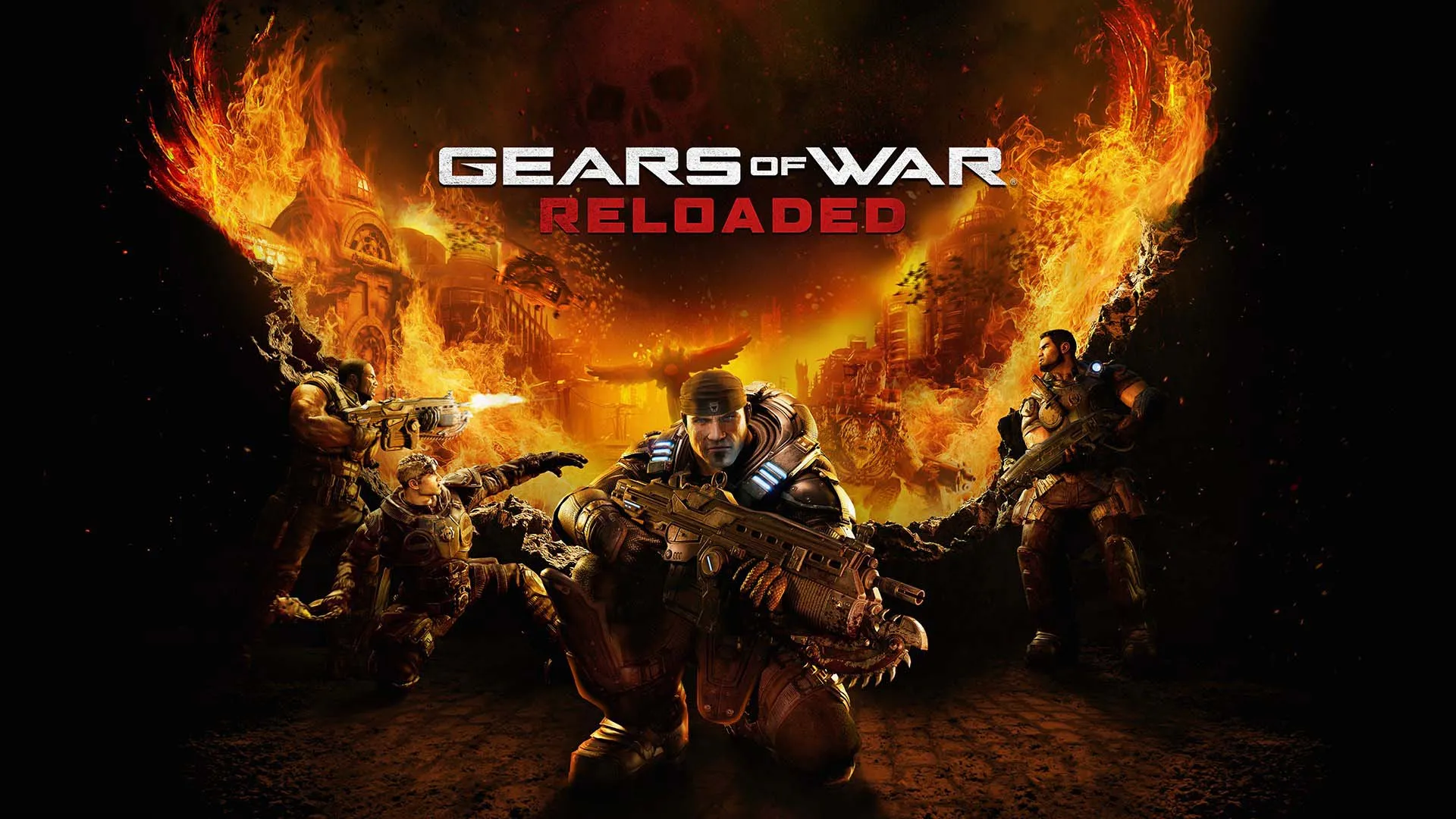
While the original Gears of War begins fourteen years after the Locust first tore through the surface of Sera, Gears of War: E-Day rewinds the clock to Emergence Day itself, following a younger Marcus Fenix and Dominic Santiago through the first chaotic hours of the invasion.
Knowing what the world eventually becomes makes those early moments hit harder. You already know Marcus turns hard and quiet. You already know Dom holds the squad together no matter what. Gears of War: Reloaded is where that knowledge comes from in the first place.
Play it before E-Day and the new game stops being just another shooter debut. It becomes the payoff to a story you already have a stake in. You get to see who Marcus really is before the Locust break the surface, understand why Dom became one of the most beloved characters in gaming, watch the Coalition of Ordered Governments assemble the fight that E-Day shows from the inside, and feel why humanity's survival has always carried this much weight across the series.
Skip that foundation, and a good chunk of E-Day's emotional payoff risks landing on nobody in particular.
A Genuine Return to Classic Gears
It's easy to forget how long it has been since a mainline Gears game actually felt like the original trilogy. Gears of War 4 and Gears of War 5 pushed the story twenty five years past the Locust War, handed the spotlight to JD Fenix and Kait Diaz, and leaned into a more polished, blockbuster-action tone. Both are good games, but a noticeably different flavor from the grimy, desperate feel of the games that built the franchise.
E-Day walks that back on purpose. Marcus and Dom return as the leads, and this time they're not the hardened, half-mythical soldiers players met in 2006. They're younger, less experienced, and by the developers' own description, genuinely vulnerable in a fight they don't understand yet. That's a real shift. Original-trilogy Marcus already knew what a Locust Drone was and how to put one down. E-Day's Marcus is finding that out in real time, right alongside the player.
Dom gets the same treatment. Instead of the steady, dependable soldier who held Delta Squad together for three games, E-Day's Dom is still figuring out who he is as a soldier and as Marcus's closest friend, which gives their relationship somewhere to actually grow instead of starting fully formed. New faces join them too. Mags Carter and Lucas Reyes round out Bravo Squad, and the whole story plays out in Kalona, a city that earlier games have referenced for years but never actually shown until now.
The tone is the bigger story, though. The Coalition has been open about leaning back into horror for E-Day, and the gameplay reveal backs that up: a nighttime setting, driving rain, a squad cut off from backup, and enemies encountered for the first time with no doctrine for fighting them. That's a very different pitch from the confident, high-firepower feel that opened Gears 5. It's closer to the dread of the original game's early hours, back when nobody on screen had any idea how bad things were about to get.
Put those pieces together, younger leads, a horror-forward tone, and a story that intentionally strips away twenty years of series lore to focus on one desperate city over one terrible stretch of days, and it's not hard to see why a lot of longtime fans are already calling E-Day a back-to-roots moment. It isn't a sequel trying to top the last game's spectacle. It's a prequel trying to earn the tone that made the first Gears memorable in the first place, and Reloaded is the clearest reference point for exactly what that tone was.
Quick Comparison: Reloaded vs. E-Day
| Detail | Gears of War: Reloaded | Gears of War: E-Day |
|---|---|---|
| Release Date | August 26, 2025 | October 6, 2026 |
| Platforms | Xbox Series X|S, PC, PlayStation 5, Steam | Xbox Series X|S, PC, Steam (no PS5) |
| Place in Timeline | 14 years after Emergence Day | Emergence Day itself (prequel) |
| Tone | Classic action-forward cover shooter | Horror-leaning, survival-focused |
| Game Pass | Available day one | Available day one |
More Than Just Nostalgia: Why Reloaded Still Matters Today
There's a reason the original Gears of War is still talked about after two decades. The cover-based combat helped redefine third-person shooters, and the gritty atmosphere, brutal Lancer chainsaw executions, and tight two-player co-op campaign shaped a huge chunk of the shooters that came after it.
Reloaded keeps that experience intact while stripping out the parts that made revisiting a 2006 game a chore. Instead of fighting with dated performance or a multiplayer population that dried up years ago, players get the classic Gears experience with modern frame rates, crossplay, and a control scheme that doesn't feel like a museum piece.
There's also a worldbuilding side to this that gets overlooked. The original Gears didn't just introduce a cover mechanic, it introduced the Locust Horde, the Coalition of Ordered Governments, and the ruined planet Sera as a setting with its own history and rules. Every later Gears game, E-Day included, is still drawing from the lore this first entry laid down. Replaying it isn't just muscle memory for the combat, it's a refresher on the politics, the factions, and the stakes that everything else in the series has been building on since 2006.
What Makes the Original Gears So Influential?
Gears of War didn't invent taking cover in a shooter, but it's the game that made cover the whole point. Snap to a wall, peek out, land a headshot, snap back. That loop became the third-person shooter's default grammar almost overnight, and two decades later it's still the shape most games in the genre take. Before Gears, cover was often just another mechanic. After Gears, it became the foundation of an entire generation of third-person shooters.
Active Reload did something smaller but just as clever. Instead of letting a reload sit as dead time, Epic turned it into a tiny rhythm-game moment: hit the reload button again inside a small window on the gauge and the gun reloads faster with a temporary damage boost. Miss the window and the weapon jams instead. It's a small mechanic, but it kept a routine action tense, and plenty of shooters since have tried some version of the same trick.
Then there's the Lancer. A rifle with a chainsaw bolted under the barrel sounds like a joke on paper, but revving it up to saw through a Locust Drone became the single most quoted image of the entire series. It's brutal, it's a little absurd, and it's a big reason people who have never touched Gears still know exactly what a Lancer is.
None of that lands the way it does without the movement underneath it. Marcus and Dom don't sprint like track athletes. They lumber, slide into cover, and roadie run with their heads down like men carrying real weight. That heaviness is deliberate, and it's a big part of why Gears combat still feels distinct from faster, twitchier shooters.
The campaign itself was built around two-player co-op from the ground up rather than bolted on as an afterthought, which was still fairly rare for a big-budget shooter in 2006. Marcus and Dom's dynamic worked because the game trusted a second player to be there the entire time, not just for a side mode tucked away in the menu.
Gears also mattered as a piece of technology. It was one of the earliest console games to show off what Unreal Engine 3 could actually do, and for a while it was the game publishers pointed to whenever they wanted to sell a new engine or a new console generation.
Sound design did a lot of quiet heavy lifting too. The Lancer's chainsaw revs, the wet thud of Locust taking cover, the way gunfire echoes differently in a bombed-out street versus a tight corridor, none of that was an accident. It made Sera feel like a place with weight and texture rather than a generic warzone backdrop, and it's part of why the atmosphere held up even as the graphics eventually started to show their age.
You can trace its fingerprints through a lot of what came after. Mass Effect 2 leaned hard into cover-based third-person combat for a series that started as more of a traditional RPG shooter hybrid. Army of Two built an entire game around cover and two-player co-op while Gears was still fresh in everyone's mind. The Division, years later, still runs on a cover system that owes an obvious debt to what Epic built first. None of those games are clones of Gears, but it's hard to look at any of them and not see the shape Gears left behind.
Should You Play the Whole Series?
Not every Gears game is required reading before E-Day, and treating this like homework misses the point. Here's a reasonable way to split it.
Play Reloaded, Gears of War 2, and Gears of War 3. Together they make up the original trilogy, and they tell one complete story: Emergence Day's aftermath, the fall of Jacinto, and the end of the Locust War. E-Day is a prequel to this exact trilogy, so these three games are where Marcus, Dom, Cole, Baird, and the rest of Delta Squad actually become the characters E-Day is building toward. Skip them and you're watching a prequel to a story you don't know yet.
Judgment, Gears of War 4, and Gears of War 5 are optional, and for different reasons. Judgment is a side story set during Emergence Day itself, following a different squad, Kilo Squad, on trial for actions taken during the very invasion E-Day is about to dramatize. On paper that sounds like required viewing. In practice, Judgment was built with a score-attack, wave-based structure and a much smaller focus on story than the mainline games, so it adds flavor and a bit of context without adding much you actually need to understand E-Day going in. Gears 4 and 5 jump forward twenty five years past the end of Gears 3, hand the story to JD Fenix and Kait Diaz, and deal with a threat that has nothing to do with the Locust invasion E-Day is about to show. They're good games and worth playing if you want the franchise's full arc, but they sit downstream of the story E-Day cares about, not upstream of it.
If your only goal is walking into E-Day with full context, the original trilogy is the whole assignment. If you're the kind of player who wants to see where the Fenix and Santiago families end up decades later, the later games will still be there whenever you're ready for them. Either way, nothing about them is required to understand what happens on Emergence Day.
The Perfect Time to Jump In
With E-Day serving as a prequel instead of a sequel, Xbox is clearly aiming this at a new generation of players as much as longtime fans. The timing lines up well too. E-Day launches October 6, 2026, and Reloaded has already been sitting in the Game Pass library since August of last year, so there's no shortage of time to play through the original story before stepping back into the events that started it all.
Veterans get a clean, modernized return to one of Xbox's defining exclusives. Newcomers get the easiest possible way into the world, characters, and history that E-Day is about to explore in far more detail.
Final Thoughts
Some remasters exist purely to preserve an old favorite. Others show up right when they're needed most. Gears of War: Reloaded is the second kind.
It's a reminder of why this franchise became one of Xbox's defining series in the first place, and it doubles as an invitation for a new generation to see the world before E-Day rewinds the clock even further.
If Reloaded has been sitting untouched in your Game Pass library, take that as your sign to install it. Not just because it's one of the better shooters Xbox has ever put out, but because it hands you the context that will make Gears of War: E-Day mean a lot more when it lands in October.
If E-Day delivers on what it's promising, players who started with Reloaded won't just recognize the faces on screen. They'll understand exactly why those moments matter.
Microsoft could have simply relied on nostalgia to sell Reloaded. Instead, bringing it to Game Pass lowers the barrier for an entirely new generation of players. Whether intentional or not, it also gives those players months to experience the original story before E-Day asks them to care about Marcus and Dom on their very first day of the Locust War.