
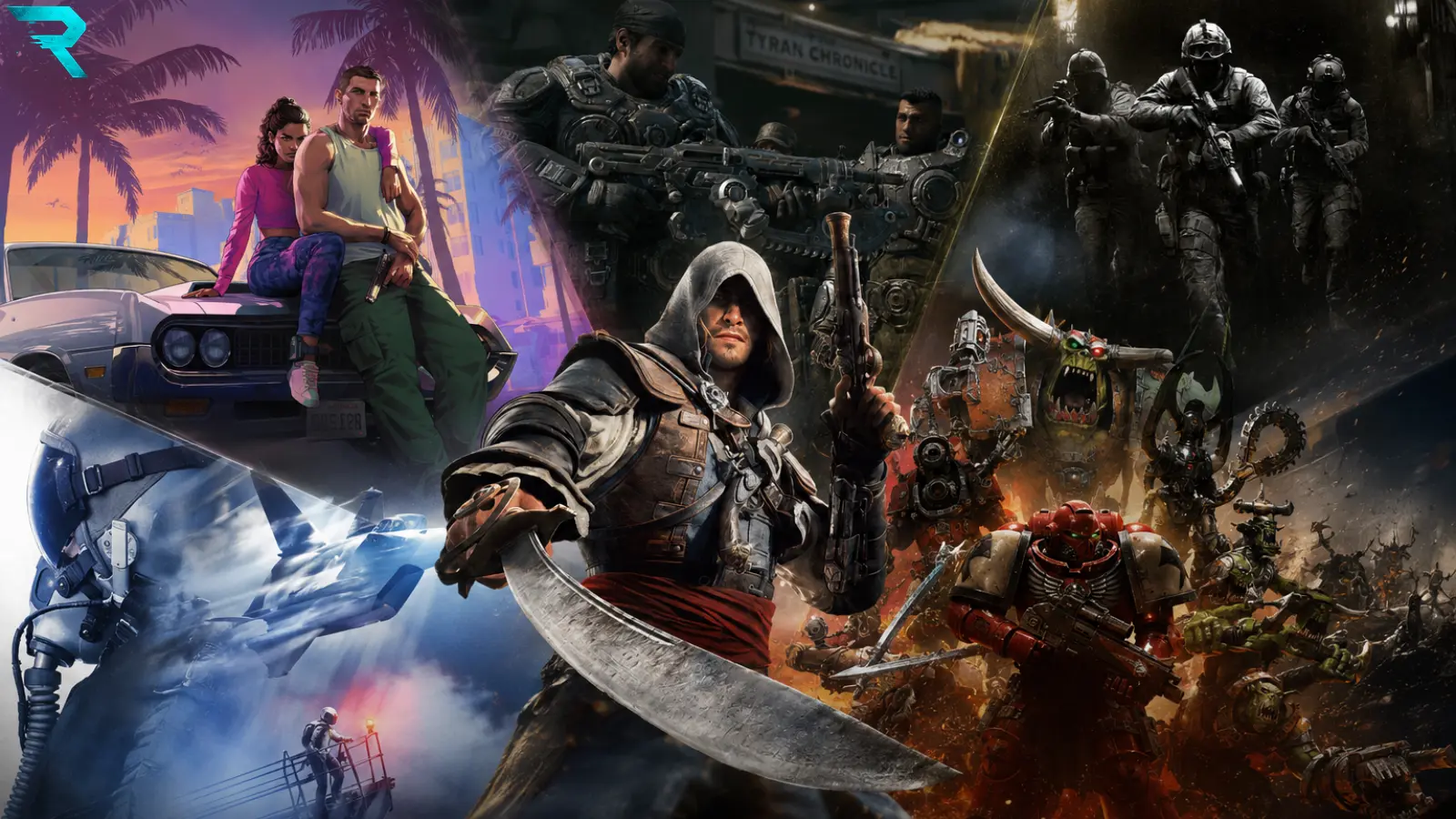
2026 is shaping up to be one of those years people will argue about for a long time. Not because every game on this list is guaranteed to be good, but because several of them are genuinely hard to call. A new Castlevania, a new Ace Combat, a new Onimusha, Phantom Blade Zero, Wolverine, and Gears of War: E-Day all in the same calendar year. Plus whatever Grand Theft Auto VI turns out to be.
This is not a release date tracker. It's a ranked editorial breakdown of the 20 games generating the most actual conversation right now, from the ones quietly building an audience to the ones that could break the internet the week they ship. We've ordered them from lowest buzz to highest, which means we're building toward the obvious but trying to give the overlooked ones their due first.
Some of these are confirmed. Some have launch windows, not dates. A few are almost certainly slipping. That doesn't make them any less worth watching.
20. Star Wars Zero Company
Let's be honest: Star Wars games have had a rough few years in terms of variety. Respawn has done strong work with the Jedi series, but the IP has been slow to branch out into genres that older fans actually wanted. Star Wars Zero Company looks like a correction.
It's a turn-based tactical RPG, closer in spirit to XCOM than to anything we've seen from this IP in a long time. You command a squad of operatives during the Clone Wars, and the previews show real attention to cover mechanics, character permadeath, and mission design that asks you to think rather than just react. The fact that EA and Respawn are letting this exist alongside the action-focused Jedi games suggests some genuine faith in the concept.
The audience for this is smaller than for a third-person Star Wars action game. That's probably why it sits at number 20 on a buzz list. But for the people who want it, it looks like exactly what they've been asking for.
19. Warhammer 40,000: Dawn of War 4
Dawn of War 2 came out in 2009 and people are still arguing about whether it was better than the original. That's how much goodwill this series has stored up, and it's been sitting on that goodwill for almost two decades with nothing to show for a follow-up.
Dawn of War 4 is finally in the pipeline, and based on early details it's trying to thread the needle between the large-scale army management of the first game and the squad-focused intensity of the second. Whether Relic can actually pull that off is the question nobody can answer yet. The Warhammer 40K space is crowded now in a way it wasn't in 2004. There are a lot of decent WH40K games. Dawn of War 4 needs to be more than decent to justify what this franchise meant to RTS fans for so long.
18. Valor Mortis
Valor Mortis is the new entry on this list, and the one with the least public information to go on. What's out there points to a dark fantasy action RPG with a heavy emphasis on combat weight and lore delivered through environmental storytelling rather than cutscenes. The aesthetic is somewhere between dark medieval and early gothic horror.
It's generating the kind of quiet attention that precedes either a sleeper hit or a profound disappointment. The developer hasn't overplayed their hand in marketing yet, which is either a good sign or a warning. Worth keeping an eye on closer to its confirmed window.
17. Castlevania: Belmont's Curse
Castlevania has been in an interesting position since Symphony of the Night. Konami's handled the mainline series with varying success, the Metroidvania genre it helped define has exploded with indie competition, and the Netflix series gave the IP a massive audience that has never touched a Castlevania game.
Belmont's Curse looks like an attempt to bring all three groups together. It's a 2.5D action game with exploration systems that put it closer to a traditional Metroidvania than a linear brawler, and the art direction leans into the gothic atmosphere the IP does better than almost anything else in gaming. The name suggests a Belmont protagonist, which is the right call. People want to whip vampires. That's the whole thing.
The concern is whether Konami's execution will match the concept. Their track record in the last decade has been inconsistent. But the IP itself is strong enough that even an imperfect Castlevania game with a good core loop could be the best the series has offered in years.
16. Rayman Legends Retold
Rayman Legends was one of the best platformers of the 2010s and a lot of people missed it because Ubisoft released it the same week as Grand Theft Auto V. That's not a joke. The original launch was genuinely terrible timing, and the game sold poorly despite being excellent.
Retold is not a sequel. It's a remaster or expanded re-release, depending on how you interpret what Ubisoft has shared. But in a year that has no shortage of heavy, serious games, a polished Rayman platformer with new levels and co-op still intact sounds like a palate cleanser worth having. The buzz is modest because it's not a new game. The quality, if they don't break what worked, should be reliable.
15. Hell Let Loose: Vietnam
Hell Let Loose built a dedicated audience by doing one thing very well: making large-scale WW2 multiplayer feel slower, more deliberate, and more tactical than anything else in that space. It's not for everyone. The learning curve is punishing and you will spend your first few hours dying to people you never see.
The Vietnam setting is a smart move. The era has been underserved in recent years, and the jungle terrain plays directly into the franchise's strengths. Ambushes, asymmetric tactics, and maps that punish impatience all fit the setting better than they fit the open fields of Normandy. Existing Hell Let Loose players are very ready for this. Whether it can bring in new players is a separate question.
14. Star Wars: Galactic Racer
Star Wars Episode I: Racer from 1999 is still one of the most fondly remembered licensed games ever made. People play it on emulators to this day. The fact that it took 25-plus years to get a proper successor says something about how risk-averse IP licensing tends to be.
Galactic Racer is being positioned as a direct spiritual follow-up, with podracer-style vehicles, a range of planets, and an emphasis on speed that looks closer to F-Zero than to modern realistic racing games. It doesn't need to reinvent anything. It just needs to feel like Racer did in 1999. That's a low bar and a high bar at the same time. Low because the formula is known. High because that game has held up for over two decades and anything that doesn't match its feel will get compared unfavorably.
13. Call of Duty: Modern Warfare 4
Call of Duty releases every year and the discourse around each entry follows a predictable pattern: prerelease skepticism, launch-week chaos, six months of complaints about the meta, and then quiet acknowledgment that the game is actually fine. Modern Warfare 4 will follow that pattern.
What makes this one slightly different is the Modern Warfare branding. The 2019 reboot and its sequel were the most successful Call of Duty entries in years, and MW3 didn't hold that momentum the way people hoped. MW4 has the task of restoring confidence in the sub-series. Based on what's been shared, the campaign is getting more attention than usual, and the multiplayer maps look more considered than the more recent releases. That's the version of this game the fanbase has been waiting for. Whether Activision delivers it is the only real question.
12. Ace Combat 8: Wings of Theve
Ace Combat 7 came out in 2019 and sold over three million copies to an audience that wasn't supposed to exist anymore. Fast arcade air combat with dramatic fiction and a bombastic orchestra had been declared irrelevant by the industry, and Ace Combat 7 proved that wrong completely.
Wings of Theve is the follow-up, and the name alone is enough to get the series' fans excited. "Theve" suggests a new fictional country in Strangereal, which is the Ace Combat worldbuilding tradition. New country means new conflict, new aircraft, and a new story full of characters with names like Trigger and Wiseman. The subtitle also carries a reference to "wings," which sounds obvious but is meaningful in how the series titles its entries. Ace Combat fans track these things.
The series does not need to evolve dramatically to succeed. It needs to improve the dogfighting feel, add more aircraft, and tell a story that at least tries to be emotionally coherent. Ace Combat 7 did all of that. There's no reason to think Wings of Theve won't.
11. Marvel Tōkon: Fighting Souls
The Marvel fighting game space has had a turbulent decade. Marvel vs. Capcom: Infinite came and went faster than almost anyone expected, and the IP has been largely absent from the genre since. Marvel Tōkon is trying to fix that.
"Tokon" is a Japanese term that refers to fighting spirit or the will to battle, and the subtitle "Fighting Souls" makes the philosophy explicit. This is being developed with the competitive scene in mind from the ground up, with a roster that balances legacy characters and newer MCU additions and a system designed to support both casual and tournament play.
The arena fighter and platform fighter genres have gotten a lot of Marvel content. A proper traditional 2D Marvel fighter with serious development investment behind it is something different. The question is execution and post-launch support. A fighting game dies without an active community. Capcom had the relationships to build that for MvC. Whether this developer does remains to be seen.
10. Assassin's Creed: Black Flag Resynced
Black Flag is consistently named the best Assassin's Creed game by people who have played all of them. The naval combat, the pirate setting, Edward Kenway as a protagonist who felt like an actual person rather than an IP vehicle, and the freedom of the open ocean made it stand apart. It came out in 2013.
Resynced is not just a remaster. Based on what Ubisoft has communicated, it includes reworked naval mechanics, updated visuals, expanded shanties, new locations, and a reworked progression system. It is not a full remake, but it's more than a resolution bump. For people who played the original, the question is whether the changes improve what was already great or get in the way of it. For people who never played it, this is an entry point into arguably the series' best chapter.
Assassin's Creed is in an odd state right now. Shadows did well commercially but divided the fanbase. Resynced going back to a beloved entry feels like Ubisoft reading the room. That's smart, even if it's also a bit safe.
9. Beast of Reincarnation
Beast of Reincarnation is one of the more unusual pitches in this lineup. It's a souls-adjacent action RPG built around a reincarnation mechanic, where death doesn't reset your run but transforms what you come back as. The gameplay implications of that are significant: your build, your narrative path, and apparently some environmental states all shift based on what form you return in.
That's either a brilliant structural idea or a nightmare to balance. Early footage suggests the developer has a strong visual sense and the combat foundations are solid. Whether the reincarnation system delivers on its promise in a full game is the part nobody can answer from previews alone. It makes the list at nine because the concept is genuinely novel and novel concepts in this genre are rare. More people should be watching this one.
8. Halo: Campaign Evolved
The name is a nod to Combat Evolved, and it's doing real work. Halo has spent the last few years dealing with the complicated legacy of Infinite, a game that had a strong campaign and a live-service multiplayer that didn't land the way 343 Industries needed it to. The studio has since been restructured, and Campaign Evolved is the first product of whatever new direction that restructuring produced.
What the name promises is a return to campaign-first design. Single-player Halo. Story-driven, linear-to-open, Chief-centered. The exact structure hasn't been confirmed but the emphasis on "campaign" in the title is not accidental messaging. Xbox needs a Halo that works. The brand is too important to the platform to keep underperforming, and a focused single-player entry might be exactly the reset the series needs.
The caution is that 343 has promised resets before. What's different now is the leadership change and the frank acknowledgment that the live-service pivot didn't work. Sometimes studios learn from that. Sometimes they don't.
7. Control Resonant
Control was one of the best games of 2019. The Federal Bureau of Control, the Oldest House, the Hiss, Jesse Faden, and the way the game used brutalist architecture as both setting and storytelling tool all combined into something that felt genuinely unlike anything else that year. Remedy has been building their connected universe ever since, and Control Resonant is the next chapter in that.
Without being too spoiler-heavy on what's been revealed: Resonant takes Jesse into a new section of the Oldest House and expands the mythology around paranatural objects in ways that tie into Alan Wake 2's lore. If you've played both games, that sentence means something specific to you. If you haven't, the short version is that Remedy is building something ambitious across multiple titles and Control Resonant is a load-bearing part of that structure.
Remedy is one of the few studios that consistently delivers on this kind of meta-narrative ambition. That earns trust. Control Resonant sits at seven because the audience for it is smaller than some of the games above it, but the passion of that audience is hard to overstate.
6. Onimusha: Way of the Sword
Onimusha has been absent for long enough that an entire generation of players doesn't know what it is. The original series ran from 2001 to 2006, built around samurai action, a demonic oni mechanic that let you absorb souls from enemies, and a setting pulled from Japanese history filtered through supernatural horror. It was one of Capcom's most distinctive IPs and it just stopped.
Way of the Sword is the revival, and the footage shown so far suggests Capcom is treating it seriously. The combat looks close to what the series did well rather than being repackaged as a soulslike, which was a reasonable concern given where action RPGs have gone since 2006. The setting is feudal Japan, the oni absorption is present, and the tone is appropriately dark without going camp.
For players who grew up with Onimusha, this is a direct appeal to memory. For newer players who love Nioh or Ghost of Tsushima, Way of the Sword is something adjacent that predated both of them. It has a path to both audiences. Whether it can reach them both is Capcom's challenge.
5. Phantom Blade Zero
Phantom Blade Zero has been building hype since its reveal and it hasn't really let up. It's an action RPG from S-GAME, a Chinese studio, with a visual style that sits somewhere between wuxia cinema and gothic fantasy. The combat system is fast, precise, and aggressive in a way that reads as genuinely demanding rather than just difficult.
What's unusual about Phantom Blade Zero's position in gaming culture right now is that it's carrying some weight beyond its own game. It's one of the highest-profile releases from a Chinese developer targeting the global premium gaming market, and the reception to its previews suggests that the audience it's reaching is not approaching it through any particular cultural lens. They just want the game. That's the best possible sign for what it is.
The combat previews are the reason it sits at five. Few games shown in the last two years have generated the kind of "I need to play this right now" reaction from action game enthusiasts that Phantom Blade Zero has managed. If the full game delivers on those previews, it will be one of the year's best.
4. The Blood of Dawnwalker
The Blood of Dawnwalker is from Rebel Wolves, a studio formed by former CD Projekt Red developers including the director of The Witcher 3's Blood and Wine expansion. That pedigree matters. Blood and Wine is still held up as one of the best pieces of DLC in gaming history, and the people who made it going independent to create their own RPG is genuinely significant.
Set in 14th-century Europe with a heavy vampire mythology, Dawnwalker puts you in the role of Coen, a man turned into a vampire who is racing against a time limit to save his family. The time mechanic is the central hook: the world changes based on how you spend your limited days and nights, and choices made early have downstream consequences the game doesn't telegraph to you in advance. That's the kind of design ambition that either produces something extraordinary or collapses under its own weight.
Given the team and the footage, this sits at four with a real chance of being higher by the time anyone actually plays it.
3. Gears of War: E-Day
Gears of War: E-Day is a prequel set on the actual Emergence Day, the moment in the series' timeline when the Locust first broke through the ground and destroyed human civilization. Marcus Fenix and Dom Santiago are confirmed as the leads. The setting is urban, nighttime, and apparently chaotic in ways the later games couldn't be because the later games took place after humanity had already organized a response.
E-Day puts you in the moment of collapse. That's a tone the series has never been able to explore properly because it was always telling stories set after the worst had already happened. The potential is obvious. Gears of War at its best is relentlessly atmospheric, and giving the series a setting that's genuinely desperate rather than just difficult is the right move.
The Coalition has been building toward this for years. The Xbox ecosystem needs it to land. Everything shown so far suggests it will.
2. Marvel's Wolverine
Insomniac's Marvel's Spider-Man 2 had a rough development period by most accounts, with reports of crunch and a launch that was good but not quite at the level the first game set. Wolverine has been in development alongside all of that, and the few glimpses shown suggest Insomniac is doing something genuinely different with the character.
Logan is not Peter Parker. He's not a hero who struggles with responsibility. He's a man with an uncontrollable weapon built into his body, a history of violence that spans a century, and a personality that's been written in wildly inconsistent ways across decades of comics and film. Insomniac has an opportunity to define a version of Wolverine for gaming that cuts through all of that noise.
The combat system reportedly centers on a rage meter and visceral moment-to-moment decisions about how much damage to absorb versus deal. Logan's healing factor makes him durable, and the game design apparently leans into taking punishment as part of the core loop. That's a genuinely interesting structural idea for a superhero game and it's the kind of concept you can only pull off with this specific character.
It sits at two because the execution questions are real. Insomniac is a great studio with a complicated year behind them. Wolverine could be their best game or their most uneven one. There's no safe prediction here.
1. Grand Theft Auto VI
There's nothing clever to say about GTA VI's position on this list. It's the most anticipated game in the history of the medium by most metrics. The trailer released in December 2023 became the most-viewed gaming trailer ever within days. A sequel announcement for one of the most viewed pieces of gaming media in history is not something that generates normal buzz. It generates a different category of cultural attention entirely.
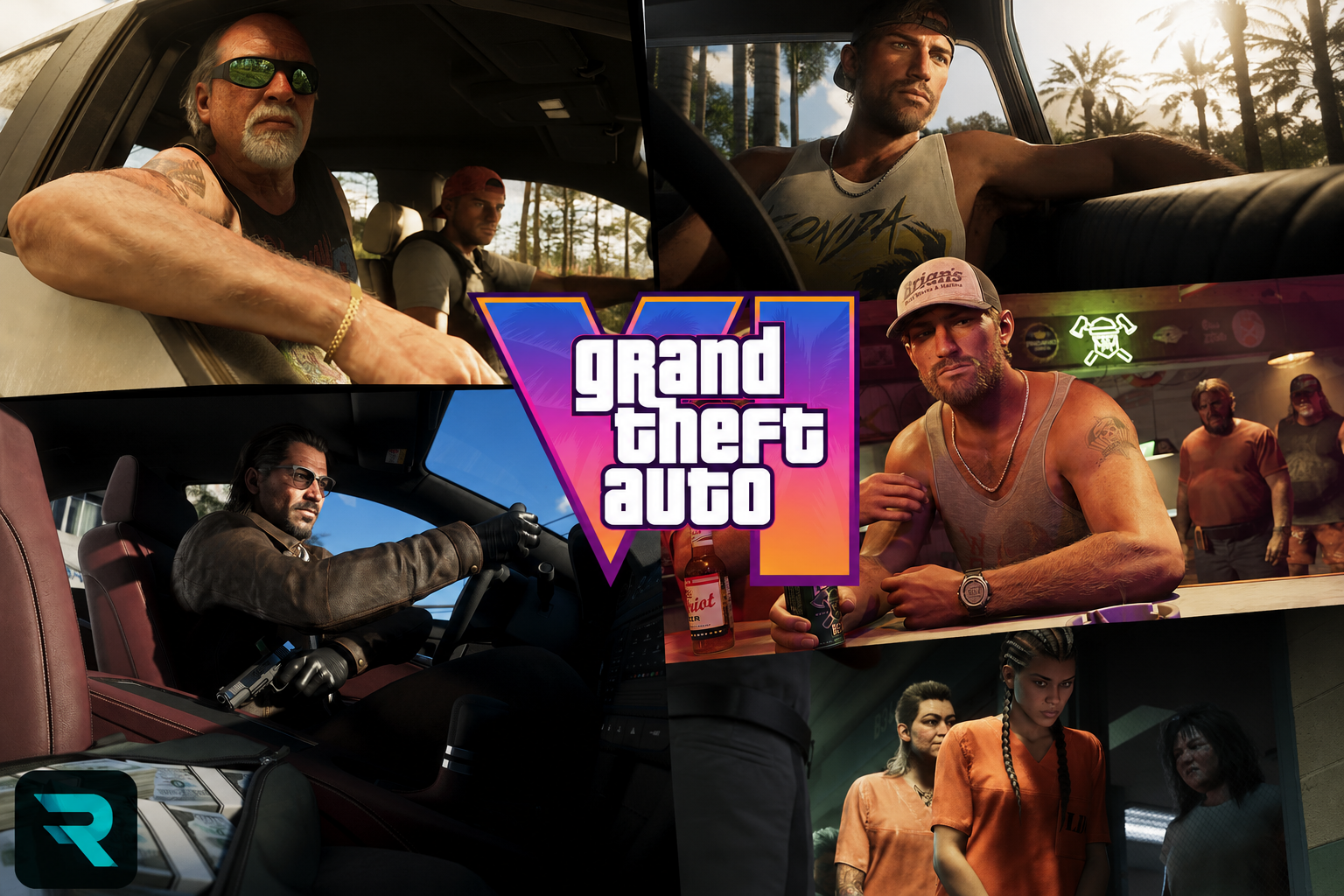
What we know: dual protagonists, Jason and Lucia, returning to Vice City, a Florida-inspired open world, and a contemporary setting that Rockstar has indicated will reflect modern social media culture in ways GTA V couldn't. What we don't know, still, is the exact release date beyond a window, what the online component looks like at launch, and whether the PC version comes simultaneously or follows later as it usually does.
The concerns people have about GTA VI are not really about the game. Nobody expects Rockstar to ship a bad Grand Theft Auto. The concerns are about release timing, about what "modern social media satire" actually looks like when it's playable rather than described, and about whether online GTA in 2026 can capture the cultural moment the way GTA Online did in 2013.
None of those concerns will stop it from being the game of the year by sales. Possibly by critical reception too. The safer debate is about everything else on this list, which is kind of the point: 2026 is strong enough that GTA VI isn't the only reason to pay attention. That almost never happens.
Final Thought
The honest answer to "which of these will actually be great" is that we don't know yet. Release dates shift, games get delayed, and some of the most hyped titles of any given year end up being the ones people remember most charitably for what they almost were. A few of the games in the middle of this list, Beast of Reincarnation, Phantom Blade Zero, Dawnwalker, could end up being the ones people talk about longest. That's usually how it goes.
Check back. This list will look different by December.