

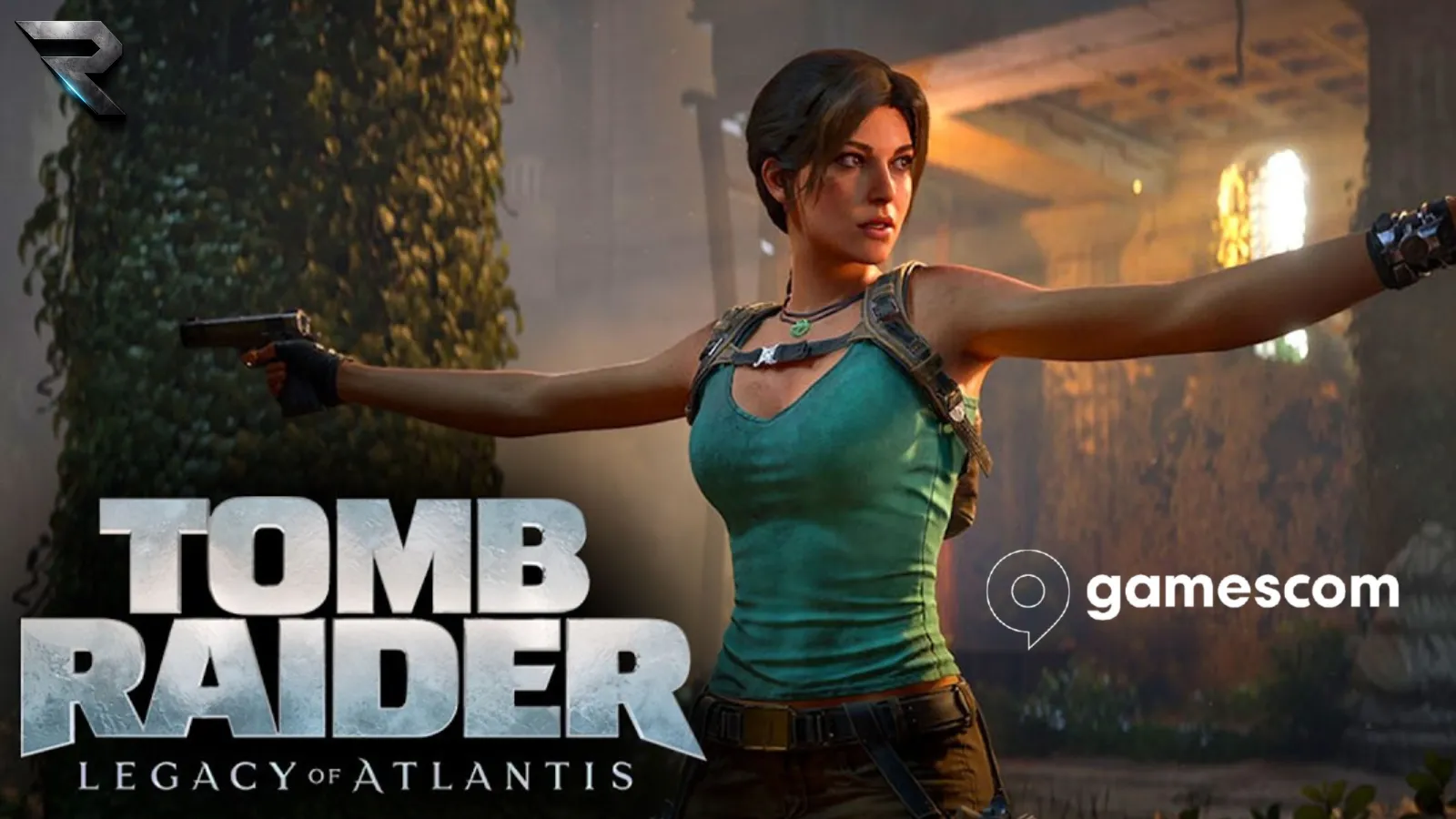
An extended gameplay demo for Tomb Raider: Legacy of Atlantis showed up at Gamescom 2026, and it comes with the developers talking through their decisions in real time. The footage runs through the Peru section of the game, from the cog puzzle at the Tomb of Qualopec to a boss fight against a redesigned T-Rex, with the team explaining why each piece was rebuilt the way it was.
What comes through across the demo is less a list of new features and more a stated philosophy: nothing in the world should exist just because the genre requires it. The developers keep returning to the same idea, that every puzzle, every gear item, and every enemy needs an in-world reason to be there, and the walkthrough spends a lot of its runtime showing what that looks like in practice.
Building Peru on Real Incan Culture
The team says the Peru setting is grounded directly in Incan culture and architecture, along with research into the region's plants and natural landscape. Lara is an archaeologist, and the developers argue that means the places she explores have to feel real rather than generic. The goal, as they describe it, is bringing back the original feeling of the 1996 Peru levels while treating the culture behind them with more care than a straightforward remaster would.
They are also careful to say the location should not feel like a preserved heritage site. Legacy of Atlantis frames Peru as a lost city that evolved in isolation, which gives the team room to invent details that are unmistakably Tomb Raider without breaking from what is actually known about Incan history. The overgrown aesthetic, along with the dirt Lara picks up as she moves through it, is part of selling the idea that she is the first person to set foot there in a very long time.
The Cog Puzzle Finally Gets a Reason to Exist
The cog puzzle from the original Tomb Raider is one of the most recognizable water cooler moments in the series, and the developers say they wanted a modern sense of immersion to go along with it. Rather than treating the puzzle as a mechanical obstacle, they built an entire culture and ceremony around it, one where cogs are brought together to open the gate to the Tomb of Qualopec.
That narrative logic runs through the whole sequence. Lara moves upward through a small civilization adjacent to the temple, discovering details about the culture along the way before reaching a water clock whose purpose is left unexplained. The developers describe designing the structure and internal logic of that space as one of the more enjoyable parts of the project, since it meant justifying why the puzzle would exist at all rather than just placing it in the world.
Also Read:Gamescom 2026: PlayStation and Xbox Detail Their Biggest Showcases
An Environment Built on Logic, Not Convenience
The team repeats a specific standard for the environment: every mechanism, every puzzle, and every obstacle Lara encounters needs to make sense within the world rather than existing because the game requires it. According to the developers, that meant treating each space as something someone actually built, with its own internal reasoning, instead of designing rooms around whatever puzzle needed to go there.
One example singled out in the demo is a moment where Lara dislodges roots and takes a dive into the water, only to notice something out of the corner of her eye that leads into a new area entirely. The developers point out that a player who doesn't take a beat to look around could miss it completely, which is presented as intentional. The demo also spends time on quieter vistas, moments without a time clock where the developers say they want players to slow down and take in the environment rather than speed run through it.
Reimagined Puzzles and an Optional Scanner
Asked how the puzzles have evolved for Legacy of Atlantis, the developers describe going back to the original intent of each classic puzzle and asking what it was actually trying to do. Sometimes that means sticking close to the original formula, and sometimes it means deviating from it, but they say the approach is always meant to respect the history of the series rather than treat it as something to ignore.
New gear lets Lara extract additional lore from the world, and a scanner tool does double duty. It can be used purely for lore, letting fans dig deeper into the world if they want to, or it can surface hints for the puzzles themselves. The developers frame this as accommodating two different kinds of players: those who want the fuller set of systems, and the hardcore players who just want two pistols and no assistance at all.
A Development Team Full of Tomb Raider Fans
Legacy of Atlantis is being co-developed with an outside studio, and the team says that partnership came together in part because the studio's staff were already fans of the series. One designer, referred to in the demo as Maddie, is described as well known in the Tomb Raider community for building fan-made levels before joining the project professionally.
The developers also point to research into Incan, ancient Greek, and Egyptian culture as part of the same effort, saying the goal is to respect the real history behind each setting while still making players feel like archaeologists rather than tourists moving through a game level.
Lara's Expanded Toolkit
Beyond the scanner, the demo highlights a grapple tool that opens up new traversal and interaction options, alongside classic abilities like push-pull that carry over from earlier games. The developers say the intent behind every new addition is that it should feel additive, enhancing what is already familiar rather than replacing it.
A crafting system also makes an appearance, letting Lara scavenge resources from the environment and turn them into recipes that provide short-term gameplay buffs. The developers frame this as a way to keep the classic feel of finding supplies in a tomb without breaking immersion, and they are clear that none of it is mandatory. Players who want to push through the game with dual pistols and standard healing items can still do exactly that.
Combat Gets Rebuilt Around Movement
The demo eventually reaches an encounter with raptor-like enemies, which the developers say received a full combat overhaul. Rather than charging directly at the player and absorbing shots, they now evade and react, and players get access to a help reticle in aim-down-sights mode to read where enemies are positioned before committing to a shot.
Lara's own combat loop is described as a continuous cycle of assessing the situation, responding, and repositioning, with her axe making an appearance as a piece of utility gear that carries into fights. A meter fills up during combat that lets her enter a hyperfocus mode, slowing down time for precision shots, which the developers single out as one of their favorite features in the game.
On the design side of the raptors themselves, the team says they kept the red coloring that longtime fans will recognize from the 1996 original, while updating the silhouette and adding feathers to reflect how much has changed in paleontological understanding of dinosaurs since then.
The T-Rex Returns, Reimagined
The demo closes on a reworked encounter with the series' signature T-Rex. The developers describe the original reveal, where Lara turns a corner and comes face to face with the dinosaur, as a moment they could not recreate exactly but wanted to honor in spirit, aiming for the same emotional reaction rather than a shot-for-shot recreation.
The redesign keeps recognizable elements from the classic look, including the green coloring with yellow markings under the eyes, while adding plumage that the team says is meant to reflect the geothermal valley the creature lives in. The result is described as a design that still carries the T-Rex's classic identity while giving it a reason to look the way it does in this specific environment.
What We Still Don't Know
The Gamescom 2026 demo does not include a release date or a confirmed platform list, and the developers stick mostly to design philosophy rather than technical specifics like performance targets or editions. What the extended footage does make clear is the scope of the ambition: a Peru setting researched in real depth, a puzzle-first approach to level design, a toolkit that expands without replacing the classics, and a combat system meant to feel as physical as the exploration around it. With ancient Greece and Egypt already mentioned as settings the team has been researching, Legacy of Atlantis looks to be planning a tour through several of the series' most iconic locations before it's finished.