
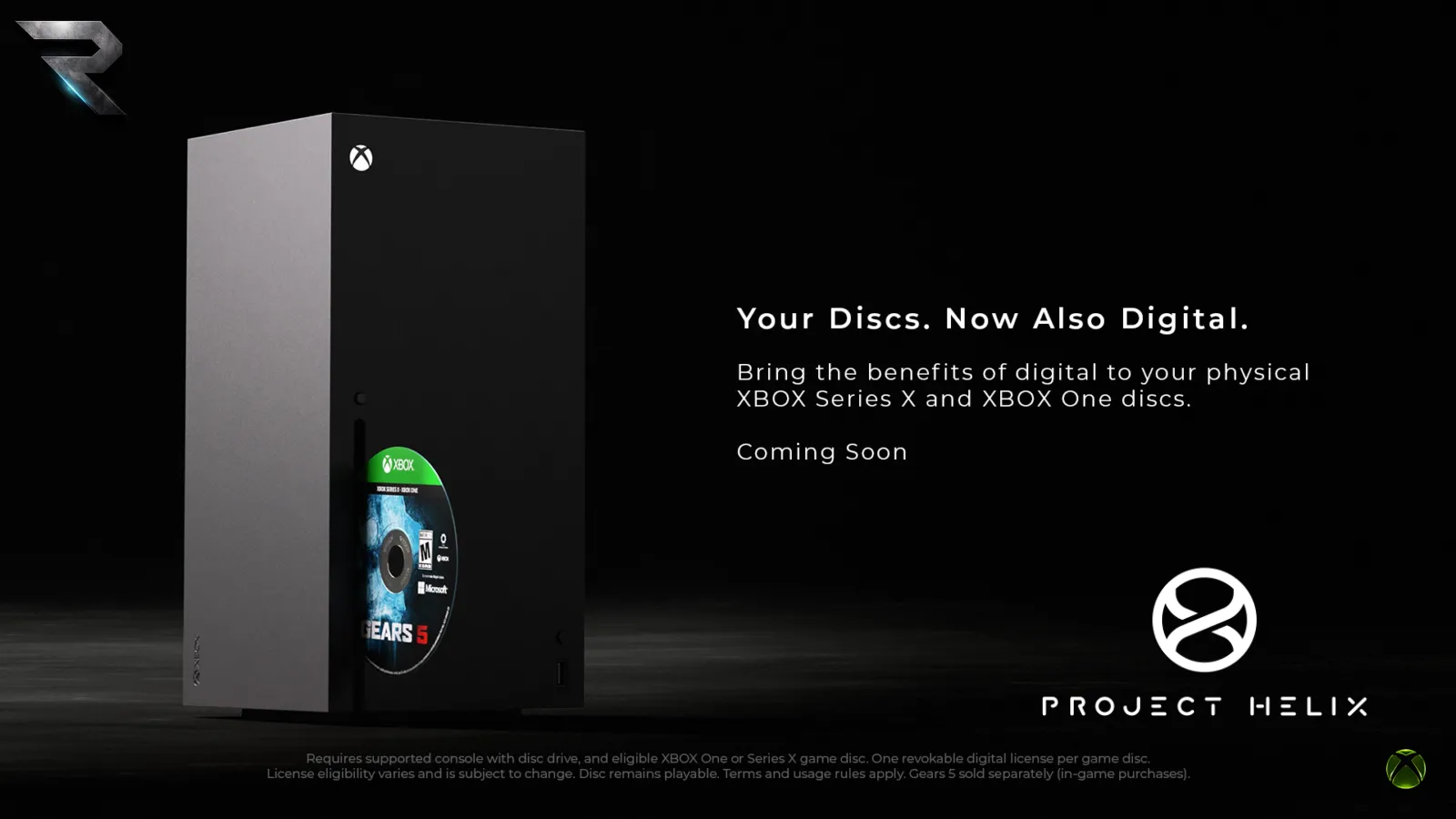
Microsoft is rolling out a new Xbox feature that lets owners of supported physical games claim a digital entitlement for their discs, folding several benefits normally reserved for digital purchases into physical game libraries. Xbox Insiders can start testing the system on August 31, and Microsoft says it will cover thousands of titles at launch before expanding compatibility over time.
Microsoft is framing the change as part of Xbox's ongoing preservation effort, pointing out that players have built their collections across decades of hardware and multiple console generations. For anyone sitting on a shelf of physical Xbox games, the update could make those libraries considerably more useful than they were the day before.
How the Digital Entitlement System Works
Under the new system, owners of eligible games can insert a disc into an Xbox One or Xbox Series X console, launch the game, and then claim a digital entitlement if the title qualifies. Microsoft says most Xbox One and Series X disc based games will support the feature, though not every title will be ready when the program goes live. The company is not swapping the disc for a digital copy. The disc keeps working exactly as it did before, and the player also gains whatever digital benefits are attached to that entitlement.
Microsoft lays out the process as five simple steps:
- Own a supported physical Xbox game.
- Insert the disc into an Xbox One or Xbox Series X console.
- Launch the game.
- Claim the digital entitlement if the title is eligible.
- Keep using the physical disc exactly as before, while accessing supported digital features such as Xbox Play Anywhere or Xbox Cloud Gaming where available.
Microsoft is starting with thousands of titles rather than trying to make every physical game compatible on day one, and it says more will be added after launch.
Play Anywhere, Cloud Gaming, and What You Actually Get
One of the bigger draws of the new entitlement is that it can unlock features tied to Xbox's digital ecosystem. Microsoft specifically calls out Xbox Play Anywhere and Xbox Cloud Gaming, both offered where the title supports them. A physical game that picks up an eligible entitlement can end up considerably more flexible than it was as a disc alone, giving players a way to access supported features across the Xbox ecosystem instead of treating the disc as something that only works once it is in a drive. The exact benefits still depend on the individual game, since Microsoft is clear that these features only apply where supported.
The idea reflects a broader shift in how console makers think about ownership. Physical media and digital distribution are usually treated as separate categories, but Xbox's approach suggests the two can work together for supported titles, letting players keep their discs while also picking up digital functionality, at a time when libraries increasingly stretch across generations, storefronts, and devices.
Your Disc Still Works, and the License Is Revocable
Claiming the digital entitlement does not invalidate the physical copy. Once a player claims it, the original disc stays playable, so the disc keeps serving as a working copy of the game while the entitlement adds extra flexibility on top. Microsoft is not presenting this as a mandatory switch from physical to digital, it is trying to make the two work together, and the promotional line for the feature sums it up simply: "Your Discs. Now Also Digital."
There is a catch worth flagging though. The promotional material says players receive one revocable digital license per game disc, which means Microsoft is not describing this as turning a physical copy into a permanent, unrestricted digital purchase. The entitlement stays tied to the eligible disc and comes with its own licensing conditions, and how transferring, selling, or otherwise disposing of a disc affects that entitlement is likely to be one of the first things Insiders test once the program opens on August 31. Microsoft's announcement does not fully spell out those scenarios yet.
Not Every Game Qualifies
There is an important limit here. Not every physical Xbox game will be eligible, even though Microsoft says most Xbox One and Series X disc based titles support the new system, with thousands included at launch and more added over time. Players should not assume any disc will automatically generate an entitlement, since eligibility comes down to the individual title. Microsoft has not published a full list of every supported game, so the early testing period should clarify exactly how broad the compatibility really is.
Why Microsoft Is Calling This Preservation
Microsoft is tying the feature directly to game preservation rather than framing it as a convenience update. Players have spent years building physical libraries that span multiple generations of Xbox hardware, and as consoles, storefronts, and compatibility systems keep changing, holding onto access to older games gets harder. Physical media preserves access on its own, but modern digital ecosystems offer advantages that discs traditionally cannot match, and Xbox is trying to bridge the two. A player who bought a game on disc years ago could keep that copy and still pick up digital features without buying the game again, which matters most for older Xbox libraries. Instead of treating physical and digital as separate categories, Microsoft is moving toward a model where an eligible disc becomes a gateway into its digital ecosystem.
For anyone with hundreds of physical games already on a shelf, that could eventually change what the collection is worth. A shelf of Xbox discs has always depended on compatible hardware, and often the disc itself, but if those same games can pick up digital entitlements, the collection becomes more tied into Microsoft's wider ecosystem. That could make it easier to carry an older library forward as hardware changes, and it gives players another reason to hold onto their discs instead of treating them as an outdated way to distribute games.
Xbox Insiders Get First Access
The feature is not rolling out to everyone right away. Xbox Insiders can start testing it on August 31, 2026, and Microsoft is using that window to gather feedback before deciding how far to expand it. The testing period should answer a few things the initial announcement leaves open, including the full list of supported games, how the entitlement behaves across consoles, and what happens under different ownership scenarios. Microsoft is asking Insiders to send feedback through the Xbox Player Voice program.
What Xbox CEO Asha Sharma Told the BBC
Microsoft's announcement covers the mechanics, but an interview Xbox chief executive Asha Sharma gave to the BBC suggests the implications reach further than the original post lets on. Sharma confirmed Xbox is preparing digital entitlements for 1,000 physical games, giving players a way to unlock digital versions of titles they already own. More notably, she said the entitlement is built with future Xbox hardware in mind.
Xbox has spent years building out its backwards compatibility program, and Sharma indicated the company plans to keep that going into future generations. "We've long pioneered backwards compatibility and so you'll continue to see that as we go forward in the generations," she told the BBC. That turns the entitlement system into more than a convenience feature for current owners, it could become the bridge between today's physical libraries and whatever Xbox hardware comes next. A player who claims an entitlement today could, in theory, keep playing that game on future Xbox hardware without needing the original disc at all.
Selling Your Disc Will Not Break the Entitlement
One of the biggest open questions after the original announcement was what happens if someone sells a physical game after claiming its entitlement. Sharma answered it. According to the BBC, if a supported disc is sold second hand, the digital rights move with it to the new owner. That makes the system a lot more interesting for collectors, since Xbox is treating the disc itself as the thing that carries the entitlement rather than locking it to the original account. In practice, a supported game could pass through the second hand market while still carrying the ability to unlock its digital benefits for whoever ends up owning the disc, which means Microsoft is not simply using this as a backdoor way to convert physical ownership into a standard digital license. The physical copy still matters.
The Big Unanswered Question: Will Project Helix Have a Disc Drive?
This is where the biggest open question sits. Sharma would not confirm whether Xbox's next generation console, currently known as Project Helix, will include a disc drive, which matters because Microsoft is simultaneously building a system that gives existing physical games digital entitlements. The company is effectively saying that players' physical libraries matter, while leaving open the possibility that future hardware might not include a drive to actually play those discs. That contradiction might be the point. If supported games can turn into transferable digital entitlements and carry forward through Xbox's backwards compatibility system, a future console could give players access to their existing physical library without needing a disc drive at all, a real benefit for anyone with hundreds of discs already, even if it is a different kind of concern for physical collectors.
The new entitlement system is a clear win for people who already own physical Xbox games, but it does not amount to a promise that future consoles will keep supporting physical media the way current ones do. Microsoft has not said Project Helix will include a disc drive, and it has not promised that physical Xbox releases will continue indefinitely either. That distinction matters more as the industry heads toward 2028. According to the BBC, Sony has said new PlayStation games will stop coming out on disc starting January 2028, and the report notes that a major release like Grand Theft Auto VI is launching without a physical disc at all. PlayStation fans have kept making their frustration visible on social media, including replying to Sony and PlayStation accounts directly, and the ongoing PSBlackout protests are another sign of that pushback. The conversation is no longer just about whether people prefer discs to downloads, it is about whether players will still get to choose to buy, own, resell, collect, and preserve games physically at all, which is exactly where Microsoft's approach starts to look interesting.
Xbox Says It Wants to Preserve Choice
Sharma's comments to the BBC suggest Xbox understands why physical media still matters to players. "I know players love physical media, and I know there's a lot of benefits in digital media, and I want to make sure people have a choice," she said. That thinking shows up directly in the entitlement system. Players keep their discs, they can pick up digital access where it is supported, digital rights transfer along with a disc when it is resold, and those entitlements might eventually let existing libraries follow players into future Xbox generations. That is a considerably friendlier approach to physical media than simply dropping discs altogether, but it still leaves one big question open. Will players still be able to buy new Xbox games on disc, and will there be a console with a drive to play them? Microsoft has not answered that yet.
Rising Hardware Costs Could Decide the Outcome
There is another reason the future of physical Xbox hardware is still up in the air. Sharma told the BBC the gaming industry is facing what she called a hardware and component "crisis," with costs climbing partly because of demand for memory and other components tied to AI infrastructure. She referred to the situation as "Rampocalypse" and argued the industry needs to start innovating around affordability and efficiency in ways it has not had to before. That could directly shape the next Xbox, since Microsoft has to balance performance, storage, memory, component costs, and the final price of its next generation hardware, and a disc drive adds hardware, manufacturing, and physical distribution costs on top of that. If Microsoft can give players access to their existing libraries through transferable digital entitlements, that gives the company another way to justify leaving a disc drive out of a future console on cost grounds alone, even if that would still be a significant change for physical collectors.
What This Actually Means for Xbox Owners
The immediate effect of this announcement is good news for anyone who already owns physical Xbox games. Microsoft is adding value to existing libraries instead of treating them as leftovers from an earlier era. Being able to claim a digital entitlement, transfer those rights with a resold disc, and potentially carry games into future Xbox generations makes physical ownership more durable than it might have been otherwise. But there is a real difference between protecting the value of today's physical games and guaranteeing that physical games have a future at all. Xbox has handled the first part. It has not addressed the second.
That makes the next few years worth watching closely. If Project Helix ships with a disc drive and Microsoft keeps releasing physical games, Xbox could end up as the platform offering both physical ownership and a modern digital ecosystem. If the next Xbox turns out to be disc less, this same entitlement system could become the mechanism Microsoft uses to move players away from physical hardware while still assuring them that the games they already bought will not just stop working. Either way, the system looks built to make that transition easier, and that might be the real point of the whole thing.
For now, Xbox players have reason to feel good about it. Their physical libraries are not being thrown out, they are being handed a possible digital future, even as PlayStation's move away from physical discs post 2028 and Microsoft's next generation hardware push the industry toward a real crossroads over physical media.