

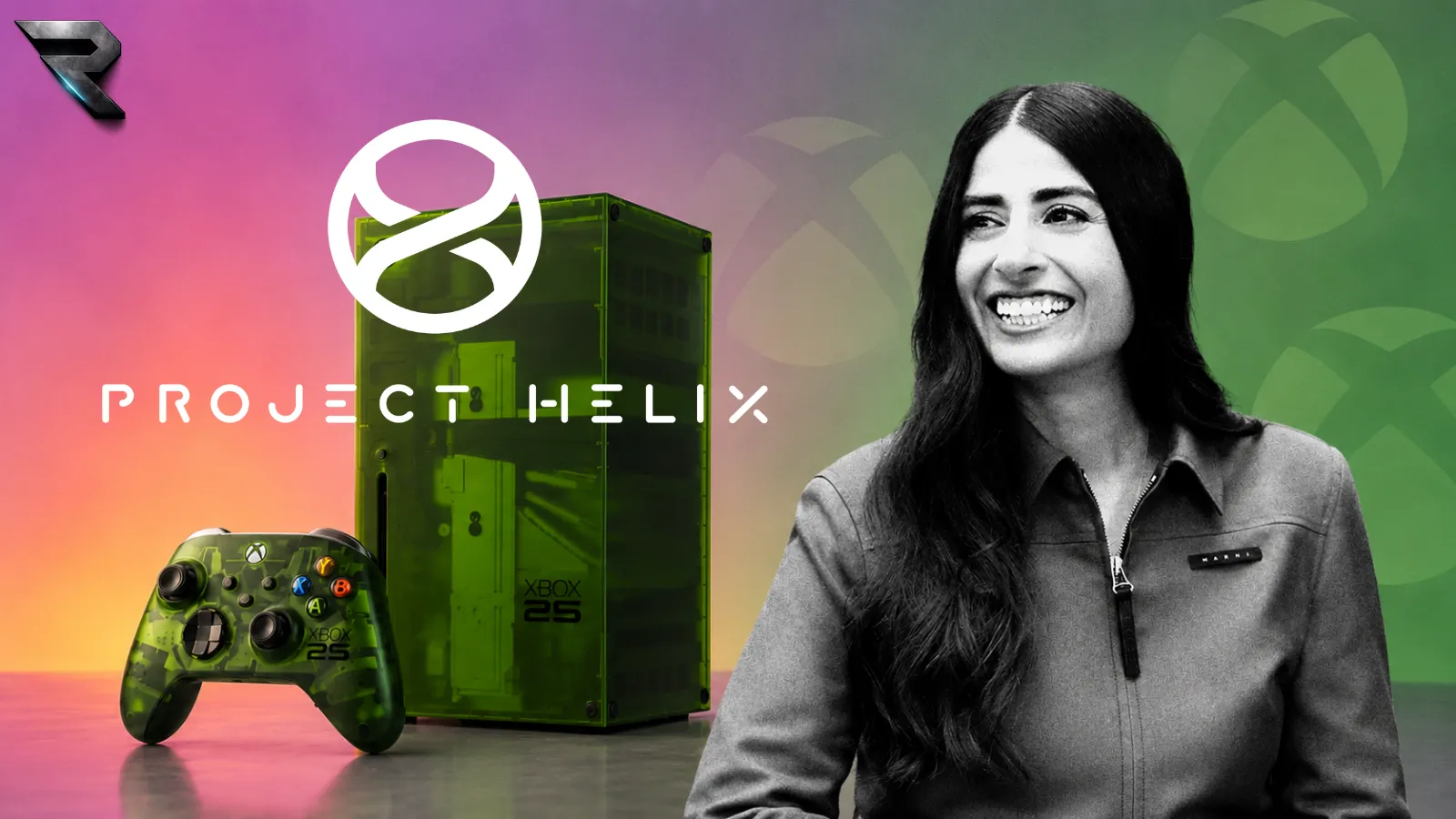
Microsoft still hasn't shown what Project Helix looks like, but Xbox CEO Asha Sharma recently gave the clearest hint yet that it won't be a simple follow-up to the Xbox Series X. Asked directly at Gamescom whether Helix would ship as a diskless console, Sharma declined to get into specifics. What she did confirm is that Microsoft is building more than one piece of hardware around its next Xbox platform.
"We've been hard at work on a great next generation and a great family of devices for Helix, and we'll share more soon," Sharma said.
That phrase, family of devices, is doing a lot of work. Microsoft has talked before about its next-gen hardware plans in general terms, but this is the first time a Sharma has framed Helix as something that could span several types of hardware rather than a single console launching to replace the Series X|S. Microsoft hasn't said what those devices actually are.
Xbox Wants More Ways to Play
The rest of Sharma's interview gives some shape to what Microsoft might be chasing with Helix. She talked about players increasingly wanting different ways to play, and repeated Microsoft's long-running line about wanting Xbox to be wherever people choose to game, while still treating a dedicated console as core to the platform.
"I want Xbox to be where the world plays," Sharma said, acknowledging that not every player wants to access their games the same way.
That's the same logic that makes the family of devices language interesting. Instead of one console for everyone, Microsoft could be building separate devices for separate kinds of players, budgets and rooms in the house.
Performance Won't Be the Only Priority
Sharma said Microsoft still plans to push performance forward with its next generation, but she was just as clear that affordability and hardware efficiency now matter as much as raw power. She pointed to the current pressure on components across the industry and said hardware needs to get more efficient, not just faster.
Pressed on what efficiency actually meant, Sharma pointed to storage and memory use, component costs, and the price per unit, the kind of detail that suggests Microsoft is thinking about margins and shelf price as much as teraflops. A multi-device lineup fits that thinking well. Rather than one expensive flagship trying to serve every kind of player, Xbox could split that job across cheaper and pricier hardware aimed at different budgets.
Xbox Is Getting Closer to PC
There's another piece worth tracking here. Sharma reiterated Microsoft's plan to let players run their PC games on Xbox hardware, not just their console library.
"We've talked about being able to not only play your console games, but also play your PC games on your console," she said.
That blurs the line between an Xbox and a gaming PC a bit more with every update, and it raises a real question about what Helix hardware ends up looking like. If Microsoft is building toward a wider Xbox ecosystem rather than a single traditional console generation, there's room for hardware that sits somewhere between the two. None of that is confirmed for Helix specifically. It's just the direction Microsoft's own comments keep pointing toward.
Is a Handheld Part of the Family?
Out of every guess floating around, a handheld is the easiest one to picture. Microsoft has already leaned into the idea that players want Xbox away from the TV, and its broader strategy has been pulling console, PC and portable gaming closer together for a while now. A dedicated Xbox handheld would give players a way to carry their library around, and it would fit neatly into a wider hardware family rather than standing alone.
It's not the only shape the lineup could take, though. A cheaper, cloud-and-digital-first Xbox could target players who don't want to spend on a flagship box. A smaller living-room device could offer a lighter way into the platform. A more PC-leaning Xbox would make sense too, given Microsoft's push to run PC games on its console hardware. None of these have been announced as Helix devices. They're just plausible answers to a question Microsoft has deliberately left open.
What About Something Further Out?
There's room for bigger swings too. Could Microsoft eventually build an Xbox-branded mixed-reality headset, something closer to its own answer to Apple's Vision Pro that folds gaming into spatial computing? Sharma's interview offered nothing to confirm a device like that exists, and there's no real reason to treat it as an announced Helix product right now. But it's exactly the kind of possibility that "family of devices" leaves on the table.
Microsoft is talking about different ways to play, different ways to reach Xbox, PC games running on console hardware, and a push for next-gen hardware to be cheaper and more efficient, all while describing Helix as a family rather than a single machine. Who actually belongs in that family is still anyone's guess.
Microsoft Isn't Ready to Show Its Hand
The original diskless-console question that started this whole conversation never got a straight answer. Sharma made clear Microsoft isn't ready to talk hardware specifics yet, which means physical media, pricing, specs, form factors and the actual number of Helix devices are all still open questions.
What is clear is that Microsoft isn't approaching the next generation as a straightforward, more-powerful sequel to the Series X|S. Sharma's comments point toward a lineup built around choice, with a dedicated console still anchoring the ecosystem. Microsoft says more details on Helix are coming soon, though it hasn't said when.
What Would You Put in the Xbox Family?
Right now, "family of devices" is the only real detail Microsoft has given up. A next-gen Xbox console feels like a safe bet, and a handheld wouldn't be a surprise either. Beyond that, it's wide open. A budget Xbox, a dedicated cloud box, a PC-Xbox hybrid, or something as ambitious as a mixed-reality headset are all fair guesses until Microsoft says otherwise.
If Xbox really is building a full family of devices around Helix, what do you think should be in it?