
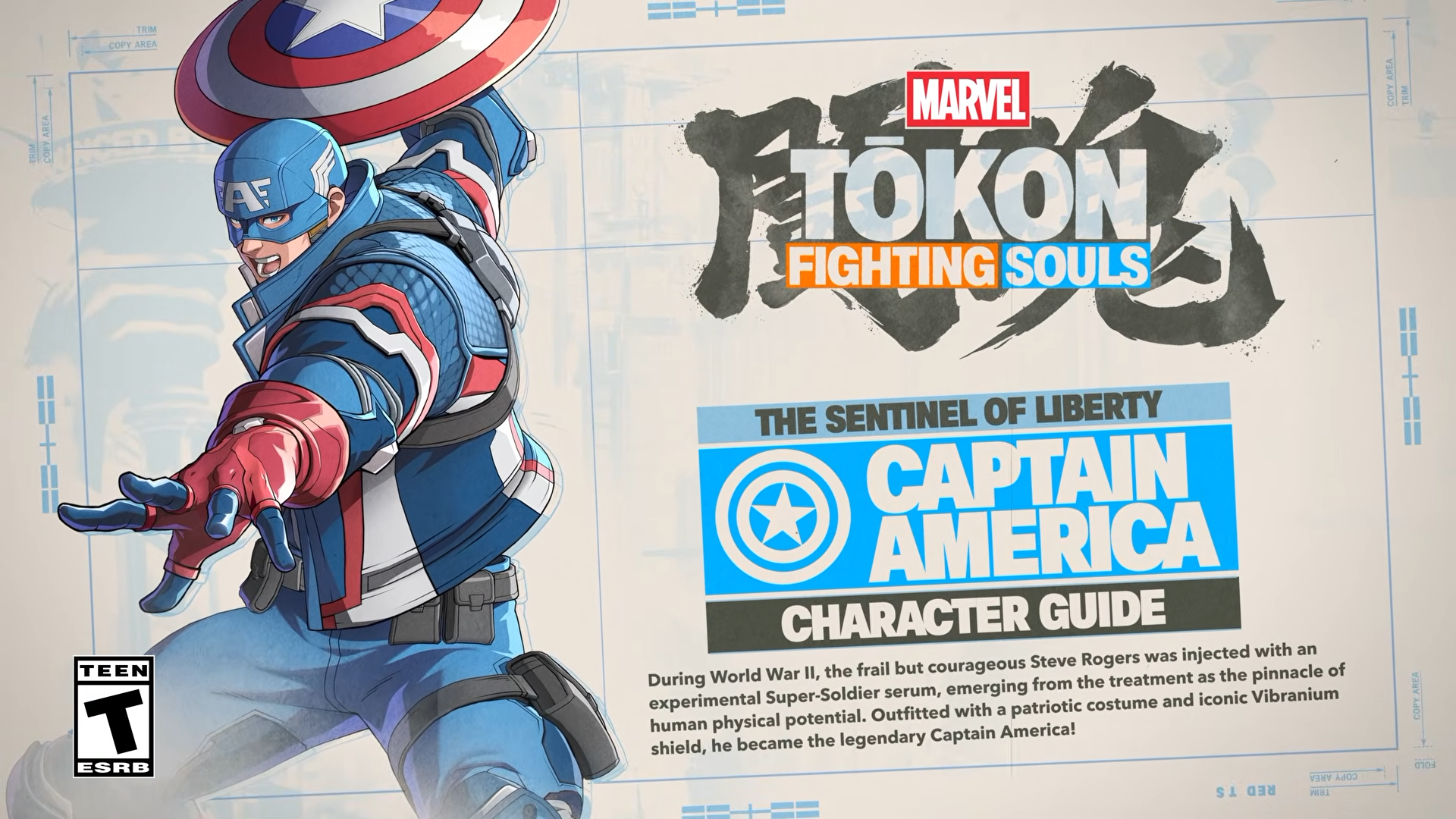
Captain America gets pitched as the "easy" character in a lot of Marvel Tōkon: Fighting Souls roster breakdowns, and that's not wrong exactly, it's just incomplete. His normals are big, his anti-air is reliable, and his shield gives him answers in situations where other characters have to guess. But there's a real skill ceiling hiding under that beginner-friendly label, and most of it comes down to one thing: how well you manage the shield itself. This guide walks through his full kit, from basic normals to his Ultimate Skill, and gets into how the pieces are actually meant to fit together in a match.
Character Overview
Cap plays the mid-range game. He's not a rushdown character who lives in your face, and he's not a pure zoner either. He sits in the space between, using his shield to control where the fight happens and forcing opponents to either respect his range or walk into a punish. If you've played a fighting game character built around a projectile that rewards patience over speed, the shape of Captain America's kit will feel familiar even before you touch him.
That mid-range identity is also why he works as either a leader or a support pick. His assists all carry the same defensive, space-controlling DNA as his point game, so bringing him in doesn't force a team around a completely different plan.
Captain America Playstyle
Captain America is an all-rounder, and the phrase actually means something here rather than being a cop-out description. He rewards good spacing and clean decision-making over fast execution. You're not trying to memorize a string of inputs so much as you're trying to read the opponent and pick the right tool for the moment, shield toss, anti-air, overhead, low. The character asks you to think, not just to react.
Strengths
- Excellent mid-range pressure
- Strong projectile game via the shield
- Reliable anti-air options
- Great defensive mechanics
- Easy to pick up
- Strong assist options across all three variants
Weaknesses
- Doesn't overwhelm opponents with mixups the way rushdown characters do
- Requires proper shield management to hit maximum damage
- Less explosive than combo-heavy characters
Quick Move Summary Table
| Move | Type | Primary Use |
|---|---|---|
| Trick Shield | Unique | Shield setup, space control |
| Ricochet Volley | Unique | Shield rebound, combo extension |
| Shield Guard | Unique | Defensive counter |
| Shield Strike | Skill | Projectile, zoning |
| Soaring Justice | Skill | Anti-air, launcher |
| Freedom Charge | Skill | Overhead pressure, approach |
| Shield Shock | Skill | Low attack, mixups |
| Living Legend | Super Skill | Combo finisher |
| Sentinel of Liberty | Ultimate Skill | High damage, shield power-up |
| Tokon Assemble | Team Super | Comeback mechanic |
Captain America Normal Attacks
Difficulty: two stars out of five. Easy to learn, but the skill ceiling is higher than it looks.
Cap has the standard set of standing, crouching and aerial Light, Medium and Heavy attacks that every character in Marvel Tōkon carries. What sets his apart is reach. The shield extends his normals further than most of the cast, which makes controlling neutral noticeably less stressful than it is with shorter-range characters. His Heavy attacks also carry aerial follow-ups, so a launch doesn't just end the exchange, it opens into extra combo routes.
Link Attacks
Cap's Link Attacks use the game's universal chain system, letting Light, Medium and Heavy normals flow into each other. What stands out with him specifically is how stable those links feel. He's a good character for players still building up execution, since his combo routes don't demand tight timing the way some of the more technical fighters do.
Captain America Unique Moves
Trick Shield
This is the move that defines him. Instead of throwing the shield in a straight line, Cap sends it out on a curved trajectory, and unlike a normal projectile, it stays live on screen. That matters because it sets up Ricochet Volley later. Best uses: controlling space, forcing the opponent to respect his range, opening shield pressure sequences, and extending combos.
Ricochet Volley
Ricochet Volley calls the shield back. If either the initial throw or the returning shield connects, Cap can cancel straight into another Skill, which is where his pressure actually starts to snowball. Best uses: extending combos, keeping offense going, and canceling into something stronger once the shield lands.
Shield Guard
This is Cap's signature defensive tool. Rather than a plain block, Shield Guard turns a successful guard against a standing attack into an automatic counter. Players can also cancel the counter window into Trick Shield or another Skill instead of letting the automatic retaliation play out. Best uses: punishing predictable offense, shutting down aggression, and flipping straight from defense into offense.
Captain America Skills
Shield Strike
Cap's main projectile. The Medium version travels at an upward angle, which is handy for catching jumps out of the air. The Heavy version is faster across the screen but costs Skill Gauge. Follow it with Ricochet Volley and the shield rebounds for more pressure. Good for zoning, extending combos, controlling mid-screen space, and setting up shield sequences.
Soaring Justice
His primary anti-air, and a genuinely strong one. Part of the animation is invincible to aerial attacks, so it's a dependable answer to jump-ins rather than a risky gamble. The aerial version hits from above but can't be repeated until Cap lands. Good for anti-air duty, combo finishers, and defensive reversals.
Freedom Charge
Cap's advancing attack, and it comes in four flavors. The Light version applies a Break effect, useful for cracking open a defensive opponent. The Medium version is an overhead, good for straightforward mixups. The Heavy version is a faster overhead that costs Skill Gauge. The Air version has Cap dive toward the ground, and the slight delay before impact can bait an anti-air attempt and punish it. Good for closing distance, mixing up guessing games, keeping up pressure, and punishing turtling opponents.
Shield Shock
A ground punch that sends out a low-hitting shockwave. Since it hits low, it pairs naturally with the overhead options in Freedom Charge to build a real high-low guessing game. The Heavy version costs Skill Gauge. Good for low mixups, resetting pressure, and catching opponents who are standing and blocking.
Captain America Assist Types
Cap brings three assist variants, and each one leans into a different piece of his identity, so team building around him stays flexible.
Assemble Assist Shooter
Cap throws his shield straight across the screen. Landing it opens up an immediate Member Switch, letting a teammate step in and keep the pressure going. Best uses: long-range pressure, extending combos, and bringing in the next character safely.
Assemble Assist Vertical
A rising attack aimed at catching airborne opponents, with the same Member Switch option on hit. It's a strong pairing for characters built around grounded pressure who otherwise struggle against jumps. Best uses: anti-air coverage, launching opponents, starting combos, and backing up the point character defensively.
Assemble Assist Assault
Cap drops into a defensive guard stance against anything that isn't a low, then automatically follows up with either a shield throw or a close strike depending on the opponent's position. Like the other two assists, a hit opens a Member Switch. It's his most versatile assist, and it fits his defensive identity better than either of the other two. Best uses: countering aggressive approaches, backing up the team defensively, punishing unsafe pressure, and swapping characters safely.
Captain America Super Skill: Living Legend
Input: Medium, Medium, Medium, Medium, or Medium again right after a Medium Link Attack.
Living Legend is Cap's meter-spending combo finisher, and it's built to be easy to route into. You can trigger it straight from neutral or tack it onto a Medium Link Attack you were already throwing out, which makes it a natural fit for punishing unsafe moves, closing out rounds, and burning off extra Skill Gauge efficiently.
Captain America Ultimate Skill: Sentinel of Liberty
Input: Heavy, Heavy, Heavy, Heavy, or via a Heavy Link Attack.
Sentinel of Liberty opens with an invincible strike, then rolls into a string of shield attacks. The part worth remembering is what happens after it connects: Cap's shield throws get a power boost for the rest of the round, so landing this Ultimate makes his projectile game noticeably stronger for the remainder of the fight. Players can also hold the directional input during the Heavy Link Attack to sneak in an EX move before canceling directly into the Ultimate. Best used for punishing predictable offense, closing out combos with big damage, and powering up his shield pressure for the rest of the round.
Tokon Assemble
Cap also has access to the game's cinematic team super, Tokon Assemble, which only becomes available when losing the current round would also lose the match. It's a comeback mechanic in the truest sense. He opens with an invincible strike before his teammates join in for an extended cinematic combo that deals heavy damage. It can be triggered from neutral or by pressing Light right after a Light Link Attack, and it's best saved for match-point situations where you need the biggest punish available.
Building Captain America's Game Plan
The core loop starts with Trick Shield. Get it out, and the opponent now has to deal with a live projectile sitting on the field. From there, Ricochet Volley reactivates the returning shield, and while the opponent is busy respecting that, Cap can safely walk forward with Freedom Charge or threaten low with Shield Shock. Against anyone in the air, Soaring Justice is one of the strongest anti-air answers in the game and converts into real damage when an assist is backing it up.
His best mixups usually rotate between the Freedom Charge overhead, the Shield Shock low, ongoing shield pressure, and throws once the opponent has been conditioned to block. None of this is about speed. Cap wins by being safe, controlling space, and slowly forcing mistakes rather than blowing an opponent's defense open in one read.
How Captain America's Moves Work Together
The shield is the connective tissue for almost everything Cap does. Trick Shield puts it in play, Ricochet Volley brings it back and opens a cancel window, and Shield Strike gives him a second projectile option that also rebounds with Ricochet Volley. Once that loop is running, the opponent is stuck reacting to the shield instead of dictating the pace, which is exactly when Freedom Charge and Shield Shock become dangerous. Shield Guard ties the whole thing together defensively, turning a blocked hit into an immediate counter or a segue back into offense.
How to Play Captain America
Early Match
Open with Trick Shield to establish space and get a feel for how the opponent wants to approach. Use Shield Strike from mid-range to test their reaction, and keep Soaring Justice ready in case they try to jump in early.
Mid Match
Once the opponent starts respecting the shield, lean into the Freedom Charge and Shield Shock mixup. This is where Ricochet Volley cancels start paying off, since a connected shield opens the door to bigger combos with assist support.
Late Match
Hold Living Legend and Sentinel of Liberty for confirms that end the round outright. If it's the final round and a loss ends the match, Tokon Assemble becomes the priority, it's the biggest punish in his kit and exactly the tool that mechanic is built for.
Neutral Game Tips
- Keep the shield active as often as possible. An idle shield is a wasted resource.
- Use Soaring Justice instead of trying to challenge jump-ins with a normal.
- Space Shield Strike to control mid-screen rather than throwing it on reaction.
Offensive Tips
- Chain Trick Shield into Ricochet Volley to keep pressure rolling.
- Alternate Freedom Charge overheads with Shield Shock lows so the opponent can't settle into one block.
- Save Heavy Skill versions for moments where the extra speed or damage actually matters, since they cost Skill Gauge.
Defensive Tips
- Lean on Shield Guard against opponents who like to throw out standing attacks recklessly.
- Use the counter window off Shield Guard to cancel into Trick Shield and reclaim initiative.
- Don't panic-block. Cap's tools reward patience more than any single defensive read.
Team Synergy
All three of Cap's assists carry a Member Switch on hit, which makes him a clean fit for teams that want safe tag-ins rather than risky ones. Assemble Assist Vertical covers characters who struggle against jumps, while Assemble Assist Assault backs up more aggressive teammates with a defensive layer they might not have on their own. We'll update this section with specific team compositions once more competitive data becomes available after launch.
Is Captain America Beginner Friendly?
Yes, and it's not close. Cap is one of the easiest characters to pick up in Marvel Tōkon: Fighting Souls, but that doesn't mean there's nothing left to master. His normals are straightforward, his anti-air is dependable, his projectile game is versatile, and his combo routes don't punish small execution errors the way some other characters do. That said, advanced players still have plenty to chase, tighter shield setups, cleaner Ricochet Volley cancels, and sharper use of Shield Guard's counter window.
Frequently Asked Questions
Is Captain America beginner friendly in Marvel Tōkon: Fighting Souls?
Yes. His balanced toolkit, dependable anti-air, and simple combo routes make him one of the easier characters to learn. There's still real room to grow once you start mastering his shield setups and defensive options.
Is Captain America a good leader?
He's a strong leader pick if you like a balanced playstyle. His shield attacks let him control neutral, and his defensive tools make him hard to pressure recklessly.
What is Captain America's best move?
Trick Shield is the signature move of his whole kit. Paired with Ricochet Volley, it creates pressure, extends combos, and controls space through most of a match.
Does Captain America have an anti-air?
Yes, Soaring Justice. Part of its animation is invincible to aerial attacks, which makes it a reliable answer to jump-ins rather than a coin flip.
Is Captain America easy to combo with?
Yes. His Link Attacks are stable and his combo routes are straightforward, though his shield mechanics still leave room for more advanced extensions once you're comfortable with the basics.
What is Captain America's overall role on a team?
He's an all-rounder built for mid-range control, mixing solid defense, a flexible projectile game, and steady pressure. That makes him a fit for both new players and anyone who's played fighting games for years.
Final Verdict
Captain America is the kind of character that teaches you the game while still being viable once you understand it. He doesn't ask you to memorize execution-heavy combo strings, but he does ask you to think about spacing and shield management, which is a more useful skill to build early anyway. Whether he ends up sitting near the top of the roster once tournaments start is still an open question. We'll update this section after launch as more competitive data becomes available. For now, if you want a character that rewards patience over flash, he's an easy recommendation.
Continue Reading Our Marvel Tōkon Coverage
Explore more Marvel Tōkon: Fighting Souls character guides in our Marvel Tōkon Guide Hub.
Note: This guide is based on Arc System Works' official Storm character guide and currently available gameplay footage. We'll continue updating it as Marvel Tōkon: Fighting Souls receives balance changes, new discoveries, and additional competitive strategies after launch.