
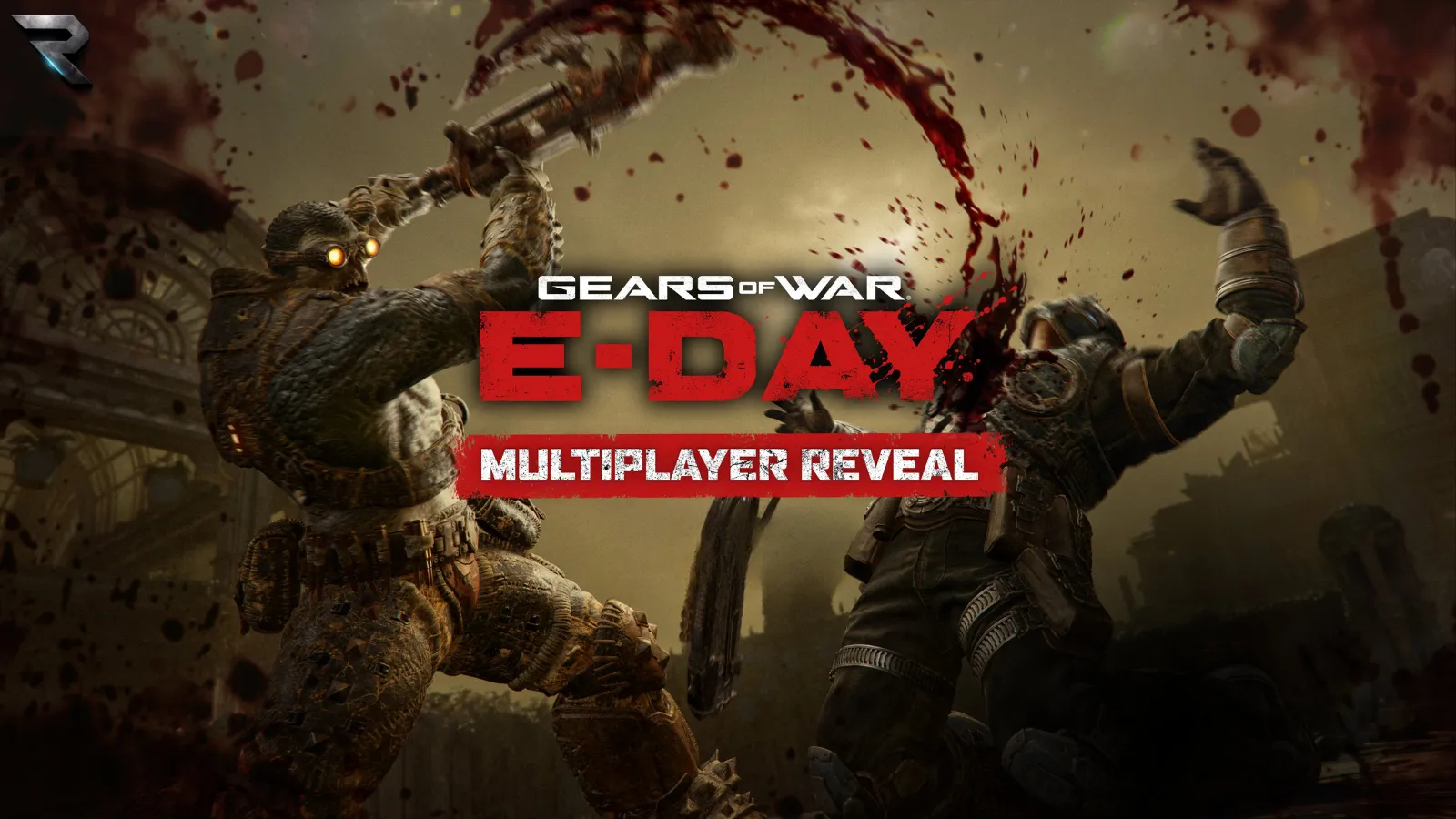
The newest Gears of War: E-Day trailer gave fans another proper look at The Coalition's prequel, but the footage itself might not even be the biggest story to come out of it. Alongside the trailer, a batch of early hands-on previews from outlets that got real time with the multiplayer started rolling out, and those impressions are doing more to shape expectations than the marketing beat ever could.
Campaign details are still locked down tight, with The Coalition keeping that side of the game close to its chest for now. But on the multiplayer side, there's an unusual amount of agreement forming among the people who actually played it. Nearly every early preview lands on the same core takeaway: Horde Siege might be the biggest shakeup the Horde mode has seen since it first showed up in Gears 2. Where opinions genuinely split is on the faster movement system, and that debate is only getting louder the more people weigh in.
That split reaction is worth sitting with for a moment, because it says something about where E-Day is trying to position itself. This is a prequel, set well before the events of the original trilogy, and The Coalition has talked openly about wanting it to feel like a return to the series' roots while still bringing the mechanics up to date for 2026. Early hands-on time with the multiplayer suggests that balancing act is mostly working, though not everyone walked away convinced it landed cleanly on both sides.
Everything Revealed So Far
Before getting into what previewers actually made of it, here's a quick rundown of the concrete details confirmed so far.
| Feature | Details |
|---|---|
| Horde Siege | 12-player PvE |
| Squad Size | Three squads of four |
| Maps | Largest Horde maps in the series |
| Objectives | Timed missions across the battlefield |
| PvP | Versus multiplayer returns |
| Beta | Early Access: Aug. 6 to 10 |
| Open Beta | Aug. 13 to 17 |
| Release | Oct. 6, 2026 |
| Platforms | PC and Xbox Series X/S |
Horde Siege Is Stealing The Show
If there's one thing every early preview seems to agree on, it's that Horde Siege is the mode people are going to be talking about once the beta opens up.
The format itself is a real departure from what long-time Horde players are used to. Older entries dropped a single four-player squad into one defensible position and had everyone hold the line together until the waves stopped. E-Day splits players into three separate four-person squads instead, spreading them across a map that's considerably bigger than anything the series has attempted before. Each squad works through its own set of objectives independently, and only later do all three converge for a shared, large-scale defensive push against the Locust.
Early hands-on accounts describe a range of objectives wide enough that no two runs are likely to play out the same way, including:
- Defusing bombs
- Eliminating priority Locust targets
- Recovering intelligence
- Building defenses
- Surviving massive boss encounters
- Fighting toward extraction helicopters
What seems to have stuck with previewers most is how naturally the cooperation happens. Nobody's being funneled into a single chokepoint anymore. When one squad starts falling behind or gets overwhelmed by a wave they weren't ready for, breaking off to help them out tends to be the smarter play rather than something the game is forcing on anyone, and that loose structure is reportedly producing some genuinely tense, unscripted moments during these early sessions. It's the kind of emergent teamwork Horde has always aimed for, just at a scale the mode hasn't tried before.
It also changes the rhythm of a match. Classic Horde had a fairly predictable cadence: hold a spot, survive a wave, spend points on fortifications, repeat. Horde Siege breaks that up by forcing squads to make decisions on the move, deciding in real time whether to push toward a struggling squad, finish their own objective first, or split the difference and risk both. Previewers describe those in-the-moment calls as the source of most of the mode's tension, rather than any single set-piece encounter on its own.
Bigger Maps And More Freedom
Several early impressions single out Kalona's maps specifically, calling them the largest the series has ever shipped. Instead of holding down one arena for an entire match, squads actually move through distinct districts, clearing objectives as they go before everyone regroups for the bigger set-piece fights that close out a run.
There's also a progression layer running underneath all of it. Weapon Parts are scattered around the map during missions, and picking them up lets players upgrade their loadout mid-match rather than heading into a boss encounter with whatever gear they started the run with. It sounds like a small addition on paper, but early impressions suggest it noticeably changes how squads approach the map, encouraging some exploration along the way instead of a straight sprint from one objective marker to the next.
The finale of each Horde Siege run also appears to shake up the traditional formula. Rather than simply clearing the last wave and calling it a victory, squads are tasked with fighting their way to an extraction helicopter after completing their objectives. That final push reportedly turns into one last desperate stand against the Locust before everyone can escape, giving matches a more cinematic ending than previous Horde experiences.
Faster Movement Is Dividing Opinions
Not everything out of these previews is unanimous praise, though. The new movement system is where things start to split.
Nobody's arguing that E-Day feels slow. Sprinting is quicker, sliding into cover is smoother, and traversal generally carries more flow than any past Gears game has offered. Legacy controls are still available for anyone who'd rather keep the older, heavier feel the series built its identity on.
Where it gets contentious is competitive Versus. Several previewers noted that in head-to-head matches, the added speed tends to reward aggression more than the deliberate, cover-heavy gunfights Gears has always been known for. That's left some early testers wondering whether the faster pace risks pulling E-Day away from what made the franchise's multiplayer distinct in the first place, even as others see it as an overdue modernization for a series that's carried the same core movement since 2006. It's a genuinely split reaction, not a one-sided complaint, and it's probably the biggest thing worth paying attention to once the beta goes wide.
Classic Versus Returns
Away from Horde Siege, the traditional competitive modes are sticking to a familiar formula. Players can expect Team Deathmatch to return, alongside Conquest and Control-style objective gameplay, and the fundamentals that have defined Versus for years, close-range shotgun duels, cover positioning, coordinated pushes, remain the backbone of how these matches actually play out.
That said, the updated movement quietly reshapes a lot of the small decisions that used to define a Versus match. Repositioning happens faster, flanks open up sooner than veterans might expect, and previewers noted that even longtime Gears players will need to unlearn a few habitual instincts before the classic modes feel fully second nature again.
Beta Dates Confirmed
Fans won't have to rely on previews alone for much longer to form their own opinion. The Early Access Beta runs August 6 through 10, 2026, followed immediately by an Open Beta from August 13 through 17.
Gears of War: E-Day then launches in full on October 6, 2026, for PC and Xbox Series X|S, with day-one access included for both Xbox Game Pass Ultimate and PC Game Pass subscribers.
The Bottom Line
Based on this first wave of hands-on impressions, Horde Siege looks like the most ambitious thing The Coalition has done with the mode in years: bigger maps, three coordinated squads instead of one, objectives that actually vary from run to run, and a structure that nudges players toward working together instead of digging into one spot and holding.
The bigger open question is the movement system. Whether the faster pace ends up modernizing Gears' combat for a new generation of players, or chips away at the slower, methodical feel that longtime Gears of War franchise fans signed up for, is still genuinely unresolved, and the previews so far don't fully agree with each other on it either.
If the early hands-on impressions by gaming outlets that attended The Coalition's multiplayer preview event are anything to go by, Horde Siege has the potential to become the defining multiplayer experience of Gears of War: E-Day. Whether the new movement system proves equally popular is a question only the August beta can answer, but for now, The Coalition appears to have delivered the most ambitious evolution of Horde in the franchise's history.