
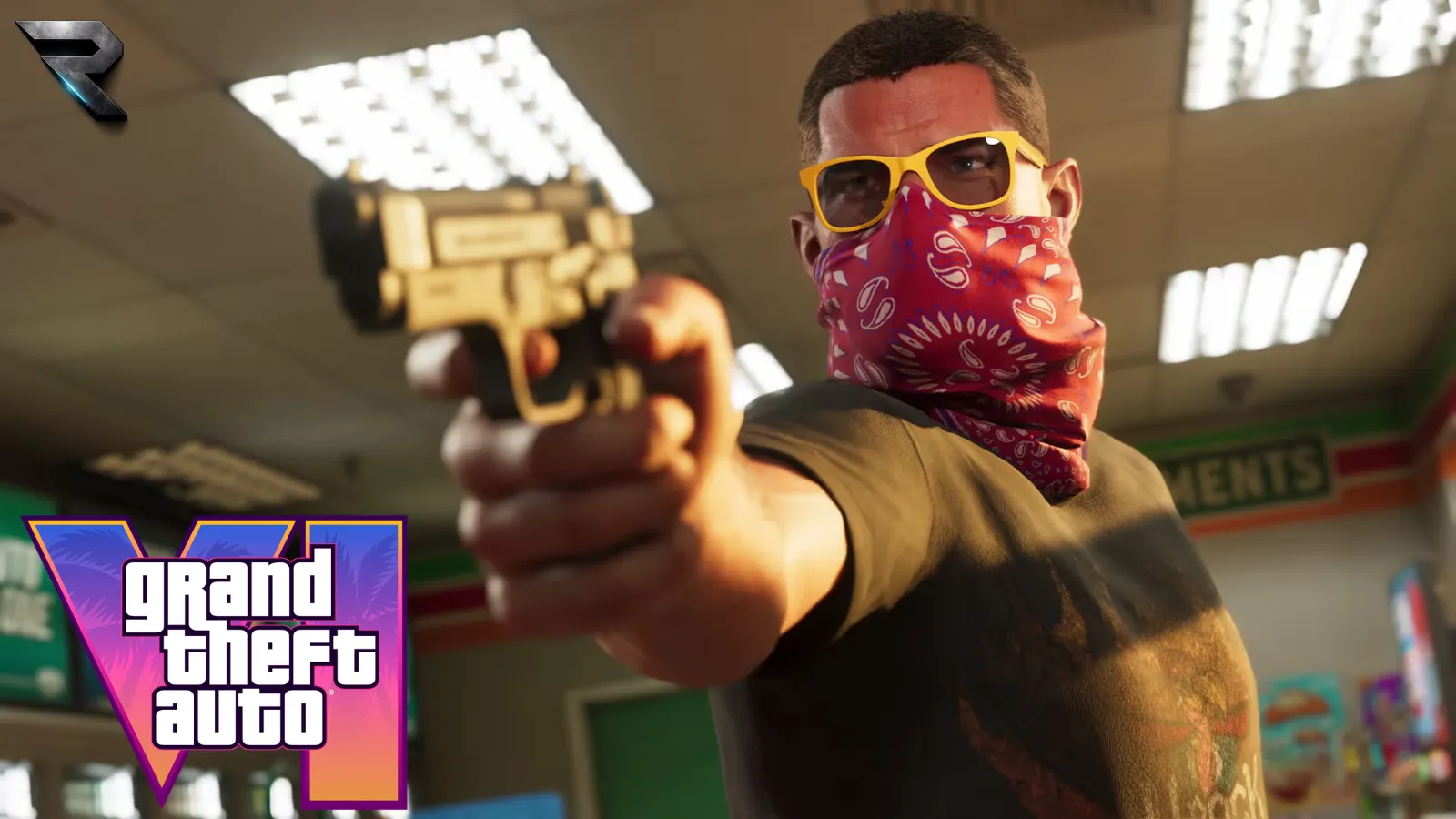
Grand Theft Auto VI is still a few months away, but the picture of how it actually plays has gotten a lot clearer over the past two weeks. Following Rockstar's Grand Theft Auto VI: An Extended Look on August 27, a wave of creators who received hands-off preview access have started sharing what they saw. The most detailed writeup so far came from TGG through an X post on September 5, and it covers police behavior, vehicle theft, robberies, weapons, relationships, and Leonida itself in more depth than anything Rockstar has put out directly.
One thing worth saying up front: not everything in these previews is a formal Rockstar announcement. Some of it comes from comments made by Rockstar North co-studio head Rob Nelson during the session. Some of it is TGG's own observation of what happened on screen. A few of the more specific details have only shown up in a single preview report so far. We're treating this as reported preview information, not confirmed fact, and flagging it where it matters.
With that out of the way, here's what TGG detailed in his post says about how GTA 6 is shaping up.
Police and Heat Are Replacing the Old Wanted System
The biggest departure from GTA 5 is how police detection works. Officers reportedly don't show up on the minimap anymore. Instead, the game's Focus ability can be used to spot them through walls, which means players have a lot less passive information about where the cops actually are.
That's a real shift from the GTA 5 formula, where losing the police was often a matter of watching the minimap, staying outside the marked search radius, and waiting for the stars to disappear. Rob Nelson explained the reasoning behind the change during the preview:
"We wanted to get past that thing we used to have where you could lose the cops instantaneously and then they forget about you instantly."
The fix is a new layer underneath the traditional wanted stars called Heat. Rather than just tracking how angry the police are, Heat represents what law enforcement actually knows about you, including your appearance, your clothing, your weapons, your vehicle, CCTV footage, your association with Jason or Lucia, and anything witnesses told them.
That makes a pursuit persistent in a way GTA hasn't really done before. If police have seen your car, switching vehicles helps. If they've seen your outfit, changing clothes removes a piece of information. If CCTV caught the crime, destroying the footage can keep that evidence out of their hands. Escaping the police and erasing what they know about you are apparently two different things now.
Somebody Has to Report the Crime First
Committing a crime in GTA 6 doesn't automatically summon police. Someone has to witness it and report it, or another system has to trigger the alert, whether that's a civilian calling it in, an alarm going off mid-robbery, or a stolen car's tracker reporting its own location.
That creates room for a robbery nobody sees to play out completely differently from one where a witness calls it in right away. It also ties vehicle theft directly into the wanted system. Stealing the wrong car can turn into a delayed problem if it's carrying a tracker that eventually leads police back to you.
The Stars Themselves Now Say More
Preview coverage describes the wanted stars behaving differently depending on what police currently know, rather than just counting up like they did in GTA 5.
| Star State | What It Means |
|---|---|
| Solid white | Police have direct visual on the player |
| Flashing white | Line of sight broken, player actively evading |
| Hollow | An alarm was raised but police lack a description |
| Red | Direct pursuit lost, but still inside an active search zone |
That hollow-star state can produce some odd moments. TGG described Lucia riding directly past officers while her stars stayed hollow, because police had been alerted but didn't have enough to identify her on sight. Red stars mark a stranger situation: the player has lost direct pursuit but is still inside an active search area, so police don't know exactly where Jason or Lucia is but still know who they're looking for.
The search area shows up on the minimap as a red zone with a lighter red zone around it, and clearing both is reportedly the cleanest way to shake a pursuit entirely. At higher wanted levels, the search stops being a simple radius and police start hunting across the whole map instead.
Managing Evidence Matters as Much as Escaping
This is probably the most interesting piece of the new system. During the preview, TGG watched Rob Nelson attempt a store robbery that fell apart. The clerk got knocked down but not killed. CCTV footage was found and destroyed. Someone had already reported the crime, though, and the safe code couldn't be located, so the robbery couldn't actually be completed.
Instead of turning it into another shootout, Nelson just walked away. Police showed up afterward and started setting a perimeter around the store.
That scenario captures what Rockstar seems to be going for. The old formula of robbery, police, shootout, escape can now play out as robbery, witness, CCTV, evidence, police response, reassess, and escape. It turns the wanted system into something closer to a persistent part of the open world rather than a temporary combat state that resets once you're out of sight.
Vehicle Theft Is Its Own System Now
Cars have always mattered in GTA, but GTA 6 reportedly treats stealing and keeping them as a much deeper loop. Getting into an occupied car involves a quick interaction to pull the driver out, and if there's a passenger, they can fight back to stop the carjacking. Parked cars give you a choice between a loud entry, smashing the window, or a quieter one using something like a slim jim. Breaking the glass can trip an alarm, and cars with security systems can call the police directly.
Not every car starts the same way either. Some can be hotwired on the spot. Others need extra tools, and an expensive enough vehicle might let you break in but refuse to start without a key cloner. With the right tool, you can get in and start it without setting off the alarm at all. None of that is available from the start. Equipment like the slim jim reportedly unlocks through interactions with fences, so what you can steal early on depends on what your character has actually learned to steal.
Waink Lets You Scan a Car Before You Steal It
One of the stranger new additions is Waink, a phone app that scans vehicles before you commit to stealing them. It reportedly shows the car's security level, the tool you'd need, its tracker type, registration cost, and resale value. That turns random parked cars into small decisions. You could scan something valuable, see it has an alarm and a tracker, and decide it's not worth the trouble yet, or find you've already got what you need and take the risk anyway.
Trackers add their own wrinkle. Preview coverage mentions tiers that react to speed, where driving fast keeps a tracker quiet but slowing down makes it start beeping, and staying slow too long can get your position reported to police. So the safest getaway might actually mean driving faster, which comes with its own risk. Removing a tracker entirely isn't available right away either, and reportedly unlocks through the same fence-based progression as theft tools.
Garages, Pay'n'Spray, and Fuel
Where you live and where you keep stolen cars are apparently separate systems now. Safehouses are tied to the story rather than something you buy whenever you want, while garages can be purchased on their own to store personal vehicles. That means you could buy a cheap garage, steal something far more valuable, and stash it there before you're even able to register it legally. It makes a garage feel more like an investment in your criminal operation than another property marker.
Pay'n'Spray is back, but it's reportedly a simpler repair and respray shop with a limited color selection rather than the full customization hub it became in later games. Its main job is getting rid of vehicle-related Heat, while actual modification work is spread across different shops around Leonida that specialize in different things.
Fuel is also a real mechanic. Refueling reportedly takes around ten seconds at a gas station, which can also repair vehicles and recharge electric ones. Rockstar apparently knew this would be a divisive addition, but the intent isn't to interrupt normal driving. It's meant to be one more thing to think about when you grab an unfamiliar car during a getaway. Take a random vehicle without checking its fuel and you might find out the hard way that you've created a second problem for yourself.
The Driving Model Has Been Rebuilt
Rob Nelson described the goal for GTA 6's driving as combining some of the weight from GTA 4 with the accessibility of GTA 5, while giving Rockstar a lot more control over things like drivetrain, tires, suspension, and steering. Preview observations back that up. Fast cars can reach higher top speeds, rear-wheel-drive cars need more careful throttle control, and muscle cars get genuinely hard to handle if you drive them aggressively.
Traffic is reportedly much denser than GTA 5 and roads are narrower, which makes ordinary driving through Vice City more demanding on its own. Taking the wrong car off-road doesn't bail you out anymore either. A supercar being fast on pavement says nothing about how it'll handle dirt.
Put together, fuel, trackers, key cloners, garages, and Pay'n'Spray point at the same idea: vehicles are becoming persistent resources instead of disposable tools. A car you steal can have a security rating, a tracker, a fuel level, your stored weapons, and a spot in your garage, and it can also become compromised by police. What you drive is part of what police know about you, which ties this whole system straight back into Heat.
Criminal Profiles Give Jason and Lucia Separate Paths
GTA 6's Criminal Profile system is worth separating from Red Dead Redemption 2's Honor system right away. Based on what's been reported, it's not measuring whether Jason or Lucia is a good or bad person. It's tracking how they behave as criminals, using a series of named states rather than a meter that fills up. Those states reportedly range from more controlled behavior, like Professional, up through increasingly violent behavior, with Psycho at the far end.
There's no bar slowly sliding one way or the other. Characters move between states based on how they handle criminal situations, which makes this feel less like a morality score and more like a read on your criminal style.
The more interesting detail is that Jason and Lucia reportedly have separate profiles. You're not building one shared identity for the pair. You could play Jason as a calculated professional while Lucia turns considerably more violent, and the profile is viewable both during gameplay and in a dedicated character menu. There's also reportedly a further state where the profile icon appears cracked or shattered, which TGG described as irreversible for that playthrough, though that specific detail should still be treated as a preview observation rather than a confirmed feature.
Rockstar's stated position is that there's no right or wrong way to play. Players who want total chaos can still have it. The system just gives extra meaning to the choices of players who want to engage with it, whether that's controlling civilians and avoiding unnecessary casualties or shooting first every time. It reads as an attempt to avoid the disconnect RDR2's Honor system sometimes created, where a player could commit a lot of violence and then nudge the meter back with a few positive interactions. GTA 6 appears more focused on your overall pattern of behavior than a running point total.
Relationships Run on States Instead of a Meter
Jason and Lucia's relationship reportedly follows the same philosophy, using stages instead of a numerical percentage. Dates aren't locked into a fixed structure either. Rather than picking a set activity and following a script, the two can apparently just spend time together doing things like visiting the zoo, walking the beach, or kayaking, and these aren't necessarily separate date missions so much as things that can emerge from the open world itself.
The gym is one of the clearest examples. Jason and Lucia can work out together, each doing their own exercises, so instead of a scripted date sequence, the gym just becomes something the two of them do. Other small touches reportedly include texting each other, sending goodnight messages, and holding hands as an available interaction. None of it is individually dramatic, but it points at Rockstar building the relationship out of ordinary open-world interactions rather than leaning entirely on scripted missions.
Robberies and Money Get More Layers
GTA 6's economy reportedly splits money into different types that each work differently. There's banked money accessed through the BuckMe phone app, cash carried on the player that can be lost on death, and physical loot carried in a duffel bag after a robbery that isn't spendable until you find the right fence to turn it into actual value.
Cash apparently can't be deposited through the phone either. You have to physically visit an ATM, which reinforces the idea that money exists inside the world instead of just being a number attached to the player. Carrying cash after a robbery leaves it exposed if something happens to you, while banked money and stolen goods each behave differently again.
Robberies also aren't limited to missions marked on the map. Players can reportedly rob stores they simply walk into, and opportunities can come from a character's tip, something stumbled on while exploring, or the story itself. Scale ranges from small stores, gas stations, and payday loan businesses up through jewelry stores, banks, armored vehicles, compounds, and larger heists, with some higher-value jobs showing an estimated payout on the map before you commit. Even a basic robbery can turn into a small investigation, since finding a safe code might mean searching the room, following environmental clues, or getting it from a fence directly.
Fences themselves reportedly specialize by category, whether that's drugs, jewelry, stolen vehicles, or other goods, and access to them is tied to progression the same way theft tools are. Perhaps the bigger economic shift is that money is reportedly tied more directly into story progression, with certain financial goals needed before the narrative moves forward. Rockstar has historically run into the problem of players becoming rich with nothing left to spend it on, and this appears aimed at giving all that open-world money somewhere to go.
Gunplay Leans on Awareness Instead of Auto-Aim
GTA 6 reportedly moves away from the strong lock-on aiming players are used to. There's still some assist, and it's adjustable in the options, but the default experience leans toward free aim. That matters more because enemies don't show up on the minimap either, removing the radar-like function it served in GTA 5.
The Focus ability picks up some of that slack. It can slow time and highlight vulnerable spots on enemies, using red to indicate a lethal hit and yellow for a non-lethal one, so players get more information than a simple alive-or-dead outcome. During the preview, a yellow hit meant an NPC was down and no longer a threat. Focus also works on vehicles, highlighting the engine block, fuel tank, and tires, so it functions as a tactical tool for disabling a car rather than just a cinematic slow-motion effect.
NPC reactions to weapons have also gotten more specific. Carrying a long gun on your back reads as fairly unremarkable, holding it draws a stronger reaction, and holding it ready to fire escalates things further. TGG described Jason walking past a group while holding a two-handed weapon lowered, and the NPCs didn't scream and scatter immediately, they gradually moved away and jogged off once out of his line of sight. Aiming a weapon directly at someone produces a much bigger response, and some NPCs can pull a concealed weapon of their own rather than just panicking, meaning threatening an apparently harmless person isn't a guaranteed win anymore.
Weapons themselves reportedly feel heavier. During a rifle fight in the preview, Rob Nelson was tap-firing rather than holding the trigger down, which points to recoil and handling playing a bigger role in accuracy. Jason and Lucia can also physically hand weapons to each other instead of switching through a menu, and players can carry two concealed handguns, with two long guns possible under certain conditions, though not just stacked freely on your back. Cover stays mapped to R1, crouching exists separately and lets you keep strafing, shoulder switching returns for peeking around corners, and a quick weapon swap system is also in.
Gym, Fishing, and Hunting Round Out the Simulation
Side activities are reportedly optional in every sense. You won't need a gym membership to finish the game, but using one can give modest boosts to health, stamina, and Focus. The gym includes treadmills, punching bags, squats, lat pulldowns, bench presses, and deadlifts, with cardio work improving stamina and strength work improving health. Weightlifting apparently uses the triggers to control the movement while stamina drains during the set, so pushing too hard runs you down, while something like an energy drink, coffee, or a protein shake can help you get through more of the workout. A partner can join in too, turning a stat-building activity into another relationship interaction.
Fishing is reportedly deeper than a simple minigame, with previewers drawing comparisons to Red Dead Redemption 2, though GTA 6 uses catch-and-release rather than letting you keep what you catch. It's aimed more at recreation, collectibles, and some narrative content. Hunting serves a different purpose and is tied to making money through a character connected to Jason. The game also reportedly tracks weight, muscle, and sleep in the background, with overeating adding weight, neglecting exercise costing muscle, and sleep affecting how certain attributes regenerate, none of which appears to demand constant attention.
Leonida Is Built to Feel Lived In
Preview coverage describes hundreds of interiors across Leonida, though the widely circulated figure of 700 wasn't confirmed during this preview and shouldn't be treated as settled. What was described includes ordinary interactions inside safehouses, like eating, disposing of the remains afterward, and shaving at a bathroom mirror, with hair that can be cut shorter at home but only grown back by visiting a salon.
Getting around the map reportedly includes buses, trains, trams, taxis, a rideshare app called RydeMe, and a service called Scooter Bros that can deliver your personal vehicle to your location, something GTA 5's campaign didn't offer in this form. That fits neatly with personal vehicles becoming more important storage-wise, since being able to summon one instead of driving across the map to get it is a real convenience.
The phone itself is reportedly a much bigger part of the game than it was in GTA 5, with BuckMe for banking, RydeMe for transport, Scooter Bros for vehicle recovery, WhatUp for messaging, Waink for scanning cars, a fitness app, and Snapmatic for social media. Several of these connect directly into other systems rather than existing as standalone novelties. Snapmatic in particular can reportedly lead somewhere real: NPCs post content, and some of those posts can point players to a location where the depicted event is actually happening in the world, turning social media into a discovery tool instead of a scripted joke feed.
Greeting and antagonizing NPCs reportedly returns, which combined with the new weapon-based NPC reactions could make ordinary street encounters feel less predictable. TV and radio are getting more attention too, with more in-game television content built with outside animators, a redesigned radio system where players scroll through individual stations, and a separate section for podcasts. Streamer Mode is also built in, letting players disable copyrighted music, which should make streaming or uploading gameplay a lot less of a headache. A photo mode is reportedly available as well, though Rockstar Editor functionality wasn't seen during this preview and shouldn't be presented as confirmed. On the smaller side, mission waypoints reportedly show up in pink and player-created waypoints in cyan, and other activities scattered around Leonida include basketball, pool, mini golf, backyard wrestling, shooting ranges, and swimming, which has its own lung-capacity mechanic that replaces the stamina bar underwater.
Leonida's Scale Is Hard to Picture
According to the preview information, GTA 6's map is roughly twice the size of GTA 5's and about three times the playable area of Red Dead Redemption 2. Vice City itself is reportedly around double the size of Los Santos, and the wider built-up area around it is described as roughly eleven times what surrounded Los Santos. These figures are still reported preview information rather than an official Rockstar measurement, but they give a sense of the scale Rockstar is aiming for, and it isn't just about a bigger empty map. More roads mean more vehicles to steal, more interiors mean more places to rob, more NPCs mean more witnesses and unscripted encounters, more rural land means more hunting and fishing, and more locations mean more social-media discoveries. The size of the world and the density of its systems appear directly connected.
There's also a smaller detail worth noting: Leonida is reportedly pronounced Lee-oh-Nigh-Da, which is worth knowing given how often the name has come up in Rockstar's marketing so far.
Why These Details Add Up to Something Bigger
On their own, a fitness app, a taxi service, a podcast tab, a vehicle scanner, and a Heat system don't sound like much. What makes them interesting is how they interact. A stolen car can have a tracker. That tracker can expose your location. Police can build a picture of the vehicle. You can abandon it, recover your own car later, or eventually register the stolen one once you've got the right progression. Meanwhile, how you handled the robbery can shape your Criminal Profile, and the same job can move your Heat too. Walk away instead of escalating, and the outcome changes completely.
That interconnection looks like the real theme of GTA 6, more than any single system on its own.
GTA 6 Isn't Trying to Tell You How to Play
Rockstar doesn't appear to be removing the classic GTA experience. If you want to steal every car in sight, start shootouts, and watch Leonida descend into chaos, the preview suggests that's all still on the table. But if you'd rather plan a robbery, avoid unnecessary casualties, manage your Heat, change clothes, destroy evidence, pick the right getaway car, watch its fuel, deal with its tracker, build a criminal network through fences, spend time with Jason or Lucia, hit the gym, or just go fishing, there's now a lot more supporting that too.
The game isn't necessarily trying to change how people play GTA. It's giving the systems more ways to respond to however you already choose to play it, which is a bigger shift than simply making Vice City larger or adding more side content.
What's Confirmed, What's Reported, and What's Next
Because so much of this is coming through preview access rather than official announcements, it's worth keeping a clear line between what Rockstar has formally confirmed and what previewers observed or were told. TGG's September 5 compilation is the most detailed look at these systems so far, but not every individual detail in it should be read as an official confirmation, and some mechanics could still change before launch.
For now, the safest read is that these previews offer the clearest picture yet of GTA 6's design philosophy: a set of systems built to interact with each other, giving players more ways to approach crime, exploration, relationships, and everyday life in Leonida. Grand Theft Auto VI is scheduled to launch on May 26, 2026, for PlayStation 5 and Xbox Series X|S. If these preview details hold up, the biggest change might not be Vice City's size. It might be how much the world actually remembers what you do in it.