
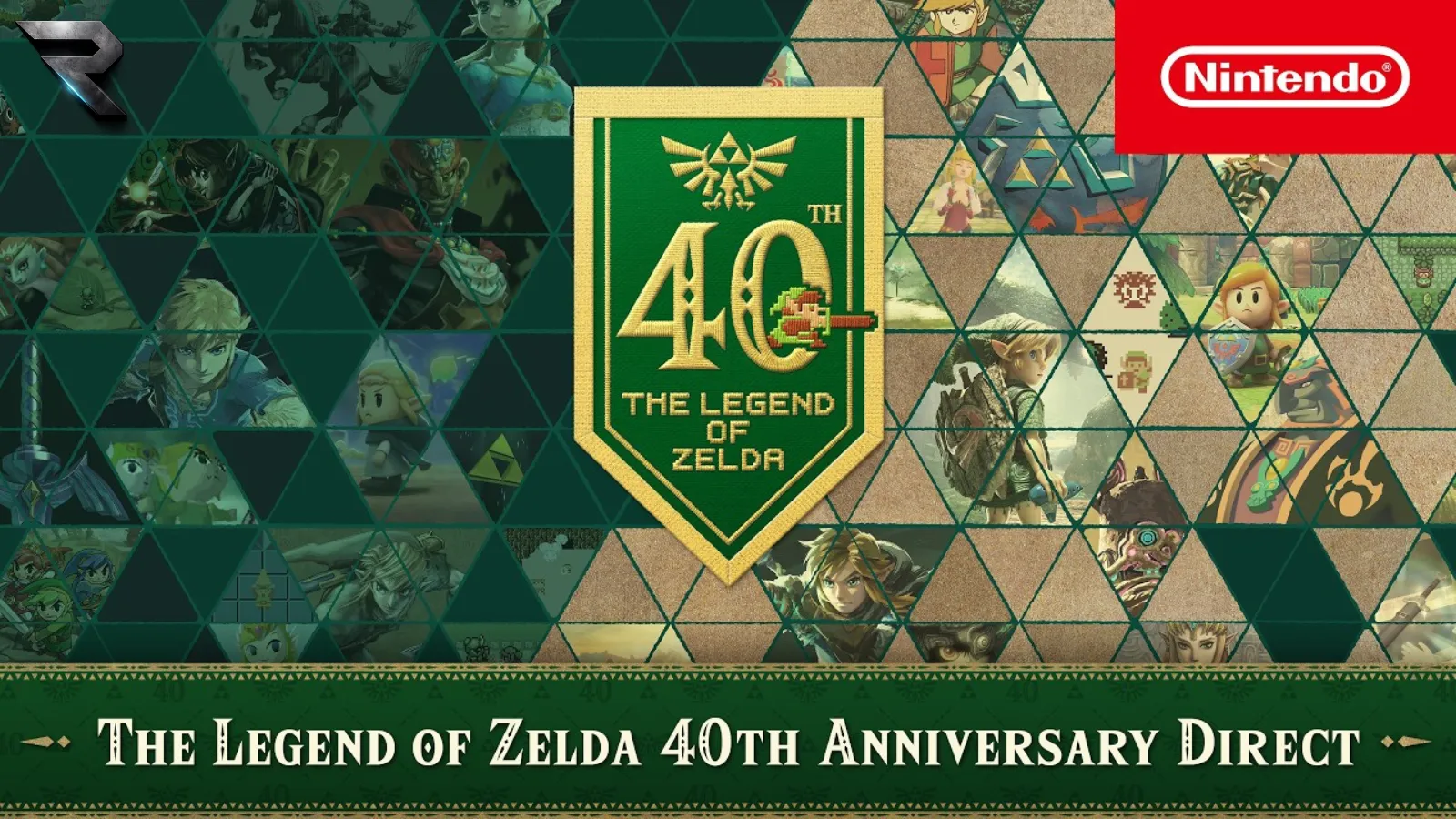
Nintendo picked The Legend of Zelda's 40th anniversary to answer the question fans have been asking since the original N64 game turned 25: yes, Ocarina of Time is getting remade. A dedicated anniversary Direct covered games, film, music, and merchandise tied to four decades of the series, and the headline news is a rebuilt version of the 1998 classic arriving on Nintendo Switch 2 on November 5, 2026.
Ocarina of Time Is Getting Rebuilt, Not Just Remastered
Nintendo didn't just show a resolution bump. The Direct walked through changes to movement, camera control, combat, exploration, environmental interaction, and character presentation, all built on top of the original game's story, characters, locations, enemies, items, and dungeon layout. Nintendo described the goal as rebuilding Hyrule while keeping the sense of nostalgia tied to the original adventure, rather than chasing full realism. In-game cutscenes are now fully voiced, and the audio has been refreshed across the board. The remake launches November 5, 2026, exclusively on Switch 2.
Modern Controls Change How Link Moves Through Hyrule
The clearest difference shown is how Link handles. The Nintendo 64 original locked players into a fairly restricted camera, and the remake replaces it with one players can freely control. A new manual jump button also replaces the automatic ledge jumping from 1998, which changes basic traversal more than it might sound. Swimming has been expanded too. Link now moves faster through water and can dive underwater to check out anything below the surface, both of which Nintendo demonstrated during the early Great Deku Tree section.
Covering ground got an upgrade as well. Holding the A button lets Link roll into a dash for faster travel across Hyrule Field, and combat now includes enemy targeting alongside quicker item switching. Motion controls are supported for aiming weapons like the slingshot. The Great Deku Tree demo tied all of this together, showing Link using the new movement options next to familiar tools like Deku Nuts and the slingshot to work through enemies and puzzles.
Hyrule Looks the Same on the Map, But Not on the Ground
The Great Deku Tree still opens the demonstrated section, and Hyrule Field still connects everything, loading screens included. Nintendo said those loading screens were kept on purpose, calling them part of the original game's character rather than something to remove for the sake of it.
Castle Town got more attention than most other areas. With the fixed camera gone, players can actually look around the town instead of relying on background dressing, and Nintendo filled in details that used to just sit in the distance. NPC conversations, extra dialogue, shops, gossip, and mini-games are all part of the town now. One change stands out more than the visual upgrades: time used to freeze while Link was in town, and in the remake it keeps moving, so stepping back out to Hyrule Field can mean returning to a different time of day than when you went in.
Threads of Time Gives Players a Visual Progress Tracker
A new feature called Threads of Time lets players check their current objective and see how far they've come. Nintendo showed it as a tapestry that fills in gradually as the story advances, meant to give players a clear reference point when they're not sure where to head next.
The Ocarina Still Drives the Adventure, and Now There's a Real One
The ocarina itself keeps its role at the center of the game, with songs triggering effects in the world. Nintendo demonstrated one song shifting the time of day from evening to daytime, and noted that certain events are tied specifically to day or night, giving players a reason to experiment with different songs while exploring.
Switch 2 owners also get a physical tie-in: an ocarina modeled on the in-game instrument, sold through the Nintendo Store, that the game can respond to directly. One demo showed playing a specific song on it to call a horse over. Nintendo held back some details about the back half of the adventure, including what riding a horse as adult Link will actually look like.
Zelda Notes Brings a Companion App to Ocarina of Time
Zelda Notes, the game-specific service tied to the Nintendo Switch app, is expanding to cover Ocarina of Time after previously supporting the Switch 2 Editions of Breath of the Wild and Tears of the Kingdom. It logs a daily record of what players accomplish, automatically saves screenshots taken during play, and tracks stats like how many enemies were defeated in a session.
A feature called Gossip Quest gives players an image on their phone as a clue, and finding the matching spot in the game earns points. Those points can be spent on music scores for the ocarina, and the app includes its own version of the instrument that players can play through their phone, either with on-screen guidance or on autoplay. Players can also build their own scores and share them as QR codes. On top of that, Zelda Notes is adding an Ocarina of Time quiz with more than 2,000 questions, limited to one attempt a day unless players spend in-game rupees for extra tries.
New Amiibo and a Triforce-Themed Switch 2
Two new amiibo are on the way: Young Link and Young Zelda, both of which unlock special masks when scanned with the remake. Nintendo didn't say what those masks actually do.
On the hardware side, Nintendo revealed a Switch 2 console with a Triforce-themed design, paired with a matching Pro Controller and carrying case. No pricing or release window was shared for any of it. Nintendo also pointed back at the existing lineup of Zelda games already playable on Switch 2, from the original entry through the series' most recent releases.
A Live-Action Movie in 2027 and a World Tour of Anniversary Concerts
Nintendo confirmed the previously announced live-action Zelda film will open worldwide on April 30, 2027, under the simple title The Legend of Zelda, with no subtitle attached. Rather than adapting a single game, Nintendo is treating it as an original story drawing on ideas built across the series' 40-year history, with Nintendo's own development team involved. More details are expected later.
Music is getting its own spotlight too. Series composer Koji Kondo, who has worked on Zelda's soundtrack since the very first game, debuted a new anniversary arrangement built around the Triforce's three virtues: wisdom, power, and courage. That leads into a run of live concerts, starting in Tokyo in January, moving to North America with a Chicago show in February, then Europe with London in April and Australia with Melbourne in May. Nintendo said more cities will be added as the tour continues.
The Nintendo Museum Gets Its Own Zelda Additions
The Nintendo Museum in Kyoto is picking up several anniversary touches. Starting September 9, tickets carry a new 40th Anniversary design, and a history board dedicated to the series is being added. From November 5, the museum introduces a Master Sword photo opportunity, and it's opening a Super Family Restaurant later in the fall with Link worked into the Nintendo-themed setting. Separately, the Nintendo Today app starts rolling out Zelda-themed calendar animations on September 9, with future movie updates planned through the same app.
Another Direct Is Already Lined Up for Today
The anniversary Direct has already wrapped, but Nintendo isn't done for the day. A separate Nintendo Direct 9.9.2026 is scheduled for September 9 at 7:00 AM PT / 10:00 AM ET, running roughly 45 minutes and focused on Switch 2 games launching this winter. Nintendo hasn't shared a lineup ahead of time, so whatever's coming will show up live.
Watch Nintendo Direct 9.9.2026
Between the Ocarina of Time remake, the movie, the concerts, and everything tied to the Nintendo Museum, Zelda's 40th anniversary is shaping up to run well past 2026. November 5 is the date to circle first. Everything else, the film, the tour, the museum additions, unfolds over the following year.