

Insomniac already proved it understands superhero combat with Marvel's Spider-Man. Marvel's Wolverine is a different animal entirely, and the studio's own hands-on report published on the PlayStation Blog, alongside a hands-on video from IGN, gives the clearest look yet at how that difference plays out ahead of the game's September 15 launch.
Logan does not swing between rooftops or lean on gadgets. He walks into a fight, takes the hits, and keeps going until everything around him stops moving. Based on what Insomniac and IGN have shown so far, that part of the fantasy is already working. The bigger question is whether it holds up across an entire campaign.
Wolverine's Combat Is Built Around Aggression
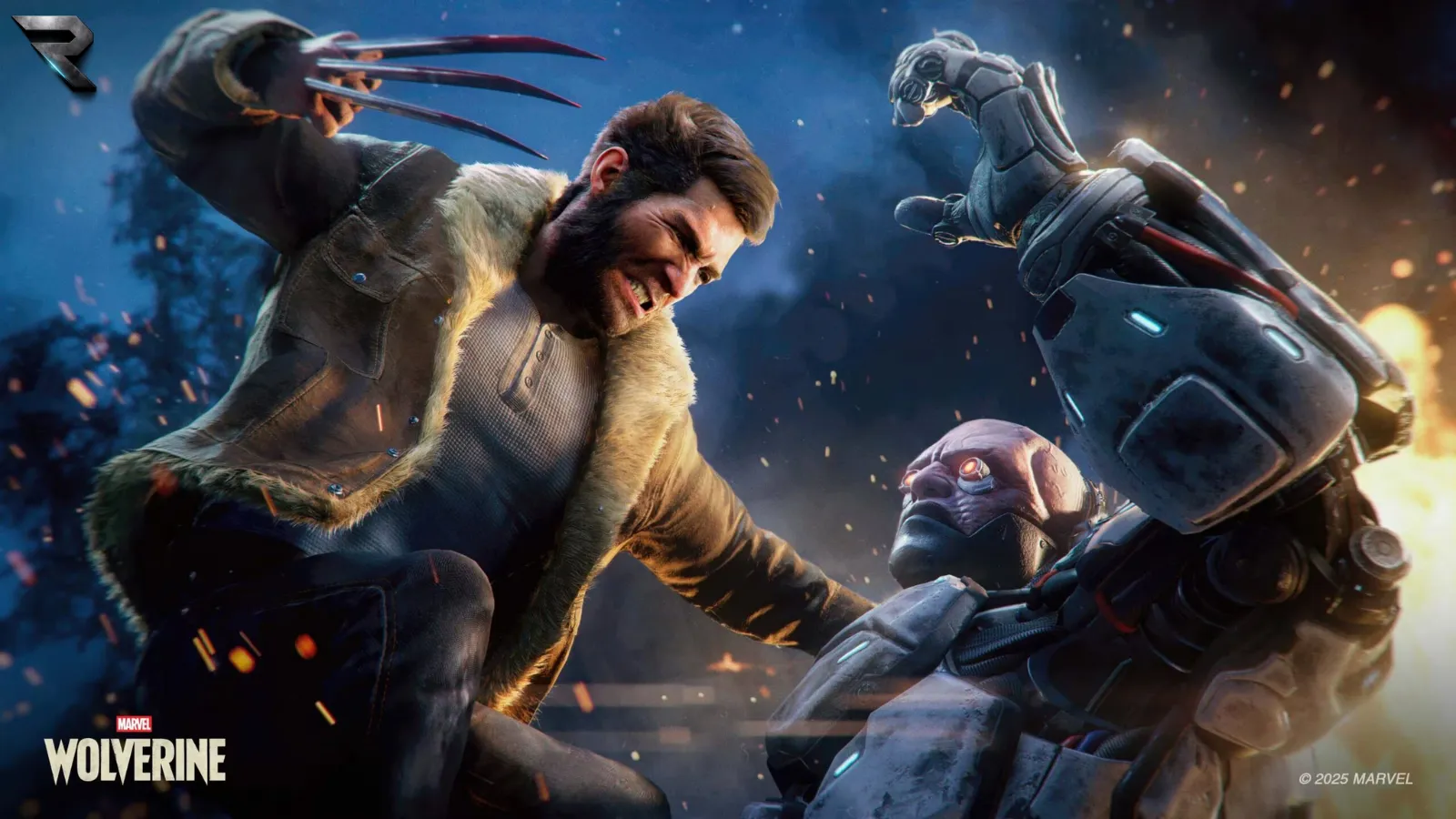
The clearest thing about Marvel's Wolverine is how hard its combat pushes Logan forward instead of letting him retreat. He can launch himself across an arena to close distance, stun enemies, break through guards, and follow up with claw strikes. Kicks send enemies into walls and environmental objects, and Special Techniques add more ways to turn a fight chaotic.
Spider-Man was built around movement and improvisation: web enemies to a wall, yank a gun away, bounce between targets, use half the environment as a weapon. Wolverine skips almost all of that. He gets close and stays there, which is more or less what a Wolverine game should feel like.
Insomniac has not simply handed Logan a pile of strong attacks and called it a day. His Rage meter builds through successful hits and combos and climbs through three tiers, and each tier changes how he plays rather than just how hard he hits.
- Rage Tier 2 unlocks stronger combo finishers along with Last Stand, letting Logan spend stored Rage to heal himself after being fully downed.
- Rage Tier 3 makes him dramatically more dangerous, with brutal critical strikes and executions that can turn an enemy's own weapon against them.
Turning the healing factor into something the player earns through aggression, rather than a passive trait that just happens because Logan is a mutant, is a smart way to make the fantasy mechanical instead of cosmetic. Keep attacking, build Rage, get more dangerous, refuse to stay down. That is the loop, and it sounds exactly like Wolverine.
The Real Challenge Is Making That Combat Last
Making Wolverine feel powerful and making his combat deep enough to carry a full campaign are two different problems, and the second one is the bigger question hanging over the game right now.
Spider-Man's combat had a toy-box quality to it. There was an optimal way to clear a room, sure, but there were also a dozen fun, inefficient ways to do it instead: movement, gadgets, web tricks, environmental kills, aerial combos. Wolverine has fewer obvious tools by design, which does not automatically make the combat worse, but it does mean Insomniac has to get more mileage out of what is there.
Early signs suggest there is more beneath the claw combo than it looks. Special Techniques can be unlocked, upgraded, and mapped to the directional buttons, adding options like Tornado Spin and Knee Breaker. Adaptations improve longer-term stats such as health and Rage capacity. And Ability Inhibitors occasionally strip Logan and his allies of their powers entirely, forcing a fight without healing or any mutant advantage until the source gets destroyed.
Boss fights reportedly demand patience rather than button-mashing, and encounters mix in environmental attacks and team moments so Logan is not just walking into the same arena over and over. Whether all of that adds up to genuinely different ways to play, or just increasingly powerful versions of the same claw-and-parry loop, is something only the full campaign can answer.
A Wolverine Story Set Before the X-Men Existed
If the combat raises questions, the story is where Marvel's Wolverine gets interesting fast. Insomniac is not retelling a familiar X-Men arc. The game opens before the X-Men have even formed, with Wolverine, Mystique, and Sabretooth running together as Team X, a mutant task force assembled by Nathaniel Essex.
Logan has already walked away from Team X by the time the story starts, and that exit has left real tension with both Mystique and Sabretooth. Essex, meanwhile, occupies an unusually important place in Logan's past: he is the man who found Wolverine feral and memory-wiped years earlier, then built Team X to try to protect mutants and carve out a future where they could live in the open.
Bolivar Trask represents the opposite vision, pursuing human superiority through the abduction and destruction of mutants. That puts Logan between two futures rather than a simple hero-versus-villain setup, and forces him to work out what kind of person he actually wants to be in a world already turning on mutants.
Wolverine's Anger Is Part of the Story Too
The opening leans hard into the tension between Logan's rage and his humanity. It flashes back to a feral, memory-wiped Wolverine before folding him into the Team X storyline, and his anger is treated as a real character conflict rather than an excuse for violence.
That comes through clearest in the quieter scenes. In Madripoor's Lowtown, Wolverine meets Jean Grey and the group of mutant teenagers she has been protecting. Their relationship is new, but Logan is honest with her about his anger scaring him and wanting to become better, which is a far more vulnerable version of the character than the one swinging claws.
Lowtown and the Princess Bar Could Matter as Much as the Claws
Lowtown and the Princess Bar give Wolverine room to just exist among his allies. Mystique is not the calculating operative players see on missions when she is off the clock, including during a surprisingly vulnerable game of Never Have I Ever with Logan. Sabretooth's hostility comes with real history behind it, still bitter about Logan leaving Team X, which gives their fights more weight than two characters who simply enjoy punching each other.
Exploration factors in too. Wolverine's Enhanced Senses let him pick up conversations, music, and scents that lead toward new areas or characters, and poking around locations turns up collectibles, upgrade materials, and Easter eggs, including nods to Mystique's history and a certain Remy LeBeau. Nightmare Doors add timed, dreamlike trials built around locations from Wolverine's past, giving players another activity outside the main story rather than another open-world checklist.
What IGN's Hands-On Preview Says
IGN's hands-on video, filed after roughly two and a half hours with the game, lines up closely with Insomniac's own report. The combat lands the Wolverine fantasy well, described as fast, vicious, and satisfying, while being noticeably narrower than Spider-Man's when it comes to creative improvisation. IGN points to the skill tree and additional abilities as the likely source of extra depth, though it is still unclear how much they will actually change how encounters play out.
IGN came away most interested in the story side: the pre-X-Men setting, Logan's relationships with Mystique and Sabretooth, and the Lowtown sequence in particular stood out as the strongest material shown. The overall takeaway was that Wolverine looks impressive without delivering quite the same immediate jolt Spider-Man did back in 2018, with combat depth remaining the open question heading into launch.
The Bottom Line
Marvel's Wolverine already nails the most basic requirement of a Wolverine game: it makes you feel like Wolverine. The Rage system gives his aggression a mechanical payoff, Last Stand turns his healing factor into something earned in combat, and the pre-X-Men setting gives Insomniac room to explore Logan's relationships with Mystique, Sabretooth, Jean Grey, and Nathaniel Essex without leaning on established X-Men lore.
The open questions are whether Rage tiers, Special Techniques, Adaptations, and Ability Inhibitors add up to real variety across a full campaign, and whether the quieter Lowtown and Princess Bar sequences carry enough weight to keep Logan from being defined purely by his claws.
Marvel's Wolverine launches on PlayStation 5 on September 15, 2026.