
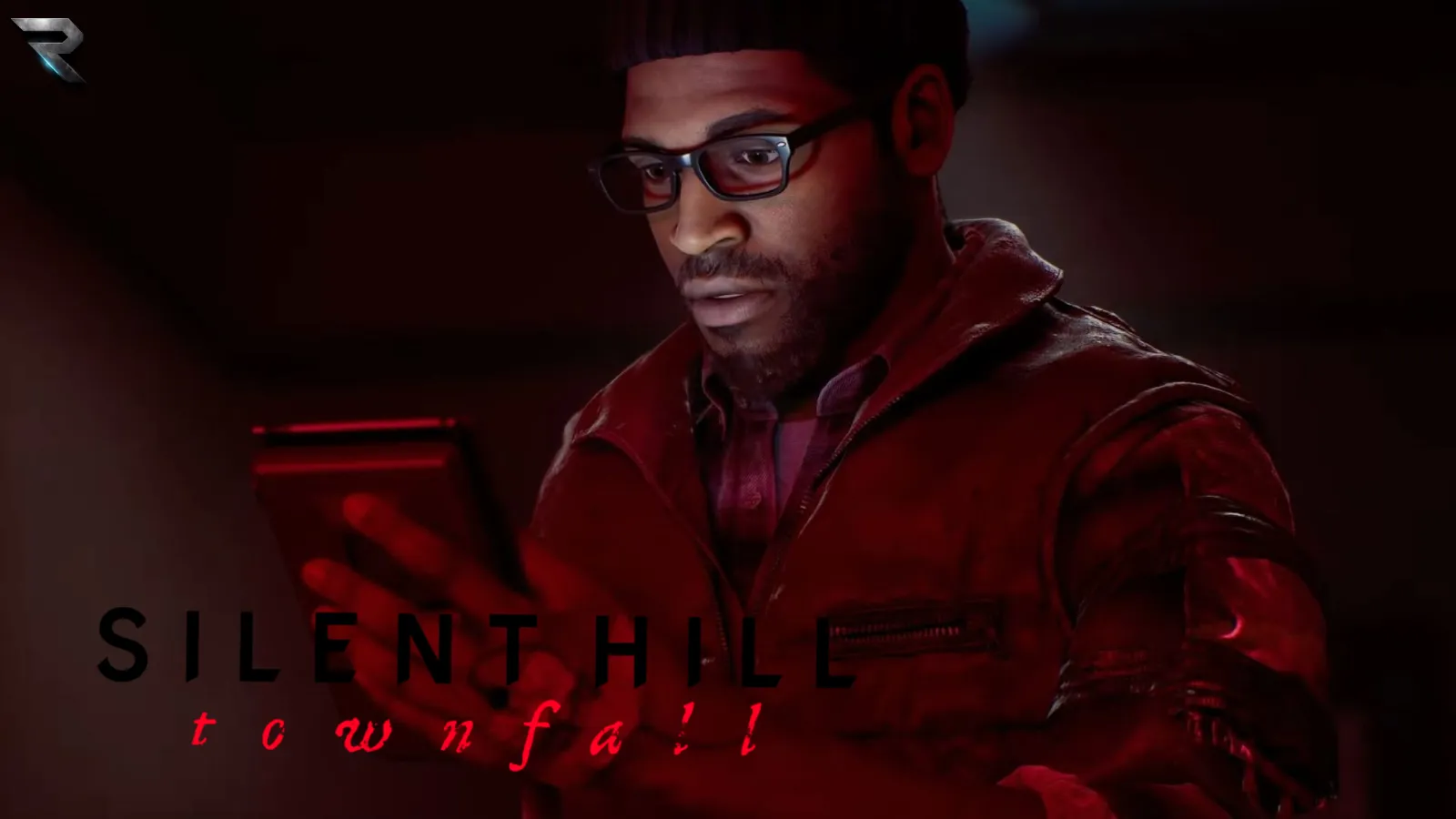
Silent Hill: Townfall keeps finding new ways to separate itself from the rest of the franchise, and a fresh developer interview on the PlayStation Blog gives the clearest explanation yet for why. The gameplay footage already showed off the fog-choked Scottish town of St. Amelia, but the interview goes further, walking through why the team left America behind, why the story is set in 1996, how the CRTV device came together, and why first-person was the perspective that made all of it work.
The conversation features series producer Motoi Okamoto alongside Jon McKellan, writer and director at Screen Burn, and together they sketch a picture of what Townfall is actually trying to be once it releases later this year.
A Silent Hill Beyond Silent Hill
The question that has followed Townfall since it was announced is a simple one: why does it leave the American town behind at all?
Okamoto's answer reframes the premise a bit. This was never about walking away from what makes Silent Hill recognizable. It was about treating that identity as something bigger than a zip code. He described wanting each new entry to look at psychological horror through a different cultural lens rather than tying the whole series to one physical map pin. In his framing, Silent Hill works better as a phenomenon, something emotional and psychological that can surface anywhere, than as a single town that has to keep justifying its own haunting.
That thinking is what pointed the team toward Scotland, and specifically toward the fictional coastal town of St. Amelia. Fog, isolation, an aging population, and a coastline that does not forgive mistakes all line up with the kind of dread the franchise has always leaned on. It is a different postcard, but the same weather system underneath it.
Why Scotland Was the Perfect Setting
For Screen Burn, the choice of Scotland was not just a mood board decision built around fog machines and gray skies.
McKellan made a point of saying the studio wanted somewhere its own people actually knew, not somewhere that only photographed well. Several members of the team grew up around Scottish coastal communities, and that lived experience is what he credits for making St. Amelia feel like a real town rather than a haunted house set dressed up with an accent.
The intent, as he put it, was to avoid the obvious move of building another spooky location that exists purely to hold monsters. Instead, the team wanted players to believe, at least for a while, that St. Amelia used to be a normal place where normal people lived before whatever happened here actually happened.
That groundwork matters for how the horror lands later. Players are supposed to care about the town and the people who once filled it before the game starts peeling back what is actually underneath the fog. Dread hits harder when there was something worth losing in the first place.
Why the Story Takes Place in 1996
The other big structural choice was the year itself. Rather than setting Townfall in the present, the team deliberately picked what McKellan called the moment right before the internet rewired daily life.
He described 1996 as a kind of perfect storm. Technology was creeping into people's lives just enough to feel present, but plenty of communities were still cut off from each other in a way that would be almost unthinkable now. Landlines still carried most conversations. Information did not arrive instantly. A lot of daily existence still ran on tape, paper, and static rather than a signal that never dropped.
For a horror game built on uncertainty and isolation, that gap is useful. Nobody in Townfall gets to pull out a phone and Google the answer. Instead, players are stuck piecing together what is happening from physical clues, strange broadcasts, handwritten notes, and whatever half-working technology they can scavenge along the way. It slows the pace down on purpose, and that slower pace is where a lot of the suspense is supposed to come from.
The CRTV Is Much More Than a Replacement Radio
If there is one gameplay idea getting the most attention out of this interview, it is the CRTV, a handheld device that reworks one of the series' most familiar tools.
Silent Hill has always had some version of a radio that crackles when danger gets close. Screen Burn did not want to just reskin that idea for a new decade. The CRTV is built around actual retro hardware, paired with custom visual effects that produce warped video signals, static bursts, and grainy image tearing throughout the game.
Its job stretches well past detection. The interview lays out several roles it fills at once, and it is worth breaking down what each one actually does for the player during a run through St. Amelia.
| CRTV Function | What It Does In-Game |
|---|---|
| Threat Detection | Flags nearby danger that is not yet visible on screen |
| Environmental Scanning | Helps locate hidden hazards built into the town itself |
| Signal Interception | Picks up mysterious broadcasts tied to the story |
| Lore Discovery | Surfaces additional narrative detail players can dig into |
| Navigation | Offers guidance through specific sections of St. Amelia |
The developers were clear that this is not meant to be a glorified puzzle key. It sits at the center of both the gameplay loop and the storytelling, and that dual role is what should make simply walking through a hallway or a flooded street feel unpredictable rather than routine.
Why First-Person Was the Right Choice
Townfall's move to first-person has been one of the more debated changes since it was revealed, and the team does not pretend the shift is minor. What they argue is that it fits the experience they are building better than a third-person camera would have.
Seeing St. Amelia directly through Simon Ordell's eyes is supposed to close the distance between the player and the town. Small environmental details are easier to catch. Puzzles feel more physical, more like something your hands are actually doing rather than something happening to a character on screen. Even an abandoned building starts to feel heavier when there is no camera pulling back to remind you it is a game.
The perspective also changes how the CRTV itself gets used. Instead of treating it as a separate menu or a cutscene tool, players raise it and interact with it in the moment, mid-exploration, which keeps it feeling like an extension of Simon rather than a UI element bolted on top of him.
The broader point the developers kept returning to is proximity. A third-person camera puts a small buffer between the player and whatever is stalking them. First-person removes that buffer entirely, and Townfall is betting that removing it is worth the tradeoff.
Combat Focuses on Survival Rather Than Action
That same logic carries over into how fights actually play out.
Simon can fight back with both melee and ranged weapons, but the developers went out of their way to say combat should rarely feel like the smart option. The design leans hard on decision making instead: hide, distract, use whatever the environment gives you, sneak past when you can, and only swing or shoot when there is genuinely no other way through.
Enemies are built to respond to how loudly and carelessly a player moves. Draw too much attention and a creature will start actively hunting Simon using its own senses, which forces a constant recalibration rather than letting players settle into one safe routine.
According to Screen Burn, that mix, part combat, part stealth, part outright escape, gets closer to what real horror feels like than a game where the answer to every threat is simply to fight it until it stops moving.
Building Horror Through Technology
None of this is new territory for Screen Burn. The studio has been leaning on retro technology as a storytelling device since earlier releases like Stories Untold and Observation, and Silent Hill: Townfall continues that tradition while embracing elements of the growing analog horror genre. Rather than relying on conventional jump scares, the game uses aging technology, distorted broadcasts, and degraded visual signals to create a constant sense of unease.
Old televisions, radios, and VHS-era visual noise are not being used here as nostalgia bait. They are functioning as part of the horror itself. Distorted footage, broadcasts that cut in and out, and signals that degrade at the worst possible moment all feed directly into the uncertainty the game is trying to build around both the town and Simon's own journey through it.
By pairing that analog decay with a more psychological, character-driven story, the team is aiming for something that reads as clearly Screen Burn while still sitting comfortably inside the wider Silent Hill universe.
Staying True to Silent Hill
Given everything that is changing here, a new country, a new decade, a new camera angle, Okamoto was careful to stress what is not changing.
The core of the series is still psychological horror built on emotionally driven storytelling, layered mysteries, memorable puzzle design, and environments that reward interpretation instead of handing players a tidy explanation. Townfall is not trying to remake past entries. It is trying to add to the series rather than replace any part of it, expanding what the world can look like while still holding onto the themes longtime fans actually show up for.
Final Thoughts
This is the most detailed look yet at the thinking behind Townfall, and none of it reads like decisions made for their own sake. Scotland was not picked because fog photographs well. 1996 was not picked out of nostalgia. The coastal setting, the analog technology, the first-person camera, and the survival-first combat all point in the same direction: psychological horror grounded in isolation, uncertainty, and something closer to real human feeling than jump scares alone.
The Bottom Line
If Screen Burn actually delivers on what this interview describes, Townfall has a real shot at becoming one of the more distinctive entries in the series, proof that Silent Hill's nightmares were never really tied to one American town in the first place.
Whether that ambition holds up will come down to execution once players are actually walking St. Amelia's streets themselves. For now, this is the clearest window yet into how the team is building that experience.