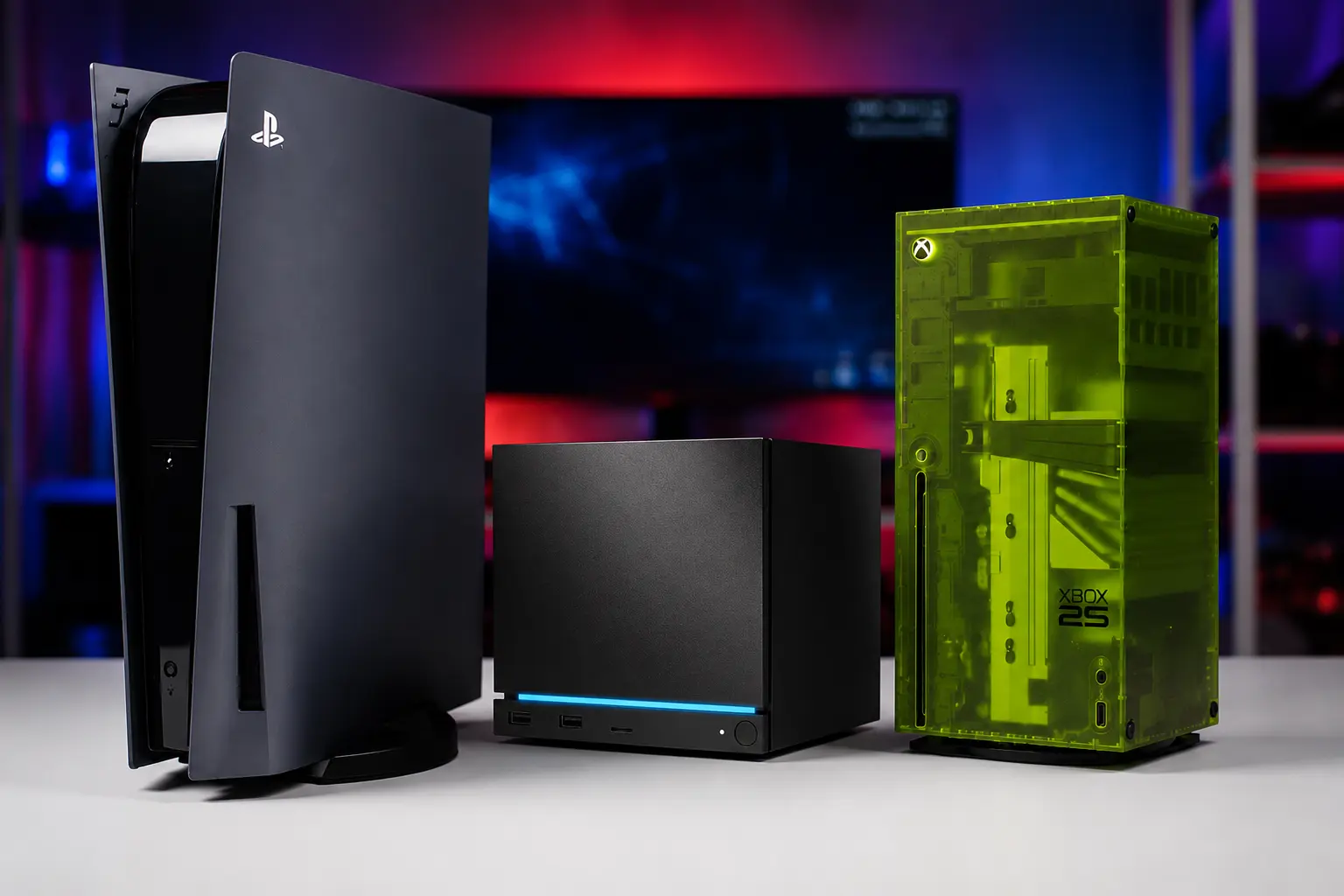


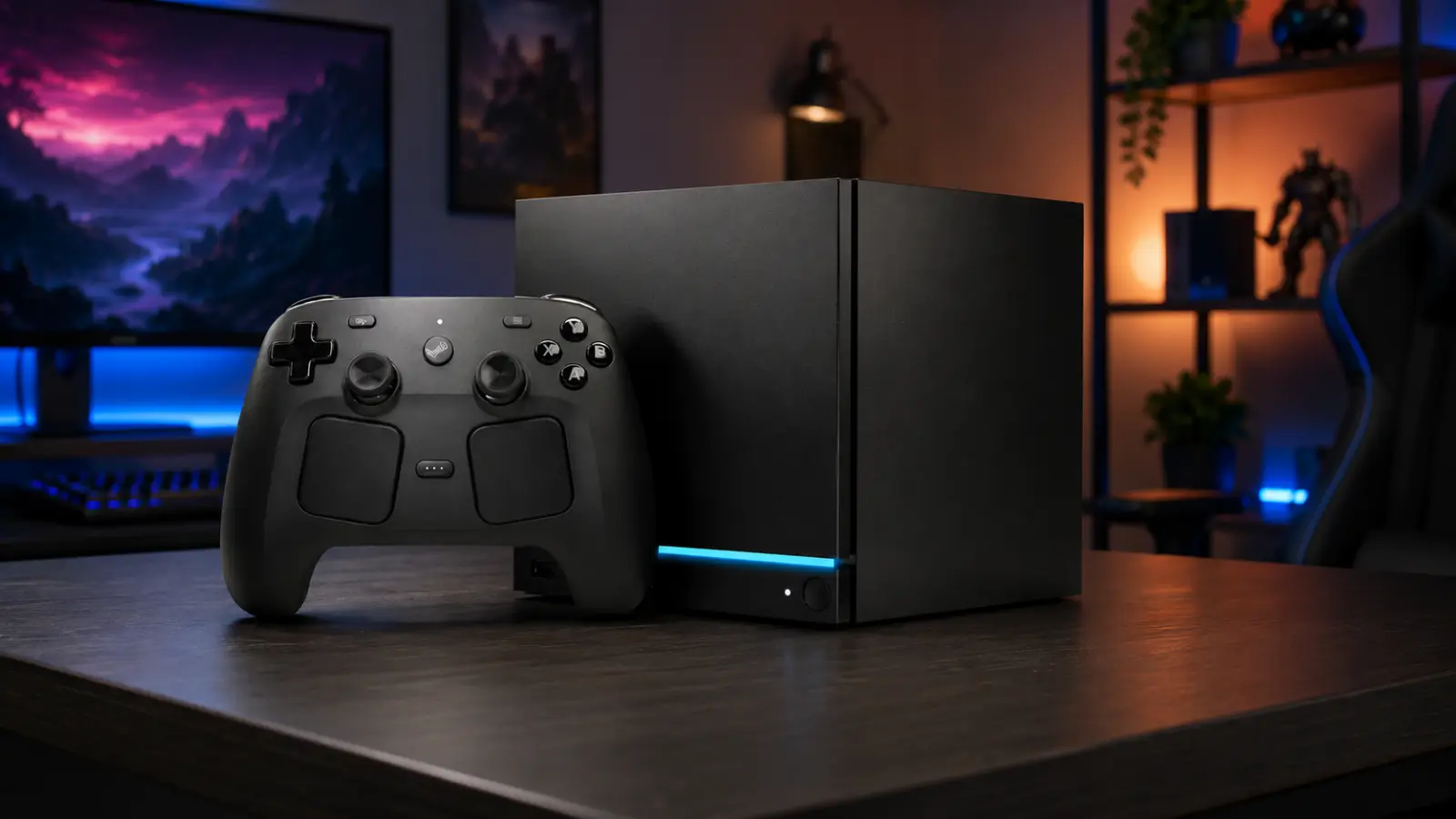
When Valve's reservation queue closed on Wednesday at 1 PM ET, most of the coverage landed on the obvious story: a randomized draw deciding who gets a shot at buying the $1,049 Steam Machine. That part is well-documented. The part that did not make most headlines is what Valve's own engineers said to Gamers Nexus in a technical interview, and then quietly walked back in an email days later.
The short version: the initial framing was that some buyers would receive a dual-channel unit with two 8GB DDR5 sticks, while others would get a single 16GB stick running slower in single-channel mode. A hardware lottery on top of the reservation lottery. Valve later corrected that. All first-batch Steam Machines ship with one 16GB DDR5-5600 SODIMM in a single slot. No lottery. Every unit is single-channel. The other slot arrives empty.
How the Story Changed
The confusion started with the Gamers Nexus interview, where Valve engineers described the situation as variable. Some review units went out with two 8GB sticks, which ran in the faster dual-channel configuration. Based on that, early coverage framed it as a components lottery where buyers would not know which setup they got until the box showed up. That framing spread fast.
Then Valve sent a follow-up email clarifying the situation. "We misspoke here," the company wrote. "All units will actually have one 16GB stick of RAM." Digital Foundry, which had also been testing a review unit, noted that it had not yet finished single-channel versus dual-channel testing on the Steam Machine when the clarification came in.
So the lottery framing was not quite accurate, but the underlying problem it pointed at is real. Every consumer unit runs in single-channel mode. And single-channel memory on a machine like this is not a trivial difference.
What Single-Channel Actually Means for Performance
The Steam Machine runs on a semi-custom AMD Zen 4 processor with 6 cores and 12 threads, paired with a semi-custom RDNA 3 GPU carrying 8GB of dedicated GDDR6 VRAM. Because the GPU has its own memory pool, the system is somewhat more insulated from single-channel RAM penalties than something like a Steam Deck, which uses shared memory for both CPU and GPU tasks. Valve's engineers made this point in the Gamers Nexus interview, and it is a fair one.
The counterpoint, which Gamers Nexus also made, is that dual-channel is faster in objective terms regardless of how the GPU is set up. Testing data from multiple outlets puts the single-channel performance penalty somewhere between 9% and 13% compared to a matched dual-stick setup, and that gap shows up most noticeably in CPU-heavy games and in 1% lows, the frame time outliers that determine how smooth a game actually feels in motion. Valve's own engineer, Yazan Aldehayyat, told Gamers Nexus the two configurations are "pretty comparable" in actual games, and less so in CPU or memory-specific benchmarks. That is probably true for many titles. It is less reassuring for anything demanding.
The situation is also harder to ignore on a thousand-dollar machine that already draws comparisons to the PS5 Pro on price. The PS5 uses 16GB of GDDR6 unified memory in a configuration that does not carry these kinds of bandwidth trade-offs. Buying a Steam Machine and getting measurably slower memory throughput out of the box, with no way to opt out, is a rough ask at this price point.
Why Valve Ended Up Here
The RAM situation did not come out of nowhere, and Valve is not the only hardware company dealing with it. The global DRAM shortage has been building since late 2025, driven primarily by AI data centers hoovering up memory capacity. Samsung and SK Hynix together produce the vast majority of the world's DRAM, and both shifted production toward higher-margin AI server chips as demand from hyperscalers accelerated. DDR5 contract prices rose more than 170% year over year between Valve's November 2025 announcement and the June 2026 launch.
Valve's specific problem was with 8GB DDR5 SODIMM sticks, the laptop-style memory modules the Steam Machine's compact chassis requires. Aldehayyat was direct about it in the Gamers Nexus interview. "It was quite literally impossible to buy 8GB sticks, at least at the quantities we're looking to buy, mostly because everybody wants higher storage, and that's more profitable, so all the capacity shifted to that." Single 16GB sticks were being produced in greater volume, so that is what Valve secured.
Adding to the pressure: Valve does not subsidize its hardware the way Sony or Microsoft does. When component costs go up, the retail price goes up directly, which is part of how a machine originally projected to land closer to $750 shipped at $1,049. The company had no long-term supply contracts with major DRAM manufacturers, which left it in the same position as smaller vendors trying to buy on the open market during a shortage. That is not a great position to be in when you are trying to build enough units to satisfy demand from a tightly limited reservation queue.
The Upgrade Path Is Real, but It Costs Extra
Because every unit ships with only one of its two SODIMM slots occupied, adding a second matching 16GB DDR5-5600 stick would bring the machine up to 32GB running in dual-channel mode. That is technically straightforward. Getting there in practice is less so.
First, the upgrade process is not simple. Gamers Nexus covered this in their teardown: getting to the RAM slot requires removing the exterior case, disconnecting fan and wireless cables, and pulling the power supply. It is all standard hand tools, but it is more involved than anything a console buyer would normally expect. Valve is working with iFixit on repair manuals and replacement parts, and Digital Foundry noted it requires more disassembly than upgrading the SSD.
Second, the cost. A single matching DDR5 SODIMM from a reputable brand currently runs around $200. Some listings are pushing $300. That is an extra chunk on top of a machine that already costs $1,049, and it needs to be spent before you actually know whether the performance difference matters to your specific use case.
There is a version of this where it works out fine. If you have a spare DDR5-5600 16GB SODIMM sitting in a drawer, know your way around an iFixit guide, and are buying the Steam Machine for its software ecosystem rather than raw spec-for-dollar value, this is probably manageable. For everyone else, it is one more thing to factor into a purchase decision that already has a lot of moving parts.
What Valve Should Have Said Sooner
The clarification came from a Gamers Nexus email chain, not from any update to the product page. If you went to the Steam Machine reservation flow this week, nothing told you about the single-channel configuration, the performance delta, or the upgrade cost. That information lives in a hardware deep-dive that enthusiasts will read and casual buyers almost certainly will not.
Valve deserves credit for being straight about the component situation when it came up in a technical interview. That is not nothing. But there is a meaningful difference between disclosing something in a media briefing and putting it somewhere near the point of purchase. A buyer clicking through the reservation queue to secure their invite has no obvious way to learn that their unit will run in single-channel mode before they hand over the money.
Consoles are supposed to remove exactly this kind of complexity from the buying decision. You buy a PS5, you know what is inside it. Every unit is the same. The Steam Machine is a genuinely different product category, somewhere between a console and a PC, and that positioning comes with trade-offs. Variable memory configurations and upgrade paths that require disassembly are very much in the PC column. If Valve wants to sell this to the living-room gaming audience, that stuff probably belongs on the product page.
What Buyers in the Queue Should Know
If you are sitting in the reservation queue waiting on an invite email next week, the configuration question is settled: you are getting a single 16GB DDR5-5600 stick in single-channel mode. You cannot choose a different setup, and Valve has not said that is changing for the first batch.
The practical options are limited. You can accept the configuration as-is and see how games perform on it. Early testing from outlets that received review hardware generally suggests the machine handles most titles competently, even in single-channel mode. You can budget for a second matching RAM stick now, before the invite lands, so you are not making a rushed purchase after already spending over a thousand dollars on the box itself. Or you can wait, and see whether later production batches change anything as DRAM supply conditions shift. Analysts generally do not expect meaningful price relief until 2027 or 2028, so that may be a longer wait than it sounds.
The Steam Machine launched into genuinely rough timing. Hardware costs across the board are elevated, the pricing ended up higher than Valve originally planned, and the memory situation is an awkward thing to explain to a general consumer audience. None of that makes the product bad, but it does make the full picture more complicated than the spec sheet suggests. Knowing the single-channel situation going in is probably the minimum any buyer should bring to this decision.