

Rockstar Games has given players a longer look at the thinking behind Grand Theft Auto VI. IGN has published its full interview with Rob Nelson, Rockstar North's Head of Development and Co-Studio Head, recorded while he played an approximately 30-minute, largely unscripted section of the game earlier this year.
Most of the big systems discussed in that session have already surfaced in earlier previews, including police pursuits, vehicle theft, robberies and the way Jason and Lucia's relationship works. What the full conversation adds is the smaller stuff that got cut, and a clearer sense of what Rockstar is aiming for. The studio does not seem to be building a bigger Vice City. It wants the story, the characters and the open world to run on the same underlying systems.
We already covered the major mechanics in our GTA 6 preview breakdown, including Heat, vehicle theft, robberies and Criminal Profiles. This interview sits on top of that picture.
This Is Not a New GTA 6 Demo
One clarification first. The interview was conducted during the same July hands-on session that fed IGN's earlier GTA 6 preview coverage. Rockstar has not revealed another 30-minute slice of the game. IGN has simply published the whole conversation with Nelson.
That means plenty of it will sound familiar if you have followed the recent previews. The difference is context, more examples and a handful of gameplay details that were left out the first time. Think of it as a deeper look at how Rockstar expects the game to work, not a fresh gameplay reveal.
Jason and Lucia Have Lives Without You
The most interesting detail concerns character switching. Jason and Lucia do not stand around waiting for the player to come back. According to Nelson, both have their own routines. If you are playing as Lucia, Jason might be at the safehouse, or he might be somewhere else doing his own thing. When you switch, you drop into whatever he happens to be doing.
That is a different philosophy from Grand Theft Auto V, where switching between Michael, Franklin and Trevor was mostly about reaching three protagonists and their separate storylines. Because Jason and Lucia are a couple, Rockstar wanted switching to feel like knowing where your partner is and what they are up to. In the demonstration, Nelson switched from Lucia to Jason and found him in the shower. It is a small moment, but it shows the idea: the game does not pause a character's life when you stop controlling them.
The Relationship Exists Even When You Are Apart
The same thinking applies to the relationship itself. Jason and Lucia can text and call each other while separated, and the relationship is not tied only to story missions or date activities. You can check in, reply to messages or ignore them.
Nelson said the team wanted the relationship to feel like something players are responsible for, not a conventional meter. If one character messages to say they are heading home for the night, you can answer normally or leave it unread. Ignoring those moments can have a small negative effect. It is not a dramatic penalty every time. The point is that the relationship runs continuously instead of appearing only when a mission needs it.
This builds on what we covered earlier about the relationship using different states instead of a percentage. The full interview explains why Rockstar went that way: Jason and Lucia are meant to feel like two people who keep existing when you are not controlling them.
Robberies Are a Core Part of the Loop
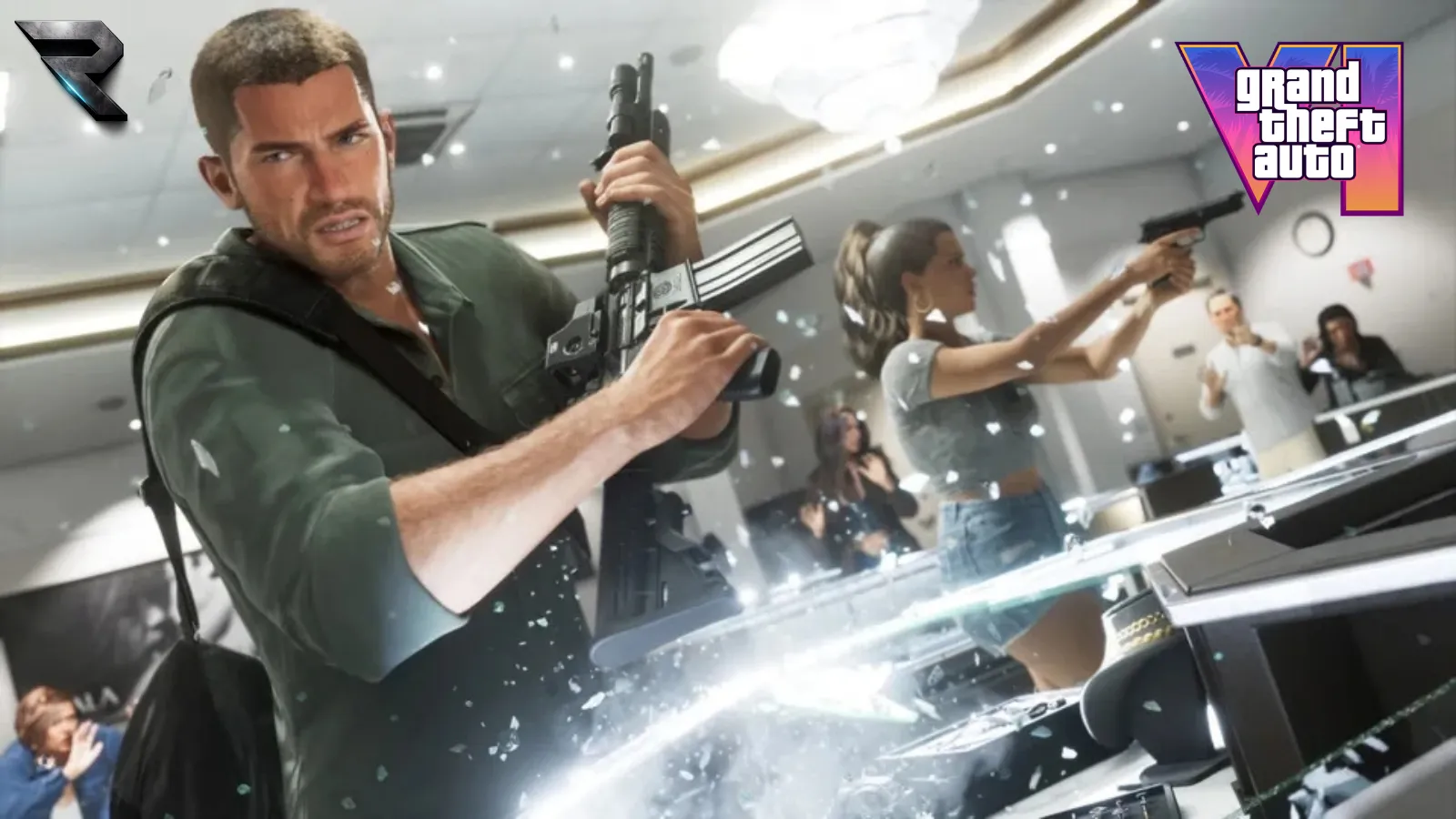
Our earlier breakdown went through how robberies involve witnesses, alarms, CCTV, safe combinations, police responses, getaway vehicles and different target types. The interview adds context: Nelson describes robberies as a major part of the gameplay loop, not an optional extra scattered across the map.
Players can hit businesses alone or work together as Jason and Lucia, and the demo shows how fast an ordinary trip can turn into an opportunity. Nelson was heading to a shop to make some money when Jason spotted a police impound lot. The plan changed. Instead of carrying on to the original target, the pair could break into the lot and steal a vehicle. That kind of interruption is exactly what Rockstar seems to be going for. You do not have to stick with the plan you started with.
The Impound Lot Shows How GTA 6 Wants You to Think
The impound sequence is a good example of several systems working together. Jason and Lucia had already been given information about a vehicle inside, along with a code to get in. The player could approach it alone or bring both characters.
Rockstar is clearly not treating robberies as isolated mission types. A single job can connect to a vehicle, a fence, a piece of information, a location, a character, a getaway plan, the police system and the relationship between the two leads. The world suggests the next thing to do, which is a long way from walking up to a mission marker.
You Can Prepare for a Robbery, but You Don't Have To
During one robbery, Nelson admits he should probably have set up a getaway vehicle outside. He does not, and goes in to see what happens. A safe turns up and the combination is eventually found. He also has an explosive that could open it, though that would damage some of the contents. Then the police arrive. Instead of the situation snapping into a scripted shootout, officers position themselves outside the building and the player has to rethink the whole thing.
It lines up with our earlier look at the robbery and Heat systems. Rockstar wants preparation to matter without forcing it every time. You can plan, you can improvise, and the world is supposed to respond either way.
Your Personal Vehicle Is More Than a Car
The earlier previews already established that vehicles in GTA 6 behave like persistent resources, with security systems, trackers, different theft requirements and different values. The full interview adds that your personal vehicle can carry your weapons and spare clothes. Nelson showed players adding changes of clothing to the trunk.
The implications for dealing with police are obvious. If your clothing becomes part of what law enforcement knows about you, changing outfits at your car is another way to manage Heat. The vehicle stops being only the thing that gets you to the job and becomes a mobile equipment locker.
Also Read: GTA 6 Preview Breakdown: Police Heat, Vehicle Theft, and Robbery Systems Explained
Damaged Stolen Cars Are Worth Less
Another smaller detail: if you steal a car and plan to sell it through the fencing system, its condition matters. A damaged vehicle is worth less than one that has been repaired. That fits the broader vehicle economy Rockstar is building, where a stolen car is not something you grab, drive for five minutes and abandon. You can assess its security, deal with its tracker, repair it and eventually register or fence it depending on your progression. Most of that system is covered in our earlier breakdown, so the new part here is how condition affects value.
The interview also reinforces that not every car will be immediately available. Some parked vehicles need particular tools or progression before you can steal them properly. That is not an invisible wall around expensive cars, since players can still take an occupied vehicle through a carjacking, but parked cars can carry extra security requirements. The better equipped Jason and Lucia get, the more opportunities open up.
Sometimes the Best Escape Is on Foot
We have already covered how police can build knowledge about Jason or Lucia through clothing, vehicles, witnesses, CCTV and other evidence. The interview adds a practical example: escaping by car is not always the right call. If police are looking for a specific vehicle, abandoning it and continuing on foot can make more sense.
Jason and Lucia can also split up during police searches, so you are not necessarily tied to your partner or your car for the whole escape. The opposite works too. The pair can operate together, with one driving while the other handles the action, and the player can switch between them mid-journey. A getaway becomes a two-person operation, which fits a game built around two protagonists who work as a team.
Strange Things to Find Between Missions
One of the best open-world examples in the interview is a completely unexpected encounter. Playing as Lucia, Nelson meets a man living in a dumpster. You can choose to give him pills, or leave him alone. If you come back later, the encounter can develop further, with the character offering legal advice. There is even an option to climb into the dumpster with him.
It is the kind of optional moment that is easy to miss, and that seems to be the point. Rockstar does not want every interesting thing in Leonida announced by a large mission marker. Some things should happen because you happened to be there.
Missions and Free Roam Are Meant to Feel Like One Game
This may be the most important takeaway. Rockstar wants to shrink the divide between scripted missions and the open world. Nelson talked about connecting who you are in the narrative with who you are while roaming Leonida. Where the systems allow it, missions can be more flexible: police pursuits behave more naturally, robberies use mechanics that also exist in free roam, and players may be able to take different routes or approach a situation differently instead of following one perfectly scripted sequence.
Rockstar is not abandoning cinematic missions. The studio still wants tightly directed moments when the story calls for them. The goal sits somewhere in between, with freedom where freedom improves the experience and control where the story needs it. That is a hard balance, and GTA 6 appears to be chasing it by running the same systems in both places.
Player Choice Was a Big Goal
Asked about choice, Nelson said it was one of the main things Rockstar wanted to improve. That does not necessarily mean dozens of radically different endings. It seems to mean that decisions should carry more influence across the whole experience. Some will be large and some tiny. Some may affect the narrative directly, while others may only change how Jason, Lucia or the world reacts to what you are doing. That ties into the Criminal Profile and relationship systems we have already covered, where the pattern of what you do seems to matter more than a single dialogue option.
Even Rockstar Doesn't Know Everything That Can Happen
Perhaps the most telling moment comes while Jason and Lucia are simply travelling. They pass the police impound, and Jason suggests stealing a vehicle from it. Nelson says he had not heard that line before.
That says a lot. Rockstar has spent years on this game, and someone directly involved in its development can still run into something he has not seen. Nelson essentially says the game is so large that he does not think anyone on the team knows everything in it. It helps explain why Rockstar keeps stressing discovery. The aim is not just a huge number of scripted events but enough systems, characters, locations and interactions that unexpected combinations emerge.
Snapmatic and Satire
Two smaller notes round things out. Jason and Lucia can browse Snapmatic and follow accounts, but they are not posting like ordinary influencers. Nelson explains that the couple are on the run, so they are effectively lurking, not publicly sharing their lives. It is a minor choice, but it fits the story.
On satire, Nelson said Rockstar does not want to chase every meme, political controversy or piece of internet slang that happens to be popular during development. GTA 6 has been in production for years and the studio expects people to play it for years after launch, so some jokes need to age better. The process starts with the world itself, meaning Vice City and Leonida, the people who live there and the experiences Rockstar wants players to have. The satire grows out of that, rather than being the starting point. That could keep the game from feeling like a snapshot of one particular year.
What We Already Covered and What This Adds
Our earlier breakdown went deep on Heat, police detection, evidence, CCTV, vehicle theft, Waink, trackers, theft tools, garages, fuel, Pay'n'Spray, Criminal Profiles, relationships, robberies, money, weapons, NPC reactions and activities. The full interview does not replace that. It adds context around it.
The new details include Jason and Lucia keeping independent routines, the chance of finding one character mid-activity, clothing stored in personal vehicles, the importance of robbery preparation, damaged stolen cars being worth less, strange optional encounters and a more flexible approach to missions. Most of all, it explains why these systems exist.
Rockstar is not just adding activities to a map. It is trying to make them interact. Your car can carry your weapons and clothes, and it can also be part of what police know about you. A robbery creates Heat, and Heat can force you to abandon the vehicle. Your partner can help you get away. The relationship keeps developing while you are apart. A random encounter can derail your plans, and a drive through the city can hand you a new opportunity.
If Rockstar makes those systems work as smoothly as Nelson describes, the most impressive thing about GTA 6 may not be how big Leonida is. It may be how much the world remembers and reacts when you do something the game did not expect.