
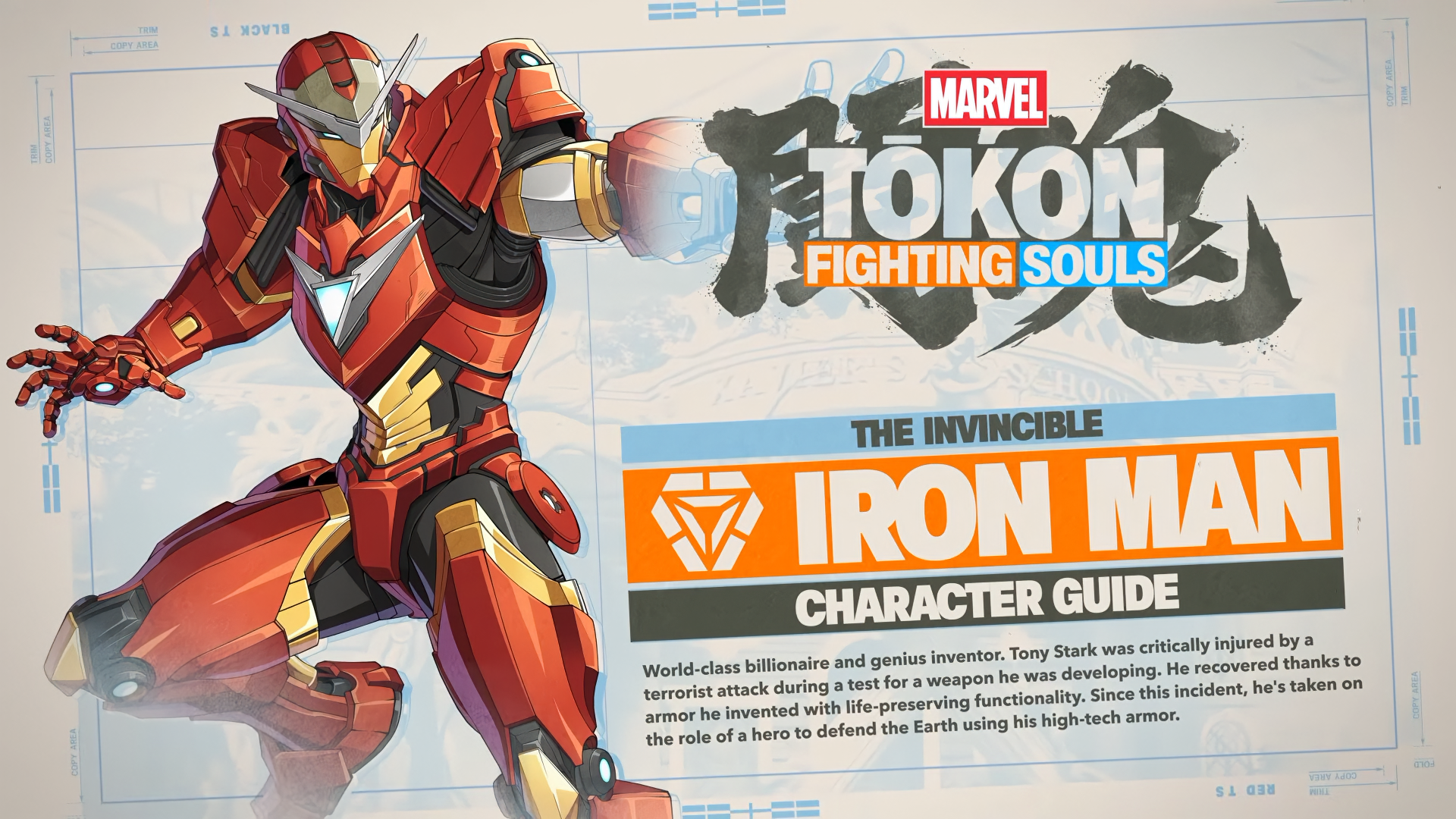
Every roster needs someone who wins by making the other player come to them, and in Marvel Tōkon: Fighting Souls, that's Iron Man. He's not the character who ends a match in three seconds of unbroken pressure. He's the one who sits at range, fires off missiles and beams until you make a mistake, then punishes that mistake for half your health bar. If you've ever enjoyed playing a zoner in a fighting game, or you just want a character who rewards patience over reflexes, Tony Stark is worth your time.
This guide covers everything you need to know about Iron Man: his strengths and weaknesses, every special move and Super in his kit, how his tools connect into real sequences, and the actual game plan you should be running from round one to match point.
Character Overview
Iron Man is officially classed as a mid-range zoner, and the label fits. He wants space, and most of what he does is designed to either create that space or punish you for trying to take it away.
- Role: Mid-range Zoner
- Difficulty: Beginner-Friendly
That beginner-friendly tag is doing real work here. Iron Man's plan doesn't ask you to memorize fifteen-hit combo trees before he starts winning matches. Fire a projectile, force a reaction, punish the reaction. It scales as you get better, but it never stops making sense.
Playstyle
Iron Man specializes in fighting from mid-range using a mix of projectiles and aerial movement, and that's really the whole thesis of the character. The plan breaks down into four repeatable steps: control space with Repulsor attacks, force the opponent into a block or a bad decision, move in once they've committed to something unsafe, then convert whatever opening you get into real damage.
What separates him from a pure turtle character is that none of this is passive. Iron Man isn't hiding behind projectiles waiting for the clock to run out. He's using them to buy the half-second he needs to close distance on his terms instead of yours.
Strengths
- Excellent projectile control
- Strong aerial movement
- Safe neutral game
- Reliable combo conversions
- Effective at forcing opponents to approach
Outstanding Neutral Control
Iron Man's projectile arsenal lets him win the neutral game before it even turns into a real exchange. Instead of committing to a risky approach, he can poke from a distance and hold his position, which is exactly the kind of thing that frustrates aggressive players who want to close the gap immediately.
Excellent Air Mobility
Being genuinely comfortable in the air is one of Iron Man's biggest edges. His movement tools mean he doesn't have to commit to a single, predictable line of approach the way most grounded characters do. He can vary his angle constantly, which keeps opponents guessing about where the next hit is coming from.
Safe Pressure
Because a lot of his offense starts from mid-range instead of point-blank, Iron Man rarely has to gamble on a close-range engagement he isn't ready for. He can grind an opponent down over time instead of forcing the issue.
Strong Combo Potential
Landing even one stray projectile can turn into a full combo once Marvel Tōkon's assist and crossover systems come into play. Once teammates are available mid-match, Iron Man's damage output goes up significantly, and a single missile connecting becomes a real threat instead of just chip damage.
Weaknesses
- Can struggle when trapped in close-range pressure
- Requires good spacing to maximize effectiveness
- Less explosive than dedicated rushdown characters
Vulnerable Under Heavy Pressure
If an aggressive character manages to get past his zoning tools and lock him down, Iron Man doesn't have the same defensive toolkit that dedicated close-range fighters carry. Losing your spacing against him is genuinely dangerous, so treat distance as a resource you're actively managing, not something that just happens.
Requires Good Positioning
Iron Man's kit is built around a specific range. Get pushed outside of it, in either direction, and a lot of what makes him strong stops applying. Standing too close in particular strips away most of his advantages.
Predictable Projectile Usage Can Be Punished
Players who lean on firing projectiles from the same spot over and over will get read and punished for it eventually. Movement has to stay part of the plan alongside the zoning, not an afterthought.
Iron Man Skills and Abilities
Iron Man's kit is built around controlling space with heavy projectiles, then using his flight tools to reposition or extend pressure once an opening appears. A lot of his specials cancel naturally into Free Flight or Multi-Dash, which is what lets experienced players stay airborne and keep attacking from angles that are hard to predict.
Smart Missiles
Type: Projectile
Iron Man launches a volley of homing missiles that travel toward the opponent after a short delay. The delay is actually a feature here, not a downside. Since the missiles take time to arrive, Tony isn't stuck standing still waiting for them to land. He can advance behind them, start pressure, or set up his next move while they're still in the air.
Best uses: forcing blocks, safely closing distance behind cover, starting pressure sequences, controlling neutral from long range, and setting up aerial follow-ups through Free Flight.
Iron Avenger
Type: Forward Rush Attack
This is Iron Man's main advancing tool, sending him forward at speed. On the ground it travels in a straight line and carries the Break effect, which makes it a solid option for punishing unsafe attacks or catching someone trying to back away. In the air, it opens up different travel angles depending on the input, which makes it noticeably harder to read on reaction.
Best uses: closing distance, punishing whiffs, extending combos, carrying opponents to the corner, and transitioning into aerial pressure.
Iron Flash
Type: Anti-Air
Iron Flash launches Iron Man upward and grants him invincibility against aerial attacks for part of the animation, which makes it one of his most reliable answers to jump-happy opponents. After it connects, he isn't locked into landing immediately. He can cancel into Free Flight or Multi-Dash and keep the offense going instead of resetting to neutral.
Best uses: anti-air punishes, shutting down aerial approaches, starting combos, escaping pressure, and opening up aerial offense.
Unibeam
Type: Beam Projectile
Unibeam sends a powerful energy beam straight across the screen and it's arguably Iron Man's best zoning tool, thanks to its range and speed. It's fast enough to interrupt someone trying to approach from far away, and it doubles as a reliable combo finisher. Like several of his specials, it can also cancel into Free Flight for extra offensive options.
Best uses: long-range zoning, beam wars, punishing careless movement, combo finishers, and general neutral control.
Repulsor Blast
Type: Unique Attack
A simple concentrated energy blast that follows the initial input, Repulsor Blast is deceptively strong as a pressure tool precisely because it's simple. It cancels into Free Flight, which lets Iron Man keep his offense rolling instead of ending the sequence there.
Best uses: mid-range pressure, combo extensions, safe pressure strings, and flight cancels.
Repulsor Shot
Type: Unique Projectile
Repulsor Shot fires a rapid series of energy blasts, and repeated presses add more shots on top, which makes it ideal for burying an opponent under sustained ranged pressure. The aerial version links directly into Multi-Dash, giving Iron Man another way to keep attacking from a fresh angle.
Best uses: chip damage, projectile pressure, locking opponents down, and air-to-ground harassment.
Super Skills
Super Skills spend Skill Gauge for attacks that hit noticeably harder than Iron Man's regular specials. These are the moves that swing momentum, punish a bad read, or close out a long combo with real damage.
Unibeam Max
The upgraded version of Iron Man's signature beam, Unibeam Max fires an enormous blast across the screen. It deals considerably more damage than the standard Unibeam and works well as either a combo finisher or a long-range punish. Its speed and reach also make it dangerous against anyone trying to recover or throw out a projectile from full screen.
Best uses: combo enders, long-range punishes, beam clashes, closing out rounds, and high-damage confirms.
Ultimate Skills
Ultimate Skills are Iron Man's biggest hits, burning a large chunk of Skill Gauge for devastating damage and a cinematic finisher. Save these for guaranteed confirms or the moment you actually need to close a round out.
Champion Buster
Champion Buster summons Iron Man's heavy armor for an explosive finishing assault. If it connects with the opposing leader character, you can spend additional Skill Gauge to activate Unibeam Overdrive and push the damage even higher. Given the ceiling on this move, it's one of Iron Man's strongest combo finishers and a legitimate comeback tool when you're behind.
Best uses: high-damage combo finishers, punishing unsafe Supers, closing out rounds, and spending leftover Skill Gauge for guaranteed damage after a confirm.
Tokon Assemble
Tokon Assemble is the game's comeback mechanic, bringing the whole team in for a cinematic offensive sequence. Iron Man opens with an invincible strike before his teammates join in. It only activates when losing the current round would also lose the match, so treat it as a genuine last-chance tool rather than something you'll see every round.
Best uses: last-round comebacks, punishing predictable offense, flipping a defensive position into offense, and locking in momentum during clutch moments.
Free Flight
Type: Mobility Ability
Free Flight isn't an attack at all. It's a temporary window of unrestricted aerial movement that dramatically expands where Iron Man can go, letting him reposition freely before deciding when and where to strike. A lot of his strongest offense revolves around canceling straight into this after a special move.
Best uses: aerial repositioning, extending combos, creating mix-ups, escaping danger, and maintaining offensive pressure.
Multi-Dash
Type: Mobility
Multi-Dash lets Iron Man dash rapidly in whichever direction you choose while airborne. Paired with Free Flight, it gives him some of the best air mobility in the current roster, and it's a big part of why he's genuinely difficult to pin down once he gets moving.
Best uses: air mobility, cross-up attempts, combo extensions, dodging anti-airs, and changing attack angles mid-sequence.
Assist Moves
Iron Man also works well as a support character, thanks to a set of ranged assist attacks that pair naturally with close-range teammates.
Assemble Rush
Rushes forward with a lunging attack after a successful hit, allowing an immediate Member Switch if it connects. Useful for extending combos while keeping the momentum going.
Assemble Assist Shooter
Fires a powerful beam projectile across the screen. This is one of his strongest assists, giving teammates solid ranged support and setting up quick conversions into longer combos.
Assemble Assist Aerial
Iron Man drops in from above and fires energy projectiles at a downward angle. Great for covering jump-ins, controlling space, and forcing opponents to respect attacks coming from overhead.
Building Iron Man's Game Plan
Iron Man has beams, missiles, mobility tools and cinematic finishers, but none of that matters much on its own. His actual strength comes from chaining these pieces together. Projectiles force the opponent to respect distance, Free Flight and Multi-Dash let him reposition off that respect, and then his Supers and Ultimate Skills convert the opening into real damage.
How Iron Man's Moves Work Together
What makes him work isn't any single attack. It's how naturally his tools flow into each other. A typical aggressive sequence looks something like this:
Smart Missiles > advance behind the missiles > Iron Avenger > Free Flight > Multi-Dash > Unibeam
Or he can play it much slower and more patient:
Repulsor Shot > Unibeam > Smart Missiles > repeat
That flexibility is the point. Iron Man can switch between grinding zoning and sudden aerial pressure depending on what the matchup calls for, and knowing when to swap between the two is most of what separates a good Iron Man from a great one.
How to Play Iron Man
Early Match
Lean on projectiles to establish neutral control. This isn't the time to force anything. Learn how your opponent moves, take the safe pokes when they're available, and resist the urge to go for a combo that isn't really there yet.
Mid Match
Once assists are up, start turning stray projectile hits into longer combo sequences. His zoning gets considerably stronger here, since teammates can cover his recovery or keep the pressure going while he resets.
Late Match
Keep controlling space instead of chasing the opponent down. Force them into taking risks they don't want to take. Iron Man does his best work when the other player feels like they have to approach, not the other way around.
Neutral Game Tips
- Stay just outside your opponent's preferred attack range
- Constantly vary your positioning between grounded and aerial
- Use projectiles to force defensive reactions
- Don't repeat the same attack pattern, or you'll become predictable
- Capitalize immediately whenever a projectile connects
Offensive Tips
Iron Man's offense is about turning small openings into bigger ones, not throwing out risky attacks and hoping. Focus on projectile confirms, safe approach options, assist extensions, and corner pressure once your zoning has actually done its job. An opponent who gets frustrated by ranged attacks will usually overextend eventually, and that's exactly the moment you want to be ready for.
Defensive Tips
When you're the one under pressure, create distance whenever you can rather than sitting in block. Use movement instead of holding back the whole time, get back to mid-range as soon as possible, and avoid panicking into a random attack against a rushdown character. Iron Man's defense improves dramatically the moment he gets his spacing back, so treat regaining that distance as the actual priority, not just damage prevention.
Team Synergy
Iron Man pairs well with characters who excel at close range, benefit from projectile assists, can safely capitalize on his confirms, and cover his weaknesses against aggressive rushdown. Since Marvel Tōkon runs on a 4v4 Assemble system with shared health and assist mechanics, he works either as a lead character setting the pace in neutral, or as a supporting fighter feeding teammates ranged coverage.
Is Iron Man Beginner Friendly?
Yes, and it's not close. His game plan boils down to four steps: control space, force mistakes, punish mistakes, repeat. Mastering the spacing and aerial movement still takes real practice, but new players can start winning matches quickly just by learning solid projectile usage and holding their position.
Frequently Asked Questions
Is Iron Man a good character for new players in Marvel Tōkon: Fighting Souls?
Yes. He's officially rated Beginner-Friendly, and his game plan of controlling space with projectiles before punishing mistakes is easy to understand even before you've learned his full combo routes.
What is Iron Man's best combo finisher?
Champion Buster is his highest damage finisher, especially when you can spend extra Skill Gauge on Unibeam Overdrive after it connects with the opposing leader character. Unibeam Max is the more accessible option for shorter confirms.
How do you deal with rushdown characters as Iron Man?
Prioritize regaining distance over trading hits. Use movement rather than sitting in block, return to mid-range as fast as possible, and avoid throwing out risky attacks in a panic. Iron Flash is also a strong answer if the pressure comes from the air.
What's the difference between Iron Man's Free Flight and Multi-Dash?
Free Flight opens up unrestricted aerial movement so he can reposition freely, while Multi-Dash is a rapid directional dash used on top of that movement. Combined, they give him some of the best air mobility in the game.
Does Iron Man work well as an assist character?
Yes. Assemble Assist Shooter gives teammates a strong ranged beam to convert combos off of, and Assemble Assist Aerial covers jump-ins well, which makes him a solid pick for teams built around a close-range lead character.
Final Verdict
Iron Man is a strong pick for anyone who enjoys calculated, methodical fighting game play. Between his projectile pressure, air mobility and reliable combo conversions, he sits comfortably among the strongest mid-range specialists currently available in Marvel Tōkon: Fighting Souls.
He's not going to win you matches through sheer aggression. He rewards patience, careful spacing and disciplined neutral play instead, and players who can hold that spacing while capitalizing on projectile confirms will find him both approachable and consistently rewarding. As the competitive scene develops after launch, expect Iron Man to stay a dependable pick thanks to how well his toolkit adapts across different team compositions, even as optimal routes and matchup knowledge keep evolving.
Continue Reading Our Marvel Tōkon Coverage
Explore more Marvel Tōkon: Fighting Souls character guides in our Marvel Tōkon Guide Hub.
Note: This guide is based on Arc System Works' official Iron Man character guide and currently available gameplay footage. We'll continue updating it as Marvel Tōkon: Fighting Souls receives balance changes, new discoveries, and additional competitive strategies after launch.