
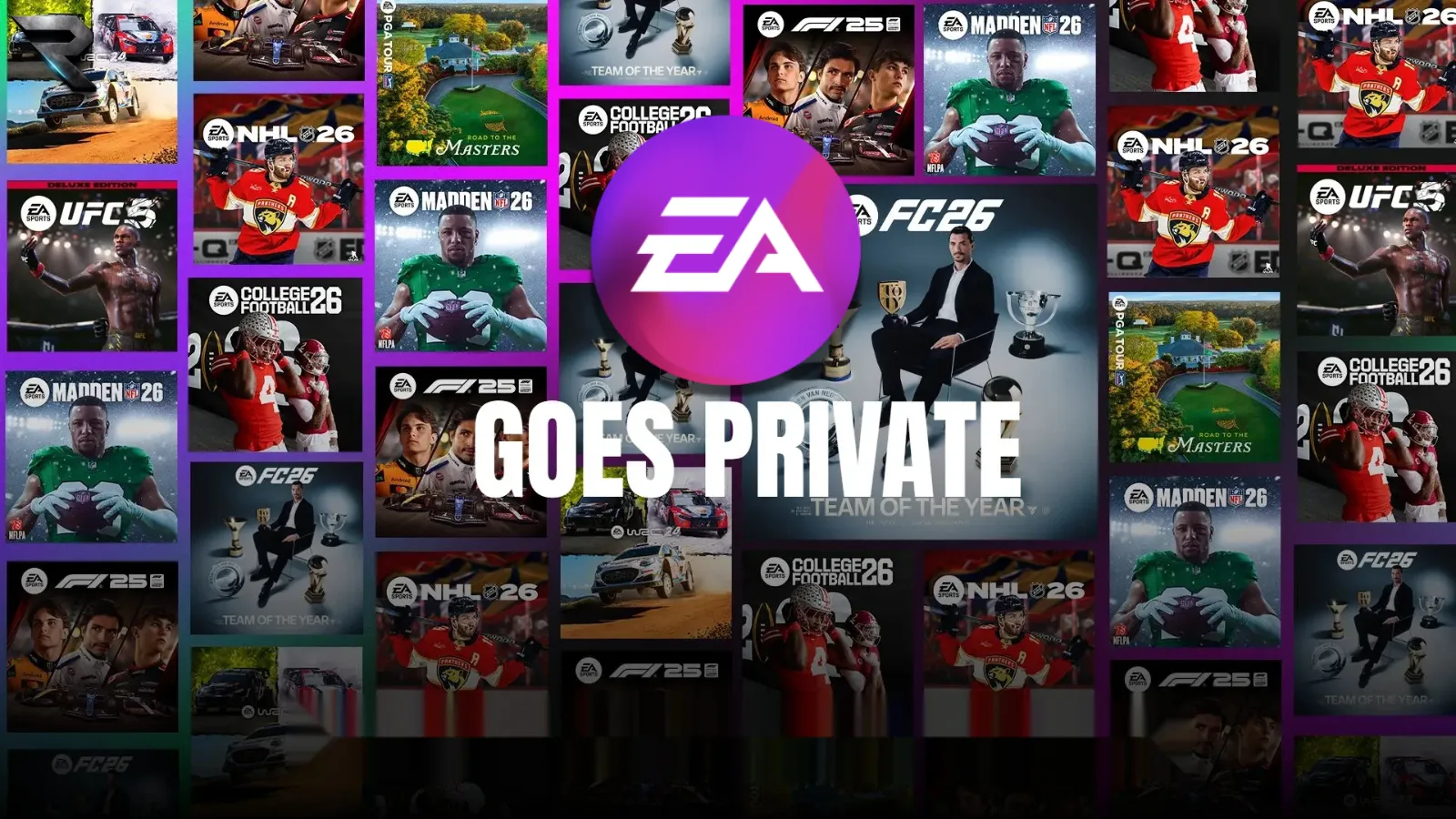
Electronic Arts is no longer a publicly traded company. The $55 billion acquisition by a consortium made up of the Public Investment Fund (PIF), Silver Lake, and Affinity Partners officially closed on August 4, and EA confirmed it in a Business Wire release the same day. Common stock has stopped trading on the NASDAQ, and shareholders who held stock at closing will get $210 in cash per share.
It's the end of a run that started in 1989, the year EA first went public. First announced back in September 2025, the deal cleared its last hurdle in December when EA stockholders voted to approve it at a special meeting.
The Deal Is Done, and Wilson Isn't Going Anywhere
Andrew Wilson remains Chairman and CEO, and he's framing the closing as a beginning rather than an ending. In a message sent to employees, he pointed to the people who built EA into what it is today and said the new ownership group shares the company's direction going forward.
He also wrote to staff about EA's history since its founding in 1982, calling this shift the start of the company's next chapter rather than a conclusion. The company's stated mission hasn't moved: Our mission remains unchanged: To Inspire the World to Play.
Two New Presidents Join Wilson at the Top
EA is also restructuring its executive bench as it enters this next phase. Cam Weber has been named President and Chief Studios Officer, putting him in charge of EA's game development organization. David Tinson takes the newly created role of President and Chief Operating Officer, overseeing the broader business side. Wilson described both as executives who have already helped steer EA through major transitions before this one.
Wilson described the games industry as entering ..one of the most exciting and transformative moments our industry has ever seen.
adding that EA intends to continue investing in creativity while embracing new technologies.
What the New Owners Are Saying
Each member of the consortium put out its own statement alongside the closing announcement. PIF's Turqi Alnowaiser, Deputy Governor and Head of International Investments, said the fund's long-term investment approach positions it well to support EA's next stage, and he singled out sports and entertainment as areas PIF wants to keep building on.
Silver Lake CEO Egon Durban talked up EA's franchise lineup and said the group plans to back new technology, artificial intelligence included, across both game development and the player experience. Affinity Partners CEO Jared Kushner focused on the size of EA's audience, pointing to the stories and communities the company has built with hundreds of millions of players worldwide.
What Actually Changes
Here's the short version of what's different as of August 4:
- Electronic Arts is now privately held.
- EA's stock has been delisted from NASDAQ.
- Shareholders receive $210 per share in cash.
- Andrew Wilson stays on as Chairman and CEO.
- Cam Weber becomes President and Chief Studios Officer.
- David Tinson becomes President and Chief Operating Officer.
- PIF, Silver Lake, and Affinity Partners now own the company.
Why This Is Such a Big Deal
EA owns some of the biggest names in gaming: EA SPORTS FC, Battlefield, Apex Legends, The Sims, Madden NFL, Need for Speed, Dragon Age, and Mass Effect. Taking a publisher this size private, at this price, puts the deal near the top of the list of the largest transactions the games industry has ever seen. That alone guarantees people will be watching closely to see how the new ownership group influences decisions on those franchises going forward.
Not Everyone Was Cheering
This deal didn't sail through without pushback. Some players raised concerns well before closing about what new ownership could mean for EA's creative direction, especially for franchises known for inclusive storytelling, The Sims 4 being the most cited example. The acquisition also caught the attention of US lawmakers, some of whom pushed regulators to take a closer look before signing off, and demonstrations were held outside EA's headquarters in the lead-up to closing.
None of that stopped the deal from closing. Shareholders approved it, and as of now, EA hasn't announced any changes to its game franchises, its studios, or its publishing plans as a result.
The Bottom Line
EA spent more than three decades on the public markets and that chapter is now closed. Wilson is staying in the top job, Weber and Tinson are stepping into new leadership roles, and PIF, Silver Lake, and Affinity Partners are footing the bill for whatever comes next.
What the new owners actually do with that influence, on AI, on existing franchises, on future acquisitions, is the part nobody can answer yet. For now, EA says the plan is to keep building the games and sports experiences its player base already knows, just without a stock ticker attached.