
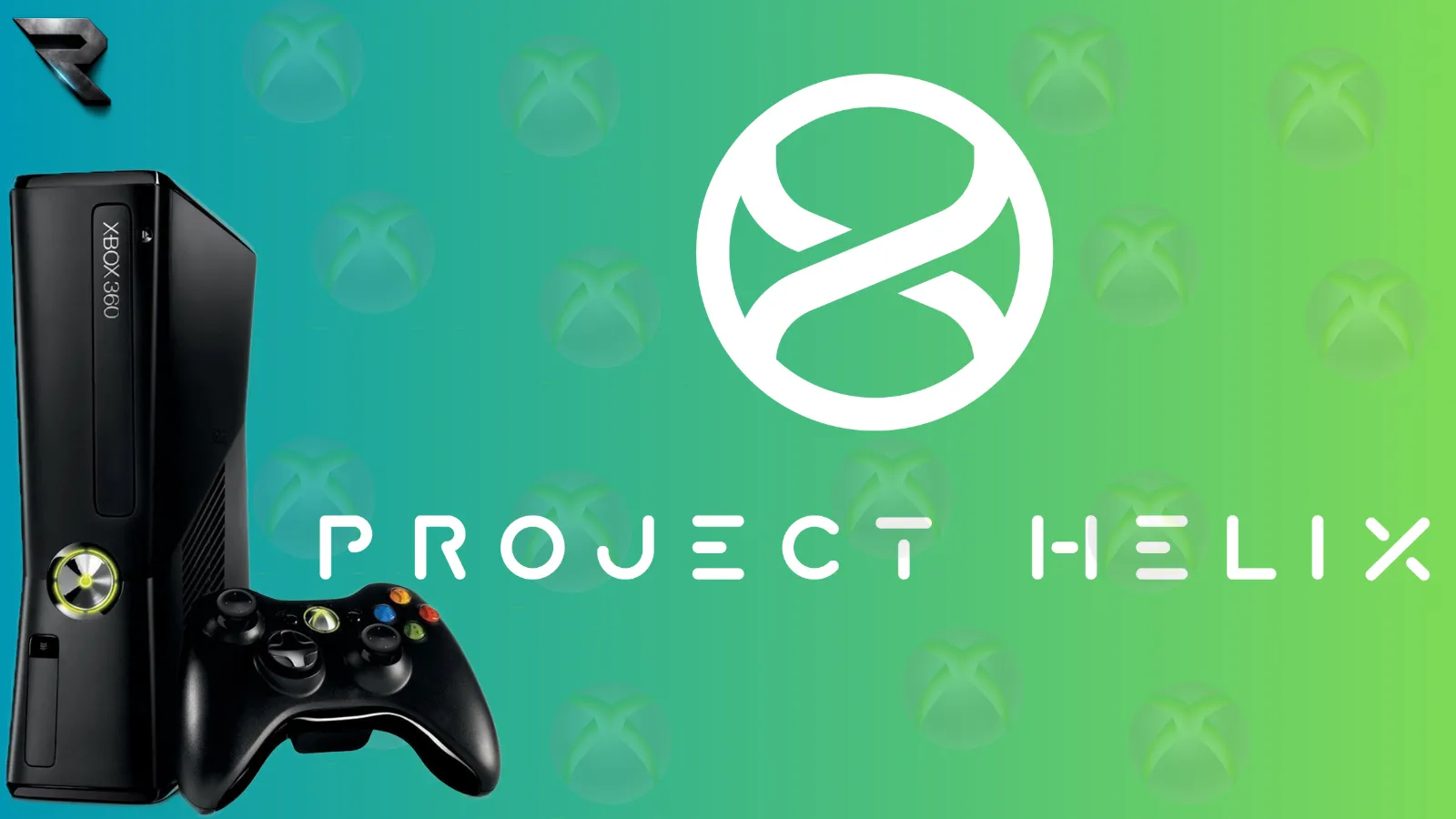
Microsoft's backward compatibility plans may be about to get a lot bigger. According to a new report from The Verge, Microsoft has shared documentation with developers outlining plans to bring Xbox 360 games to PCs, handheld devices, and the upcoming Project Helix platform, with the rollout reportedly stretching across 2027 and 2028.
If the report holds up, it would push Microsoft's preservation push well past the original Xbox library and further into a strategy where players carry their game collections across hardware instead of being locked to whichever console they bought a generation ago.
What the Report Says
The leaked developer document obtained by The Verge reportedly describes Xbox 360 games running not just on Project Helix, Microsoft's next-generation console, but also on Xbox PCs and handhelds. Rather than flipping a switch and adding the whole catalog at once, Microsoft would apparently leave the decision to publishers and developers, who could choose whether their own games join the program.
Those same publishers would reportedly keep control over pricing and whether a title lands on Xbox Game Pass. The rollout itself is said to happen gradually, spread across 2027 and 2028, giving Microsoft room to build out compatibility as its next generation of hardware comes online.
Microsoft hasn't confirmed any of this publicly. But the approach lines up with how the company has handled backward compatibility before: let publishers opt in, then expand the library over time rather than all at once.
This Looks Like Part of a Bigger Strategy
Taken on its own, Xbox 360 games arriving on PC would already be a big deal. Stacked next to everything else Microsoft has said this year, it starts to look like one more piece of a strategy the company has been building toward for a while.
Project Helix, unveiled earlier this year, is Microsoft's attempt at an Xbox that isn't tied to one box under the TV. The pitch is a shared ecosystem across console hardware, Windows PCs, and portable devices, with Microsoft leaning less on "the console" as the center of the experience and more on making sure players can pick up their library wherever they land.
Xbox 360 compatibility, if it materializes, slots neatly into that. It's another chunk of legacy games able to follow players across whatever device Microsoft wants them using next.
How Project Helix Fits Into the Bigger Picture
The reported plans track closely with what Microsoft has already said publicly about Helix. Instead of treating Xbox as a single console line, Microsoft has described Helix as the base for an ecosystem where console hardware, Windows PCs, and handhelds all work off the same library.
That vision already includes original Xbox games making their way to Windows PC through a new compatibility program, with four classic titles as the initial batch and more promised as the preservation effort expands. If Xbox 360 support follows, it reads less like a new direction and more like the next obvious step. Rather than preserving individual consoles, Microsoft increasingly appears to be preserving the Xbox platform itself, ensuring each new generation carries more of the previous one forward.
For players, the end state Microsoft seems to be building toward is one where switching between a console, a gaming PC, or a handheld doesn't mean leaving years of purchases behind.
Why Xbox 360 Is Such a Big Deal Here
The Xbox 360 era is arguably the most important stretch in Microsoft's console history, and it's the generation that gave Xbox a lot of the identity it still leans on today.
Some Xbox 360 games did eventually make it to PC, but plenty of the console's biggest exclusives never did. Fable II, Lost Odyssey, Blue Dragon, Project Gotham Racing 4, and both Gears of War 2 and Gears of War 3 are still near the top of most "bring this to PC already" wish lists.
That's what makes this report worth paying attention to. Instead of relying on old hardware or workarounds that live in a gray area, players could get official access to some of Xbox's most beloved games through Microsoft's own system. We've covered a handful of Xbox 360 exclusives that deserve exactly this kind of second life, and if the leak holds up, that wish list just got a lot more realistic.
A Bigger Library Doesn't Mean Every Game Comes Back
Even if Microsoft moves ahead with this, don't expect the whole Xbox 360 catalog to show up overnight.
Participation is reportedly optional, and it's on developers and publishers to decide whether their games join in. They'd also keep control over pricing and Game Pass availability, which gives publishers flexibility but also means some games might just never come back.
Music licensing, vehicle deals, sports league agreements, celebrity likenesses, all of that has blocked older games from returning before, and there's no reason to think those problems disappear just because Microsoft opens the door. Expect a slow trickle of additions rather than one big launch, shaped as much by legal red tape as by developer interest.
The Original Xbox Program Is Already the Blueprint
The current original Xbox compatibility program offers a preview of how an Xbox 360 rollout could actually play out. That program launched in early access in July with four titles — BLiNX: The Time Sweeper, Conker: Live & Reloaded, Crimson Skies: High Road to Revenge, and Fuzion Frenzy — playable through the Xbox app on Windows PCs and handhelds like the ROG Xbox Ally X. A full launch of that same program is reportedly set for October 2026, giving a rough sense of how long Microsoft tends to spend between early access and a wider release before a bigger wave, like Xbox 360 support, follows.
The licensing risk isn't hypothetical, either. Several Forza titles have already been pulled from sale entirely after licensing agreements for cars, tracks, or music expired, despite Microsoft owning the franchise outright. If a first-party series can lose games to expired deals, it's a safe bet that Xbox 360's sports, racing, and soundtrack-heavy titles face the same odds, no matter how loud the demand to bring them back.
The Disc-to-Digital Program Might Matter Just as Much
Buried in the same leaked document is Microsoft's disc-to-digital initiative, which could end up changing how players carry their libraries forward almost as much as backward compatibility itself.
Per The Verge's report, inserting a supported Xbox One or Xbox Series disc into a compatible console would hand players a digital license tied to both their Microsoft account and that specific disc. That license would follow them across supported Xbox devices, and ownership would transfer automatically if the disc gets sold or handed off to someone else.
It's a rare attempt to keep two things that usually fight each other, digital convenience and physical resale, both intact at the same time. Pair that with backward compatibility across original Xbox and Xbox 360 titles, and Microsoft ends up with an ecosystem where a library follows the player, not the disc case gathering dust on a shelf.
Also Read: Xbox Insider Update Adds Chat Audio to Captures While Platinum-Style Achievements Are on the Way
Where All of This Seems to Be Heading
None of these pieces exist by themselves. Over the past several months, Microsoft has confirmed Project Helix, brought original Xbox compatibility to PC, kept pushing its unified Xbox messaging, and continued backing Xbox Play Anywhere across first-party releases. Xbox 360 support would fit right alongside all of that rather than read as some sudden pivot.
The reported plans also align with Microsoft's broader Xbox roadmap outlined in a recently leaked internal leadership memo, which described a long-term strategy focused on expanding Xbox beyond traditional console hardware and reaching players across more devices. Xbox 360 compatibility would fit neatly within that vision.
What We Still Don't Know
A lot of the exciting parts of this report come with an asterisk. Microsoft hasn't confirmed Xbox 360 compatibility on PC and hasn't said a word about how the technical side would actually work.
It's unclear whether supported games get any kind of upgrade, higher frame rates, better resolutions, HDR, or anything beyond baseline compatibility. Cloud saves, achievements, keyboard and mouse support, multiplayer, and how many publishers actually sign on are all still open questions.
Those answers will decide whether this ends up as a modest bonus feature or a genuinely significant shift in how much of Xbox's back catalog stays playable going forward.
The Bottom Line
For now, Xbox 360 compatibility on PC is based entirely on a report from The Verge, and Microsoft hasn't confirmed anything publicly. Even so, it fits a pattern that's been building all year: Project Helix, original Xbox compatibility on Windows, the reported disc-to-digital system, and Microsoft's broader ecosystem push all point toward the same idea, an Xbox where a player's library matters more than which box it's plugged into.
If the leaked plans turn out to be real, Xbox 360 games landing on PC won't just be another entry in Microsoft's backward compatibility program. It would be another step toward an Xbox that keeps decades of games playable no matter where someone decides to play them next.