


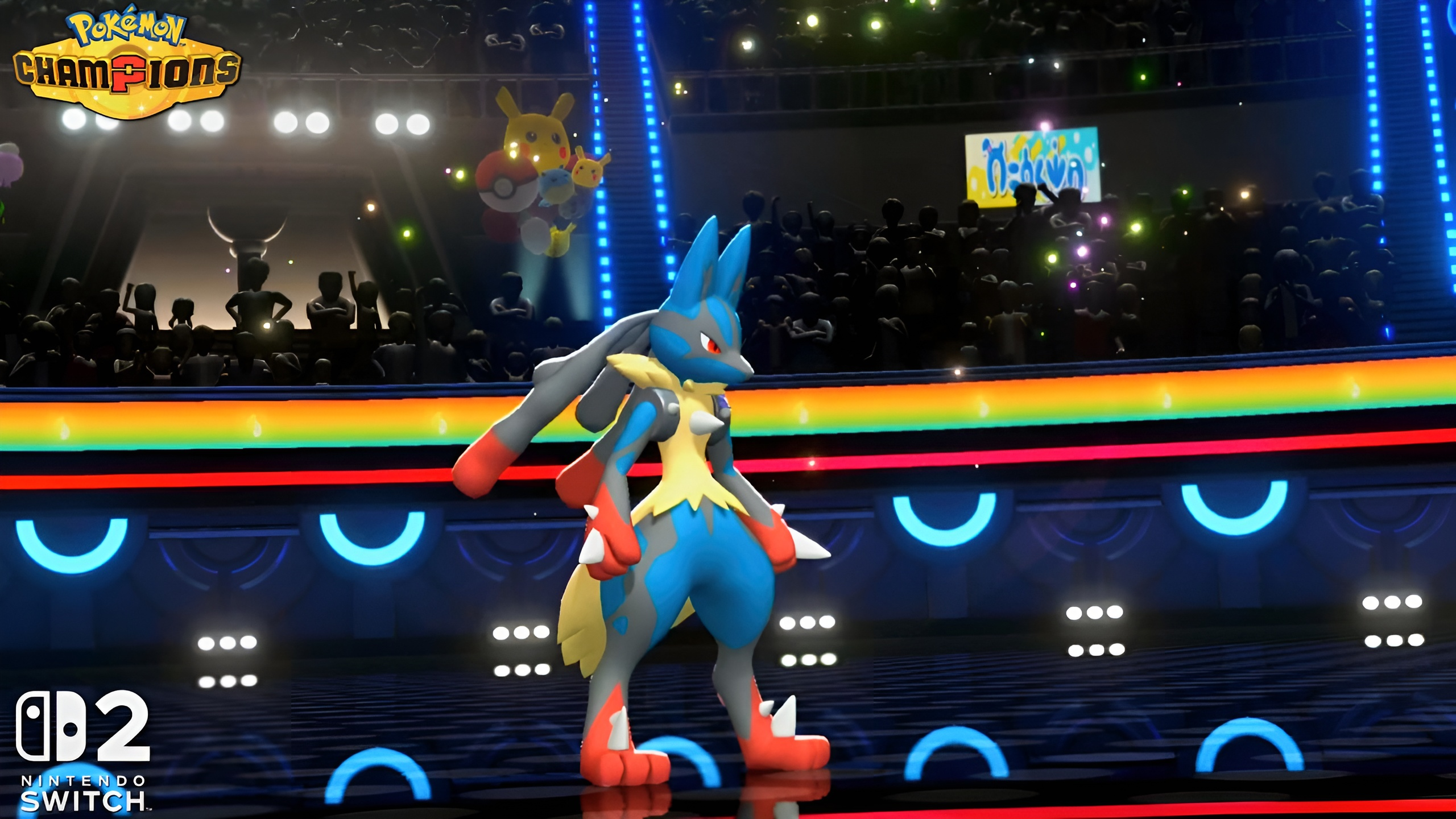
Most attackers in Champions pick a lane and stay there. Lucario doesn't. Its Attack and Special Attack stats sit close enough together that either side of the moveset works, which means your opponent has to guess whether they're walling a Close Combat or eating a full-power Aura Sphere until Lucario actually moves. That guessing game is worth more than it sounds like on paper, and it's a big part of why Lucario keeps a seat on so many Regulation M-B teams.
Fighting and Steel typing does a lot of the heavy lifting too. It hands Lucario resistances to Rock, Bug, Normal, Dragon, and a handful of other common attacking types, and once Mega Evolution is in the picture, Adaptability turns every same-type move Lucario throws into something closer to a two-hit-KO machine. This guide runs through the build that's currently putting up the best results, the special alternative worth knowing about, and how to actually pilot Lucario once it's on the field.
Is Lucario Good in Pokémon Champions?
Yes, and it's not a close call. Lucario is one of the more heavily used Pokémon in the current Regulation M-B metagame, and the physical Adaptability build shows up on tournament teams again and again, often sitting alongside Talonflame, Basculegion, and Whimsicott. It isn't the single best Pokémon in the format, but it's flexible enough to slot into almost any offensive core without forcing the rest of the team to build around it.
The tradeoff is that Lucario is fragile. Its Defense and Special Defense are both average at best, so a single unresisted hit from something fast can end its game before it fires a shot. That's less a knock on the Pokémon and more a reminder that Lucario wants support, not a spot leading your team into the open.
The Best Lucario Builds
Two sets currently see real use in competitive Champions play. The physical version is the far more common of the two and the one you should default to if you're building your first Lucario.
Physical Lucario (Recommended)
| Category | Recommendation |
|---|---|
| Ability | Inner Focus (becomes Adaptability after Mega Evolving) |
| Held Item | Lucarionite |
| Nature | Jolly |
| Moves | Close Combat, Meteor Mash, Bullet Punch, Detect |
Special Lucario
| Category | Recommendation |
|---|---|
| Ability | Inner Focus (becomes Adaptability after Mega Evolving) |
| Held Item | Lucarionite |
| Nature | Timid |
| Moves | Aura Sphere, Flash Cannon, Vacuum Wave, Detect |
Why This Is the Best Physical Lucario Build
This is the set most ranked and tournament Lucario are running right now, and for good reason. Inner Focus is only there to stop Fake Out and Intimidate from ruining Lucario's day before it gets to Mega Evolve. Once it does, Adaptability takes over, and Close Combat and Meteor Mash start doing damage that most bulky Pokémon simply can't absorb twice.
Close Combat is the main attack. There aren't many neutral targets that enjoy taking an Adaptability-boosted hit from it, and the Defense and Special Defense drop rarely matters when the Pokémon on the other side of it is already dead. Meteor Mash covers the Fairy types that would otherwise wall Fighting attacks outright, and the chance at an Attack boost occasionally turns one good roll into a snowballing game. Bullet Punch is what separates this build from a generic wallbreaker: priority lets Lucario pick off faster threats that survive its first hit, and it's often the move that closes out a match against a weakened offensive team. Detect rounds out the set, giving Lucario a free turn to Mega Evolve safely, scout what the opponent is about to do, or just buy a teammate time to reposition.
If you want to deviate from the standard four moves, there's room to. Extreme Speed can replace Bullet Punch on teams that want neutral priority instead of Steel-type coverage. Thunder Punch handles the bulky Water types that otherwise shrug off Lucario's main attacks. Stone Edge picks off Flying types that resist Fighting moves outright, and Poison Jab is worth a look if your local meta is unusually heavy on Fairy types, though Meteor Mash typically covers that role well enough on its own.
Why the Special Lucario Build Works
Lucario's Special Attack is high enough that this build isn't a gimmick. Instead of leaning on physical pressure, it fires off Adaptability-boosted special attacks and uses Vacuum Wave to clean up whatever survives.
Aura Sphere is the backbone of the set. Perfect accuracy means it never misses at the worst possible moment, which matters a lot once Adaptability is in play and every hit is expected to do real damage. Flash Cannon gives the set the same Fairy-type answer that Meteor Mash provides on the physical build, and Vacuum Wave is the reason this version can still finish off faster attackers instead of just trading with them. Detect functions the same way it does on the physical set, letting Lucario Mega Evolve without immediately eating a hit.
Some players swap Nasty Plot in for Detect, trading the safety net for a genuine late-game sweeper that can tear through defensive teams after a single boost. It's a riskier line, since Lucario without Detect is easier to punish on the turn it Mega Evolves, but it pays off against teams that don't have a fast answer once the boost is up.
Best EV Spread
Physical Build
Max Attack and Speed with the rest dumped into HP, running a Jolly nature. Speed is non-negotiable here since a slower Lucario loses most of what makes it dangerous, and the extra HP gives it a little more room to survive a hit before it can act.
Special Build
Max Special Attack and Speed with the rest into HP, running a Timid nature. Same logic as the physical spread: Lucario wants to be moving before most of what it's threatening, and any leftover investment is better spent keeping it alive for a second turn than chasing marginal bulk elsewhere.
How to Play Lucario
Lucario is a mid-to-late-game piece, not a Pokémon you want leading unless your team specifically needs the pressure immediately. Let your other Pokémon knock out or weaken the bulky walls first. Once the field is softened, Lucario can come in, Mega Evolve, and start putting up real numbers without much resistance left to punish it.
Its dual STAB combination is the reason this works so well. Very few Pokémon in the current format resist both Fighting and Steel, so once Lucario is in and boosted, opponents are usually picking between two bad options rather than one clean answer. That said, its own defenses are nothing special, so avoid switching it directly into Ground, Fire, or Fighting attacks whenever you have another option.
On the physical build, don't be afraid to take the guaranteed Bullet Punch knockout instead of gambling on a Speed tie you might lose. The special build asks for a bit more patience since it lacks that same guaranteed close-out, but Aura Sphere's accuracy means the damage is close to a sure thing turn after turn.
Best Teammates for Lucario
- Whimsicott: Prankster Tailwind lets Lucario outrun nearly the entire format the turn it matters most, and Encore shuts down setup sweepers before they get going.
- Talonflame: Also brings Tailwind support and threatens a lot of the Pokémon that give Lucario trouble on the switch-in.
- Basculegion: Adaptability-boosted offense from a completely different angle, which forces the opponent into difficult decisions on both sides of the field at once.
- Meowscarada: Handles the bulky Water and Ground types that otherwise slow Lucario's momentum down.
- Grimmsnarl: Light Clay screens buy Lucario the extra turn it sometimes needs to Mega Evolve without eating a hard hit first.
Strengths
- Genuine dual-STAB pressure from Fighting and Steel that very few Pokémon resist cleanly.
- Works as either a physical or special attacker, which makes team preview guessing games in Lucario's favor.
- Adaptability after Mega Evolving turns already strong attacks into near-guaranteed knockouts.
- Priority on both builds gives it a way to close games out that most wallbreakers don't have.
Weaknesses
- Below-average bulk on both defensive stats, so it dies fast to anything super effective.
- Loses to faster attackers if its priority moves aren't enough to finish the job.
- Physical variants can get worn down by repeated Close Combat defense drops over a long game.
- Uses up the team's Mega Evolution slot, same as any other Mega Pokémon.
Biggest Threats to Watch For
Fast Fighting, Fire, and Ground attackers are Lucario's biggest problem across both builds, since all three hit it for at least neutral damage and Lucario rarely survives a direct hit from any of them. Sneasler in particular is dangerous, since it can outspeed and threaten Lucario before Mega Evolution even happens. Bulky Pokémon that resist both Fighting and Steel while also carrying a super effective attack of their own are the cleanest counters, so watch for anything that can absorb Close Combat or Aura Sphere and strike back safely.
Common Mistakes to Avoid
- Leading with Lucario before the opposing walls have been weakened, which wastes its best turns.
- Running the physical build without Bullet Punch, giving up the guaranteed knockouts that make the set consistent.
- Switching Lucario directly into Ground or Fire attacks it has no way to answer.
- Forgetting that Lucario's own bulk is average at best and playing it like a tank.
- Skipping Speed investment on either build, which undercuts the entire point of Mega Evolving it.
Which Lucario Build Should You Use?
For most teams, the physical Adaptability build is the correct starting point. It's the more consistent of the two, it's what's currently winning at tournaments, and Bullet Punch gives it a reliable way to close games that the special build can't quite match. The special build is worth building if your team already has enough physical pressure and needs a Fairy-resistant special attacker with priority instead, or if you're specifically trying to catch physically-defensive teams off guard.
Either version rewards good timing more than raw power. Bring Lucario in at the right moment, and it can tear through whatever's left standing. Bring it in too early, and it's just a frail Pokémon that folds to the first hard hit it takes.
Build data and competitive usage trends referenced from Pokémon Zone and other publicly available competitive resources.