


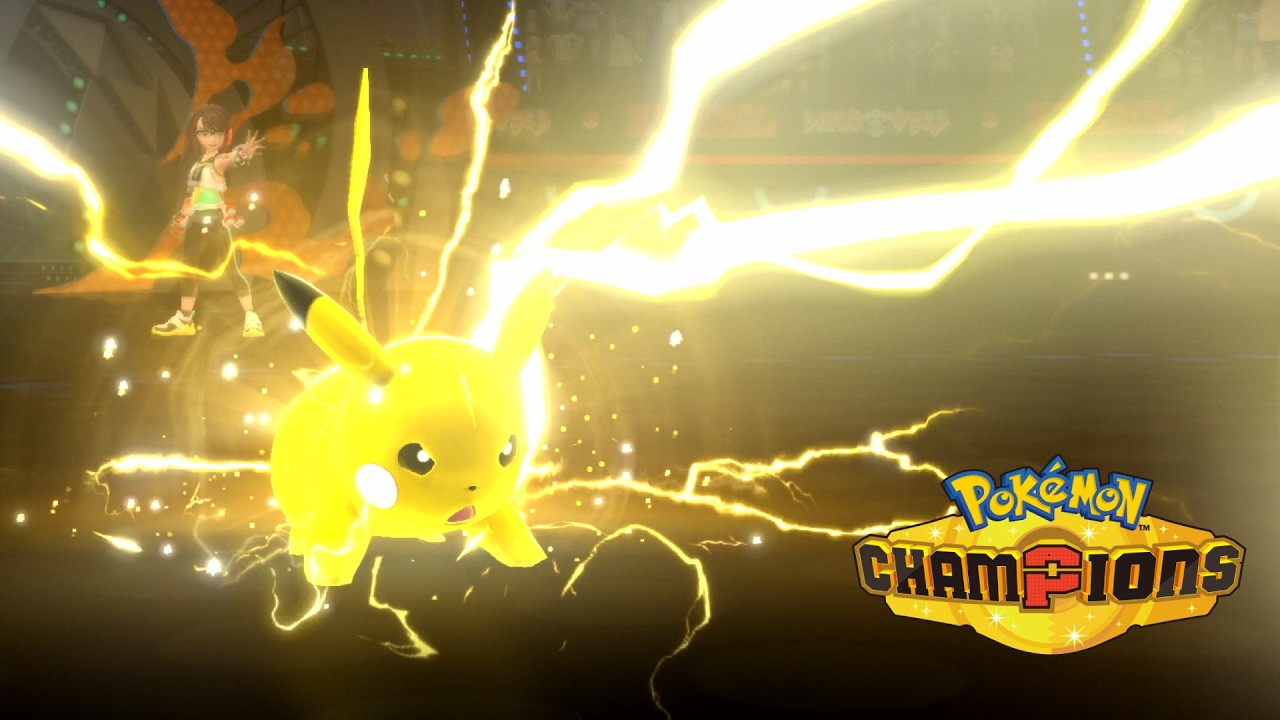
Pikachu is not the Pokémon you expect to see climbing a Pokémon Champions ranked ladder. Most of the format is built around Kingambit, Garchomp, and Incineroar, not the franchise mascot. But write it off as a joke pick and you will lose to it at least once, because Light Ball does something to Pikachu's numbers that nothing else in the game quite matches. It doubles both Attack and Special Attack at the same time, which turns a Pokémon with unremarkable base stats into something that can punch a hole through teams that were not built to respect it.
This guide walks through the build that has actually shown up in early Champions tournaments, why Light Ball is not optional, which moves earn a slot, how to play Pikachu in both Singles and Doubles, and which teams make its life miserable.
Is Pikachu Good in Pokémon Champions?
Pikachu is a high risk, high reward Pokémon, and there is no getting around that. With Light Ball equipped, its offensive output is genuinely dangerous. Without bulk to back it up, though, almost any neutral hit from a real attacker puts it down in one shot. Whether Pikachu works for you comes down to how well you can position it, predict incoming attacks, and build a team around covering for its one obvious hole.
Tournament usage backs this up. Pikachu shows up as an occasional surprise pick rather than a staple of the meta, and that is probably the honest way to think about it. It rewards a player who knows exactly what they are doing and punishes anyone who treats it like a normal Pokémon that can afford to switch into an attack.
The Best Pikachu Build
This is the set that has appeared most often across early competitive Champions play, and it is the one we would recommend starting with if you are building Pikachu for the first time.
| Category | Recommendation |
|---|---|
| Ability | Lightning Rod |
| Held Item | Light Ball |
| Nature | Modest |
| Stat Focus | Maximum Special Attack, Maximum Speed |
| Moves | Thunderbolt, Fake Out, Grass Knot, Protect |
Lightning Rod gives Pikachu a free immunity to Electric attacks and boosts its Special Attack whenever it absorbs one, which is a nice bit of insurance on top of the raw power Light Ball already provides. Nothing here is exotic. It is a straightforward set, and that is largely the point. Pikachu does not need a complicated game plan, it needs to hit hard on the turns that matter.
Why Light Ball Is Mandatory
Most Pokémon in Champions can run two or three viable held items depending on team need. Pikachu really only has one. Light Ball doubles both Attack and Special Attack, and that single effect is doing almost all the work in making Pikachu playable at a competitive level. Take it away and Pikachu is just a fast, frail Electric type with below average offensive stats and nothing to compensate.
Every successful Pikachu set from recent tournaments has Light Ball attached. If you are experimenting and considering something else, know that you are giving up the one thing that actually makes this Pokémon work.
Best Ability
Lightning Rod
Lightning Rod is the ability worth building around. It grants complete immunity to Electric type attacks, raises Pikachu's Special Attack after it absorbs one, protects Electric-weak teammates standing next to it, and forces opposing Electric attackers to think twice before firing off a move. In Doubles specifically, this becomes a genuine mind game. Opponents either avoid using Electric moves entirely or feed Pikachu a free stat boost, and neither option is good for them.
Static
Static is a usable alternative if you would rather have a passive damage deterrent than an immunity. The paralysis chance on contact can occasionally swing a match against a fast physical attacker that gets unlucky. It is a less consistent tool than Lightning Rod overall, though, and most competitive builds still lean toward Lightning Rod as the default.
Best Moves Explained
Thunderbolt
Thunderbolt is Pikachu's main attack and the reason Light Ball exists on this set in the first place. It has excellent accuracy, no recoil, and hits hard enough with the item boost that most Pokémon without a defensive investment do not want to switch in for free.
Fake Out
Fake Out is one of Pikachu's real strengths and shows up on nearly every competitive set. It causes the target to flinch on Pikachu's first turn in battle, which in Doubles can completely derail an opponent's opening play before they get to act. That tempo swing is worth more than it looks on paper.
Grass Knot
Ground types are Pikachu's single biggest problem, since they shrug off Electric attacks entirely and often threaten to knock Pikachu out for free on the switch in. Grass Knot exists specifically to punish them, hitting heavier Ground and Water and Ground types hard enough that they can no longer switch in without a real risk.
Protect
Protect matters most in Doubles, where it lets Pikachu scout an opponent's move, stall out a field effect, dodge a Fake Out from the other side, or simply buy a turn for a teammate to clean up a threat safely. It is not a flashy slot, but it is a necessary one.
Alternative Moves Worth Considering
Depending on your team and what you are trying to accomplish, a few other moves are worth a look:
- Volt Tackle: Considerably stronger physical damage, but the recoil adds up fast. Better suited to the physical build below than the standard special set.
- Nuzzle: Guarantees paralysis on contact, which gives your team real speed control and helps slower teammates function.
- Helping Hand: One of Pikachu's best support tools in Doubles, boosting a partner's damage output on a key turn.
- Volt Switch: Deals damage and then pivots Pikachu out into a safer teammate, keeping momentum on your side.
- Encore: Punishes opponents who lean on Protect, setup moves, or status moves by locking them into repeating the same action.
- Electroweb: Chips damage while lowering the Speed of both opposing Pokémon in Doubles, which is useful against faster teams.
- Rising Voltage: Hits significantly harder under Electric Terrain, and is worth running if your team can reliably set that terrain up.
Best Stat Allocation
Special Attacker Build
For the standard set, prioritize Speed and Special Attack, with any remaining points going toward HP for a bit of extra survivability. The plan is simple even if executing it is not: move first, and try to knock out the threat in front of you before it gets to act.
Physical Pikachu Build
A less common but still viable option is to prioritize Speed and Attack instead, pairing that spread with Volt Tackle and physical coverage moves rather than Thunderbolt. It is a riskier build because of Volt Tackle's recoil, but it can catch opponents who are only prepared for the special version off guard.
Singles Strategy
In Singles, Pikachu is best treated as an aggressive offensive piece rather than something you send out and leave on the field. Bring it in after a Pokémon faints or through a pivot move rather than switching it directly into an attack, since it rarely survives a hard hit either way. Once it is in, lean on Thunderbolt to pressure Water and Flying types, and keep Grass Knot ready for any Ground type that thinks it can switch in safely. Every turn Pikachu is on the field should be doing something, because it is not built to sit around and absorb damage.
Doubles Strategy
Doubles is genuinely where Pikachu gets more interesting to play. Fake Out creates immediate tempo the moment it enters. Lightning Rod protects your other Electric-weak teammate from getting picked off. Helping Hand pushes a partner's big attack over the top. Protect buys you a turn to reposition when something looks dangerous. Nuzzle spreads paralysis across the field. Played well, Pikachu supports your stronger Pokémon while still threatening real damage of its own with Thunderbolt whenever the opening is there.
Building Around Electric Terrain
Electric Terrain boosts the power of grounded Electric type attacks and prevents grounded Pokémon from falling asleep for as long as it is active. If your team has a reliable way to set it, Pikachu becomes noticeably stronger, and Rising Voltage in particular turns into one of its most threatening attacks. This is not a requirement to make Pikachu work, but a terrain-focused team is one of the clearer ways to push its ceiling higher.
Best Teammates
- Pelipper: Rain support weakens the Fire attacks that threaten Pikachu while enabling aggressive offense from your Water type teammates, and Pelipper has shown up alongside Pikachu on several tournament teams already.
- Swampert: Handles the Ground types that wall Pikachu outright, while Pikachu returns the favor by pressuring the Flying and Water Pokémon that give Swampert trouble.
- Sylveon: Covers Dragon types that Pikachu cannot touch, and appreciates the Fake Out support clearing the way.
- Farigiraf: Its Armor Tail ability blocks priority moves aimed at Pikachu, which meaningfully improves its odds of surviving to attack again.
- Kingambit: Pikachu can soften up the opposing team early, setting up Kingambit to clean up once Supreme Overlord starts stacking.
- Charizard: Pikachu's Electric coverage removes the Water types that give Charizard the most trouble, clearing its path.
Biggest Threats to Watch For
Ground types are the single biggest problem Pikachu has. They are immune to its main attack type and frequently knock it out on the switch in before it gets to do anything. Fast priority users, things like Extreme Speed or Sucker Punch, are just as dangerous, since they can eliminate Pikachu before it even gets a turn. Bulky special walls can simply tank a Thunderbolt and answer back without much concern, and several of the format's faster sweepers will still outpace Pikachu even with a full Speed investment. None of this makes Pikachu unplayable, but it does mean you need a plan for all four before you bring it to a real match.
Common Mistakes to Avoid
- Running any held item other than Light Ball on a competitive build.
- Switching Pikachu directly into an attack instead of bringing it in safely.
- Leaving Pikachu on the field without Protect backup in Doubles.
- Forgetting that Ground types are completely immune to its main STAB move.
- Spamming Volt Tackle without accounting for the recoil damage.
- Playing Pikachu like a bulky Pokémon instead of the glass cannon it actually is.
Team Building Tips
Pikachu performs best surrounded by teammates that cover for its one glaring weakness. Look for a partner that resists or is immune to Ground attacks, a bulky pivot that can bring Pikachu in safely rather than forcing it to switch into a hit, some form of speed control through Tailwind or paralysis, a reliable answer to Dragon types, and a late game cleaner that benefits from Pikachu having already worn the opposing team down.
Should You Use Pikachu?
If your only goal is climbing the ranked ladder as efficiently as possible with the strongest meta Pokémon available, Pikachu is probably not the pick. It is not that kind of Pokémon, and it never really has been in a Pokémon Champions context. But if you enjoy aggressive, punishing play and the specific satisfaction of catching an opponent off guard with the franchise mascot, Pikachu offers one of the more entertaining playstyles in the game right now. Light Ball gives it damage output that has nothing to do with its base stats, and Fake Out, Lightning Rod, Protect, and solid coverage let it contribute in both Singles and Doubles when it is played with care.
It demands precise positioning because there is no room for error in its defenses. Get that right, though, and Pikachu can steal games from opponents who assumed it was a novelty pick and stopped paying attention. Tournament usage remains niche rather than mainstream, but the teams that keep bringing it are proving there is more here than a nostalgia pick every time it shows up.
This guide references competitive build data from Pokémon Zone alongside publicly available tournament and metagame information.