
There are certain sounds from games that stay with you forever.
For me, one of those sounds is the scream of a Snatcher.
It was never necessarily the loudest sound in a Gears of War campaign, but I knew what it meant. Sometimes it was barely a hint in the distance, enough to immediately get my attention and make me start looking around. Then the Snatcher would suddenly appear in front of me from a distance, and the entire situation would change.
The same thing happened with the Swarmaks and the other creatures that inhabited the world of Gears. Their sounds were warnings. They told me something was coming before I could always see it.
I can still remember those moments clearly.
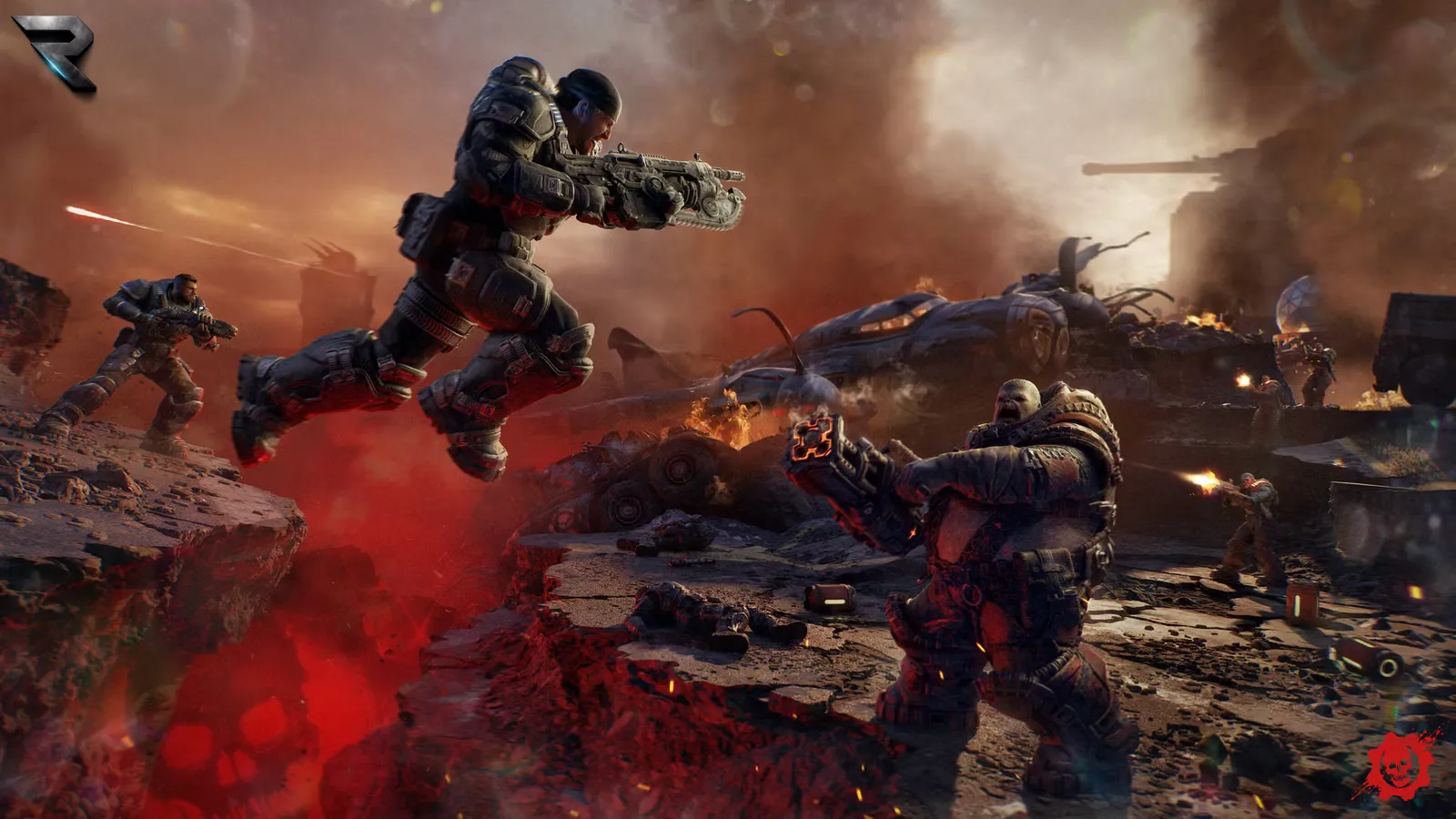
Limited ammunition. The Lancer in my hands. The Gnasher ready for close combat. Taking cover as I tried to move forward, then having to sprint toward an ammo box while hearing the screams of Snatchers, Swarmaks and other Locust creatures around me.
It was not simply the act of shooting that made those moments memorable. It was the feeling of being hunted.
That is probably the best way I can describe what I miss about the original Gears of War trilogy.
I miss the monsters.
I miss the darkness.
I miss the horror.
Most importantly, I miss the feeling that I was fighting something genuinely monstrous.
That might sound strange coming from someone who did not actually play the original trilogy when it first released. I came to Gears much later. In fact, I played Gears of War 4 before I ever went through the original trilogy, and I did so around 2016, roughly a decade after the first game had released.
By that point, I had already played plenty of shooters. I had experienced games that had taken the ideas introduced by earlier titles and evolved them. I had played the Uncharted games and plenty of other modern shooters. The industry had moved on from what the original Gears of War had been when it first arrived.
Yet going backward somehow felt fresh.
That is one of the strangest things about my relationship with Gears. I am nostalgic for something I did not experience at the time.
I was looking backward at a franchise that was already a decade old, but the experience never felt like I was simply playing an outdated shooter. There was a rawness to the original game that I genuinely appreciated.
The cover system is a huge part of that.
It maybe that not a lot of gamers claim Cliff Bleszinski invented taking cover in games, but the way Gears of War implemented cover became one of the defining elements of the franchise and helped inspire so many games that followed. Going back to that original system after playing so many other shooters was fascinating.
The movement had weight. Getting from one piece of cover to another felt deliberate. Taking cover, moving, shooting, repositioning and knowing when to make a run for the next safe spot created a rhythm that felt completely authentic to Gears. And it only became better as the trilogy progressed.
Gears 2 polished the mechanics further. Gears 3 pushed them even closer to perfection. By the time Gears 4 arrived, the formula had been modernized into something incredibly smooth.
But there was still something about going back to that original version that I loved.
It was raw.
And that word keeps coming back to me whenever I think about the original trilogy.
The same thing happened with the weapons.
I had already spent a lot of time playing Gears 4 Horde with friends before I went back to the trilogy. I almost always played as the Soldier, and a huge reason for that was my love for the Chainsaw Lancer. I absolutely loved that weapon's abilities and the feel of using it both in melee attacks and taking down drones from a distance. The increased damage from getting a perfect reload, the ability to take long-distance shots and then get into close combat with the chainsaw made it almost impossible for me to give up. It became my main weapon whenever I could use it, usually alongside the Gnasher and Pistol for close-range encounters.
I definitely got my share of Locust chainsaw kills in Gears 4, before I went backward and met the Retro Lancer.
Initially, I had to spend some time getting used to it. It was retro for a reason. It did not have the same advanced feel as the Chainsaw Lancer I had become so comfortable with. But eventually, the Retro Lancer grew on me.
It was not some throttled-down version of the Lancer. It was an absolute beast in its own right, especially when it came to melee attacks. There was something ridiculously satisfying about using that razor-sharp blade against a Locust.
Even later, when Gears 5 gave us the more advanced GL Lancer, I still found myself sticking with the Chainsaw Lancer whenever possible. I just could not let it go.
That is probably what makes the weapons so important to my memories of Gears. Gnashers and the Pistol were not reduced to close-encounters alone as they were absolute beasts during a round of Versus where the Lancers made little sense to be used in close encounters. My love for the Chainsaw Lancer was not merely because it was a tool for killing enemies. It became part of how I played the game and how I forged my character throughout the franchise. And Horde gave me some of my favourite Gears memories of all, and not just for me it still remains one of the best memories with my friends with whom I've conquered every map in every difficulty level. The maps, the different difficulties, the boss fights, running out into the field during waves to collect points and ammunition, suddenly finding yourself in close combat while trying to survive and make it back to safety. Doing all of that with friends made Gears 4 feel like something more than another shooter, and for that reason, I will always have some fantastic memories of those Horde sessions.
But as much as I enjoyed the modernized version of Gears, going back to the original trilogy showed me why the franchise had such a distinctive identity in the first place. Playing the campaign of the original trilogy never felt boring no matter how many times I had completed them. The original Gears of War had this darkness to it that I absolutely loved.
Again, playing it in 2016 probably made that feeling even stronger. I was going backward into an older game after spending so much time with contemporary titles, and suddenly I was in this brooding, serious world where everything felt heavier.
The Gears of War: Ultimate Edition remaster did something I particularly appreciated. It modernized the original experience without completely losing the broody look and atmosphere that made the first game so memorable.
But if I had to pick the game that remains my favourite in the entire franchise, there is no hesitation.
Gears 2.
That game was just something else.
The storyline, the cinematic scale, the world of Sera and the way the campaign progressed all came together perfectly for me. It felt like the sequel understood what made the first game special and then expanded everything without losing its identity.
Sera itself became a character in a way. The world felt bigger, and there was so much more to experience as the story moved forward.
And then there was the ending.
Even after everything that happened, that haunting radio call after the credits remained with me.
For me, Gears 2 remains unmatched.
Then came Gears 3, which I see as the perfect ending to that original trilogy.
It was an emotional ride, and losing Dom was gut-wrenching.
Dom and Marcus' friendship is probably one of the biggest reasons that moment affected me as much as it did. It represents the kind of friendship I think a lot of us guys crave. I have friends I've known for more than 20 years, so when I look at Marcus and Dom, I do not simply see two video game characters who happen to be friends. I see the kind of bond that comes from having been through things together.
Dom had already been through some of the worst experiences imaginable. Losing his family never made him lose focus from the greater mission, and he remained beside his best friend and continued fighting alongside Marcus through battle after battle. And when the two of them finally reached a point where there seemed to be no way out, Dom understood what his sacrifice would mean.
He knew that if he made the right move, Marcus and the rest of Delta Squad could survive.
What makes the scene even more powerful to me is that Dom does not simply lose control or make some desperate final charge. He calculates it. He asks Marcus to jump away from the zone. Then he says his farewell in the most Dom way possible, he thought of the two people he was most close to, forces Marcus to jump to safety and then calls out to Maria and says nobody could have expected it to end like this. He drives the petroleum truck into the fuel depot, creating the explosion that gives Marcus and the rest of Delta Squad their chance to escape.
Marcus realizes what is happening and almost jumps in himself before the explosion throws him away. And even after that first explosion, Marcus still thinks about pulling Dom out before another explosion erupts.
That is the kind of friendship that made the original trilogy so special to me.
It was not just deep.
It was layered with trust, commitment and loyalty.
Dom knew Marcus wouldn't hesitate to hurt himself trying to save him. Marcus could not simply stand there and watch Dom die. Neither of them needed to explain what the other meant to them.
You could feel it.
And that makes Marcus Fenix an especially interesting character to me because I actually met him in reverse.
My first real introduction to Marcus was in Gears 4.
I still remember JD visiting him and opening the door. I was expecting Marcus to be somewhere inside, but instead there was this massive, war-torn veteran sitting in the darkness of a shed.
It was such a perfect introduction to the older Marcus.
He looked like someone who had been through hell and somehow kept going. He was still a beast of a man, but there was something different about him compared with the Marcus I would later meet in the original trilogy.
When I eventually went back and played the original games, I was seeing Marcus before he became that man.
I was seeing him when he was still fighting his way through the Locust war and still getting to grips with the monsters of Sera.
Suddenly, Gears 4 had more context.
The veteran I had first encountered was not simply an older Marcus.
He was the result of everything that had happened before.
The losses.
The war.
The people he could not save.
Dom.
And Gears 5 found another way to put Marcus through emotional hell.
The decision involving JD and Del is a great example. I played both outcomes, and when Kait chooses to save Del, Marcus receiving JD's COG tag in silence is one of those scenes that does not need a massive speech to explain how devastating it is.
The silence says everything.
Marcus is Marcus.
He breaks down but absorbs it. He keeps going.
That scene brought back some of the feelings I had from Dom's death in Gears 3. It is not the same moment and it does not carry the same weight for me, but it demonstrates something important about Marcus' character.
He keeps losing people.
And he keeps moving forward.
At the same time, Gears 5 moved the spotlight away from Marcus and toward Kait and JD, which made sense for the direction of the story. But it also made me realize how much I missed the original Delta Squad.
Anthony Carmine, for example, remains one of those characters who will always be talked about when people discuss the franchise.
Anthony was almost the complete opposite of Marcus and the other heavyweights in Delta Squad. He was a green rookie who idolized the soldiers around him and was genuinely excited to be part of the team despite knowing exactly how dangerous the war was.
He never backed down. And then the game took him away. His death came at a moment when I was not expecting it, and that short appearance was enough for Anthony Carmine to become a memorable part of Gears history.
Then Benjamin Carmine came along in Gears 2, followed by Clayton Carmine in Gears 3, and suddenly the Carmine family had become a franchise institution.
Damon Baird was different again.
Baird had the attitude, the sarcasm and the personality that helped complete Delta Squad. Every member of that group felt different, but Baird's engineering ability made him particularly useful.
He was not just there to complain about everyone else's plans.
He was a genius.
That side of Baird eventually became increasingly important to the wider franchise, particularly through the development of technology and machines that could help the team.
By Gears 5, JACK's sacrifice becomes another reminder that even Baird's greatest achievements could become deeply personal losses.
And that is the thing about looking back at the original Delta Squad now.
So many of them are gone.
The further the franchise moved forward, the more obvious it became that the group I had grown attached to in the original trilogy was disappearing.
Which brings me back to the Locust.
Because if there is one thing I want E-Day to bring back more than anything else, it is the feeling of fighting those monsters. The original trilogy was refreshing because the enemies were so different.
The Locust were terrifying, but they were only part of it.
There were Berserkers.
Brumaks.
The Kryll.
All these grotesque creatures that made Sera feel like a place where something horrible could be waiting around the next corner.
The darkness and horror were not just decoration.
They shaped the experience.
And then there was RAAM.
RAAM, to me, still remains the most badass character among the monsters to me.
The other creatures could be horrifying because of their appearance or sheer size, but RAAM delivered a different kind of fear.
He was tactical.
He commanded the Kryll.
He was methodical about how he approached his enemies.
He was not simply another monster charging into battle. He was Queen Myrrah's General for a reason.
That first encounter with Delta Squad remains unforgettable. In the middle of the gunfire, RAAM grabs Lieutenant Kim, lifts him like a toy and kills him.
It immediately tells you that this is not just another Locust.
And then you eventually have to fight him yourself.
That final battle between RAAM and Marcus was memorable because you had to approach it almost as tactically as RAAM himself did.
You had to time your shots.
You had to use cover properly.
You had to understand the threat.
You had to survive the Kryll.
Eventually, you had to bring him down.
Queen Myrrah brought another layer to that same atmosphere. Even when she was not physically on screen, her narration and dialogue during important moments gave the Locust a presence that went beyond the enemies directly attacking you.
That is something I hope E-Day understands.
The monsters are not simply there because they look cool.
They are part of what made Gears feel like Gears.
That is exactly why the return to the Locust has me so excited for E-Day.
After Gears 4 and Gears 5 took the franchise into a more modern era with bots and a different style of enemy, going back to the Locust and the monsters of the original trilogy feels like a much-needed step for the franchise.
And from what I have seen during the current open access beta, I am encouraged.
The Coalition has been very deliberate about describing E-Day as a darker, grittier return to the horror of the series, while bringing back the cover-based combat and modernizing movement and traversal rather than simply recreating the old games. The game is set fourteen years before the original Gears of War, putting Marcus and Dom together at the beginning of the Locust invasion.
That is exactly the balance I want.
I do not need Gears to stop evolving.
I just want it to remember what made me fall in love with it.
The Coalition could have simply continued moving forward with another modern sequel, but instead we are going backward to the moment when the world changed.
And honestly, I think that is exactly what the franchise needed.
Maybe this is the prequel that should have come immediately after the original trilogy.
But as they say, better late than never.
What excites me most is that E-Day could work for people who have been there since the beginning and for people who have never experienced Gears before.
For the original fans, it is a return to Marcus, Dom, the Locust and the horror of the world before we knew exactly what was waiting underneath it.
For new players, it could be the perfect opportunity to discover why this franchise became so important in the first place.
And am sure I speak for all fans of the original trilogy with this wish. I would love to see Gears 2 and Gears 3 eventually make their way to PC.
Not necessarily as huge remasters. If Xbox ever decides to bring them over, I would happily take direct ports that preserve that original experience. There has been no announcement of that happening, and I am not pretending otherwise. It is simply something I would love to see.
If E-Day becomes the success that I hope it will be, perhaps that could eventually encourage Xbox to look back at those games too. Because I would love for more people to experience Gears 2 and Gears 3 on modern PCs and not just on the Xbox consoles. For me, though, this entire editorial is ultimately about something much simpler.
This is my love letter to Gears of War.
It is one of the very few franchises that sits particularly close to my heart, and perhaps the strangest part is that I did not even experience its original era when it was happening.
I discovered it years later. I played the modern games first. I met the older Marcus before I met the younger Marcus.
I became attached to the Chainsaw Lancer before I learned to appreciate the Retro Lancer. I played Horde with friends before going backward into the original Locust war.
I knew what Gears had become before I fully understood what it had been and what the characters had been through.
And somehow, when I finally went backward, the original trilogy absolutely blew my mind despite the broody look and the dated graphics. I will forever love the raw experience that only the original trilogy could offer. The weapons still felt brutal. The darkness still felt oppressive. The monsters still felt frightening.
The sound of a Snatcher still made me look around.
And the friendship between Marcus and Dom still managed to break my heart.
That is why E-Day feels different.
I am not simply waiting for another Gears game.
I am waiting to see the beginning of something I already know the ending to.
I know what Marcus will eventually become.
I know what Dom will eventually lose.
I know what the Locust will eventually do to Sera.
I know how much this war will cost them.
But for the first time, I get to see Marcus and Dom before all of that.
Before the losses.
Before the years of fighting.
Before Marcus becomes the war-torn veteran sitting alone in that shed.
Before their friendship becomes one of the most heartbreaking relationships in the franchise.
And maybe that is why seeing the E-Day teaser with a younger Marcus and Dom hit me harder than I expected.
I have already seen where their story ends.
Now I just want to go back and see where it began.
After everything I have remembered about this franchise while writing this, I cannot wait for the final release of Gears of War: E-Day.
I cannot wait to hear the Locust again.
I cannot wait to see those monsters again.
I cannot wait to get my hands on that Lancer.
But most of all, I cannot wait to go back to Marcus and Dom.